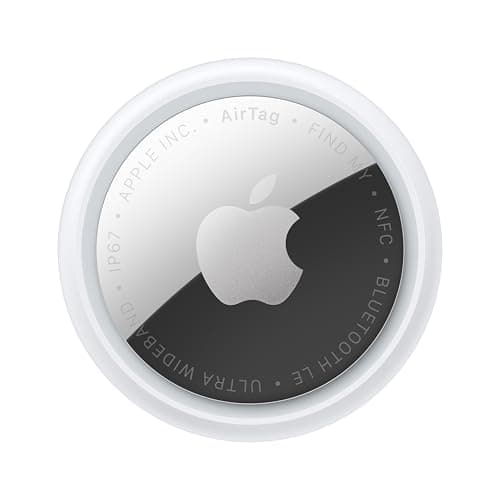
Best overall item tracker
Best Bluetooth item trackers
Seven no-fee item trackers sorted by network, with manufacturer loudness and battery figures. Pick by phone first, loudness second.

Everyday carry
Every tracker in this category is genuinely free to run. The decision is not price, it is which crowd network your phone belongs to.
By Mike M.Last updated
#ad — we earn a commission if you buy through the links on this page, at no cost to you. It never changes what we recommend, and the structural reason it cannot is that we recommend the no-subscription devices, which pay the least. Full disclosure.
This is the easy category, and it is easy for a good reason: Bluetooth item trackers have no cellular radio, so there is no data to pay for and no subscription to avoid. Buy the tag, replace or recharge a battery once a year, and that is the entire cost of ownership. Anyone selling you a monthly plan for a key finder is selling you something else.
What you are actually choosing between is networks. A tag only knows where it is when somebody's phone walks past it and relays the position, so the useful question is how many phones are in that network. Apple's Find My is the largest by a wide margin, built from every iPhone in the world. Google's Find Hub is newer and growing. Samsung's SmartThings Find only includes Galaxy devices. Tile runs its own, which is the smallest of the four and the reason Tile has struggled.
That makes the decision mostly mechanical. iPhone household: buy Find My. Android household: buy a dual-network tag like Chipolo or a Find Hub tag like the Moto Tag. Galaxy specifically: SmartTag2 gives you the longest stated battery life of anything here at 500 days. Mixed household where one tag has to serve everyone: Tile Pro is the honest answer, with a smaller network as the price.
Two practical notes that matter more than any spec sheet. First, loudness beats precision indoors: most things in this category are lost in the house, and a 130 dB siren finds a sofa cushion faster than any map ever will. Second, check the battery type. Rechargeable means remembering a cable once a year; a CR2032 means a supermarket. Neither is wrong, but a dead tag you cannot revive in five minutes is a tag you stop trusting.
Start here
Best for iPhone
The largest finding network in the world plus Ultra Wideband Precision Finding, which walks you to the item by direction rather than showing a pin. No keyring hole.
#ad · live price from Amazon's product API. Disclosure.
Everything in this section
Best overall item tracker
Seven no-fee item trackers sorted by network, with manufacturer loudness and battery figures. Pick by phone first, loudness second.
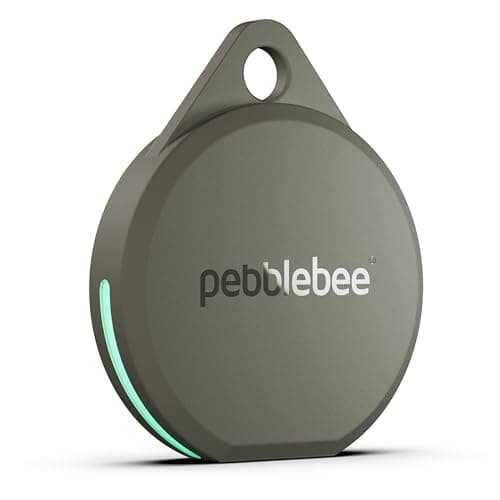
Best key finder
Five key finders ranked on loudness, because keys are lost inside the house where the alarm does the work and a map pin does not.
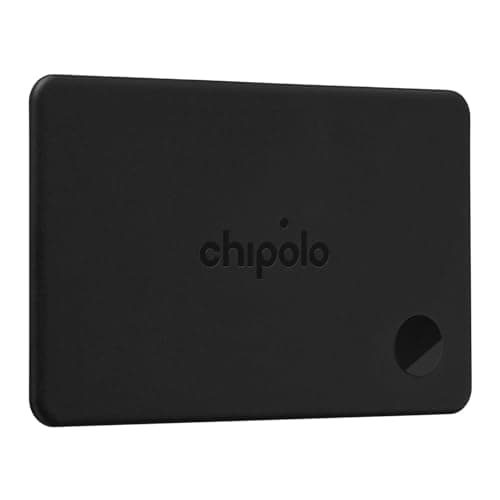
Best wallet tracker
Card-format trackers ranked on battery type then thickness, because a sealed-battery card quietly turns a one-time purchase into a repeat one.
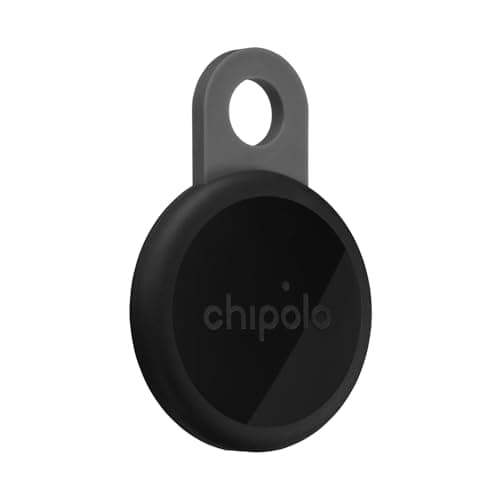
Best item tracker for Android
Five no-fee Android tags sorted by network, with the Samsung requirement spelled out: SmartTag2 needs a Galaxy, not just Android.
Best item tracker for iPhone
Find My tags for iPhone, all no-fee, with an honest account of when Apple's Precision Finding is worth paying for and when a cheaper tag does the job.
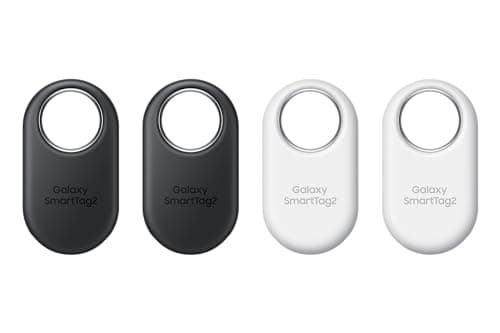
Best replaceable-battery tracker
Why sealed batteries quietly make a tracker a repeat purchase, which tags take a coin cell, and the rechargeable alternative that also avoids expiry.
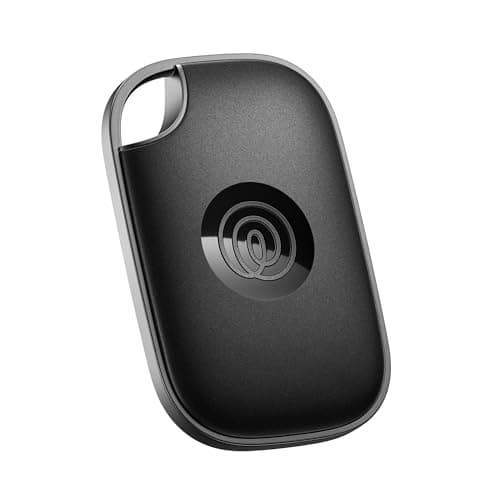
Head to head
Five axes between the Pro and the Mate, including the CR2477 battery annoyance — plus the case for buying neither.
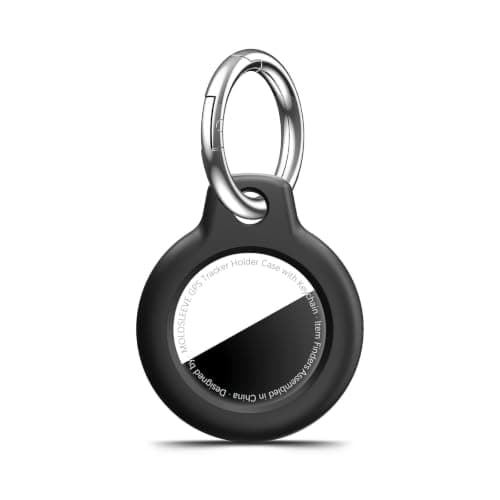
Best AirTag holder
The right AirTag holder for keys, collars, wallets, bikes, luggage and tool cases — and why Apple's own leather loop is the one to skip.
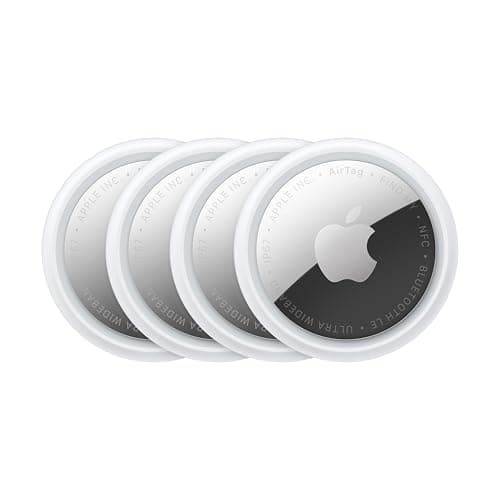
Best gift under $40
Six trackers chosen as gifts, with the one question that decides it — which phone do they carry — and what else they will need to buy.
Best travel gift under $50
Luggage trackers under $50 chosen as gifts, with the FAA battery rule explained and a note on which platform the recipient needs.
Guide
The habits that stop keys going missing, the one tracker feature that genuinely prevents it rather than cures it, and which tag to buy.
Guide
How left-behind notifications work on each platform, why false positives make people disable them, and the trusted-locations step that fixes it.
Guide
What to tag first, why one good tag plus a multi-pack beats four good tags, and the three cases where two tags on one item is right.
Without the monthly fee
Seven no-fee item trackers sorted by network, with manufacturer loudness and battery figures. Pick by phone first, loudness second.
This single question eliminates most of the market before you have looked at a specification, and it is the question product pages are least clear about.
Apple Find My is the largest finding network in the world, assembled from essentially every iPhone. Setting up and using a Find My tag requires an iPhone — there is no Android app, and the ability of an Android phone to read a found AirTag over NFC is an anti-stalking feature, not a usable one. Apple's own AirTag additionally gets Ultra Wideband Precision Finding, which walks you to the item by direction rather than showing a pin.
Google Find Hub is the Android equivalent, newer and smaller but growing, and open to third-party tags — Chipolo, Pebblebee and Motorola all make Find Hub devices. If you carry an Android phone that is not a Galaxy, this is your network.
Samsung SmartThings Find only includes Galaxy devices, which makes it the smallest of the three big networks but still a large one. The SmartTag2 needs a Galaxy phone or tablet on Android 9 or later — not just any Android, which catches people out.
Tile's own network is made of other Tile users and is the smallest of the four by a wide margin. Tile's compensating advantage is real though: it is the only mainstream tag that works identically on iPhone and Android from one app, which is exactly right for a household running both.
Chipolo's dual-network tags are the hedge. One tag, either network, chosen at setup — so a phone platform switch in two years does not make your tags landfill.
Most things in this category get lost inside one building, and inside one building the map is nearly useless — it will tell you the keys are in your house, which you knew. What finds them is the alarm. That makes loudness the most under-rated specification here: Pebblebee states 130 dB for the Clip 5 and Chipolo states about 125 dB for the LOOP, both comfortably above an AirTag, and you can hear either one through a sofa cushion.
Battery type is the other practical decision. A replaceable coin cell means a dead tag is revived in two minutes with a battery from any shop; Apple states more than a year per CR2032 and Samsung states up to 500 days for the SmartTag2. A rechargeable tag means finding a USB-C cable roughly once a year; Chipolo states about a year per charge and Pebblebee states up to 12 months. Rechargeable is tidier and avoids a drawer of dead cells. Replaceable is better when the tag dies in a hotel room.
One warning about coin cells that has nothing to do with tracking: they cause severe internal injuries if a small child swallows one, quickly. If there are toddlers in the house, store spares locked away and treat a tag with a loose battery door as a thing to fix today.
Wallets need a card-shaped tracker, and the specification that matters is the battery. The first generation of wallet cards had sealed batteries and a hard expiry date — two or three years, then you bought the same product again. The rechargeable cards from Chipolo, Pebblebee and KeySmart removed that, and the small premium is worth it.
Remotes, laptops, passports and bike frames have no attachment point at all, which is what adhesive mounts and stickers exist for. Treat the choice as permanent: an adhesive pad is a one-shot decision and a keyring tag is not, so if there is any chance you will want to move the tag, use a holder instead.
Finally, the AirTag's one genuine design flaw: it has no hole. Apple sells a leather loop for most of the price of another AirTag; a three-dollar plastic shell does the same job. If a keyring hole matters to you, Chipolo's LOOP and Samsung's SmartTag2 both have one built in and you can stop reading about holders.
Questions
Also worth reading

Travel & trade
The one category where the cheap answer is also the right answer. Bags and tool boxes live among people, and that is exactly where a no-fee tag works best.

Head to head
Most comparisons in this category are a feature grid with a winner at the bottom. These compare the thing that decides it: what each one costs you over three years, and which phone you own.