Skip to content
Tag & Tether

Everyday carry · Keys, Wallets & Everyday Carry

How to stop losing your keys

A tracker finds keys you have already lost. One tracker feature actually prevents it — and three habits beat all of them.

By Mike M.Last updated

#ad — we earn a commission if you buy through the links on this page, at no cost to you. It never changes what we recommend, and the structural reason it cannot is that we recommend the no-subscription devices, which pay the least. Full disclosure.


A tracker is a cure, not a prevention. It finds keys that are already lost, which is useful and is not the same as stopping the problem.

So this page is in two halves: the habits that stop it happening, and the one tracker feature that genuinely prevents it rather than curing it.

The habit that works: one place, always

Not a tip, a mechanism. Put a hook or a bowl within arm's reach of the door you actually come in through — not the front door if you come in the back, and not a shelf in another room.

The reason this works and resolutions do not is that losing keys is almost never a memory failure. It is the absence of a default: you walk in holding keys, something else needs doing, and they are put down wherever your hand happens to be. Give the hand a destination two steps inside the door and the problem largely disappears.

Two refinements that matter. The hook has to be before the first distraction — before the kitchen, before the post, before the kettle. And one hook, not two, because two places to look is the same problem in miniature.

The second habit: reduce the number of keys

A heavy keyring is uncomfortable in a pocket, so it comes out, and keys that come out get put down. Strip it to what you actually use daily. Spare car keys, the garage padlock and the key to a lock you replaced in 2019 can live in a drawer — tagged, if you like.

The third: carry them the same way

Same pocket every time, or clipped inside the same bag compartment. Keys that live in whichever pocket is free are keys you have to search for several times a day, and each of those searches is an opportunity to set them down somewhere new.

The short answer

Quick picks

Ranked by what each one costs to own for three years, not by sticker price. The plan column is the one most comparisons leave out.

#ProductBest forPlan / 3 yrPrice
01
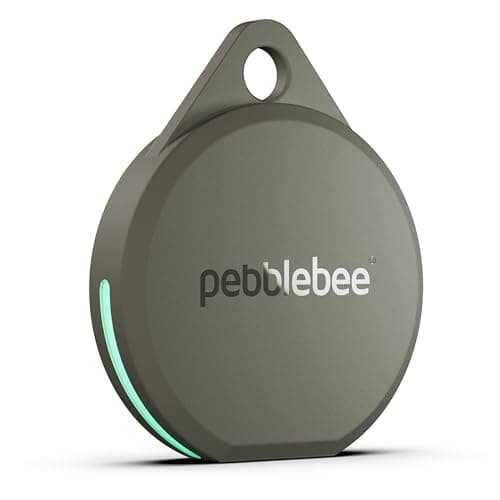
Pebblebee Pebblebee Clip 5
Pebblebee Clip 5

A stated 130 dB siren, audible through a sofa cushion from the next room. For keys, which are almost always lost inside, that is the whole job.

Loudest, for keys lost indoorsNo monthly fee

$0

$27.99Amazon
02
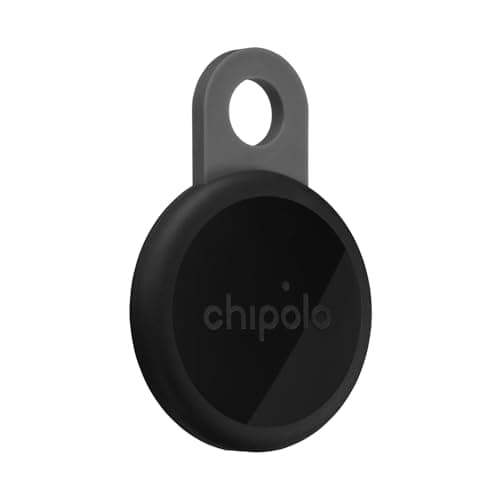
Chipolo Chipolo LOOP
Chipolo LOOP

A stated 125 dB and an actual loop, so there is no holder to buy, on either Apple Find My or Google Find Hub.

Loud, with a keyring loopNo monthly fee

$0

$33.15Amazon
03
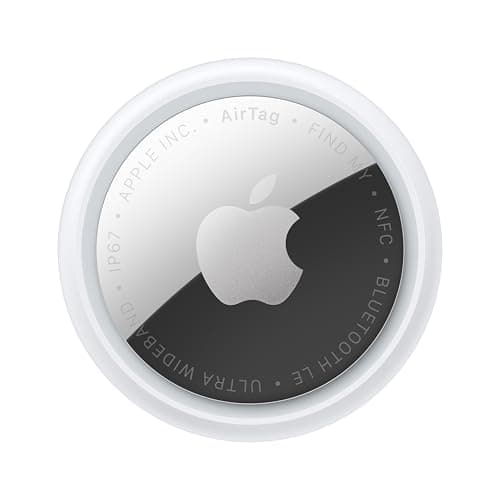
Apple Apple AirTag (2nd generation)
Apple AirTag (2nd generation)

The directional arrow in the last ten meters is genuinely useful in a cluttered room. Budget a few dollars for a shell, because there is no hole.

iPhone, with Precision FindingNo monthly fee

$0 + batteries

$24.00Amazon
04
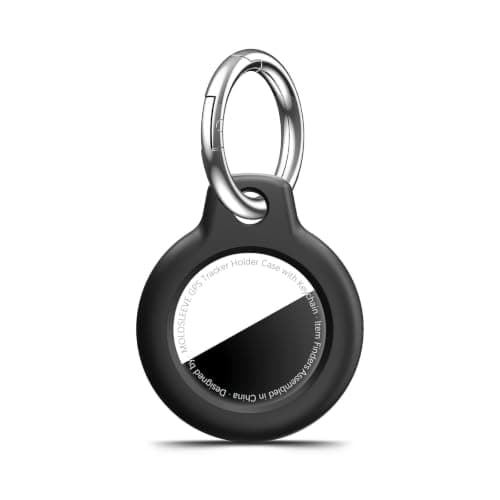
MOLOSLEEVE AirTag keyring case (multi-pack)
AirTag keyring case (multi-pack)

A few dollars fixes the AirTag's one real design flaw. Put it on a short split ring rather than a long chain, which wears through its own mount.

The shell an AirTag needsNo monthly fee

$0

$4.99Amazon

#ad · Live prices from Amazon's product API, as of October 8, 2026. Where we have no verified live price we show none — a gap beats a number that has rotted. Plan figures are the brands' own published rates, cited in Sources below.

In detail

The picks, in full

Pebblebee Pebblebee Clip 5
$27.99View on Amazon

$34.9920% off

Price as of October 8, 2026. Prices move — Amazon's at checkout is the one that counts.

#ad · we may earn a commission from this link to Pebblebee Clip 5

Top pickNo monthly fee#01 · Pebblebee

Pebblebee Clip 5

Loudest, for keys lost indoors

A stated 130 dB siren, audible through a sofa cushion from the next room. For keys, which are almost always lost inside, that is the whole job.

The subscription reality

No subscription, now or later. The purchase price is the whole cost of ownership.

Over three years:
$0

Specs, as published by Pebblebee

  • Rechargeable over USB-C; Pebblebee states up to 12 months per charge
  • 130 dB stated siren
  • IP66 water resistance
  • Works with Apple Find My or Google Find Hub

Good

  • 130 dB stated siren is the loudest claim of any mainstream tag — it is the one you can hear through a sofa
  • No subscription
  • Dual-network, and Pebblebee states it has no access to your location data
  • 12 months per charge is a real year, not a marketing year

Not so good

  • IP66 rather than IP67, so it is rain-rated rather than dunk-rated
  • Charge cable not included
  • One network per tag, chosen at setup

Skip it if

the tag will live somewhere that gets properly submerged — a dog's water bowl, a kayak — where IP67 is the floor.

Chipolo Chipolo LOOP
$33.15View on Amazon

$39.0015% off

Price as of October 8, 2026. Prices move — Amazon's at checkout is the one that counts.

#ad · we may earn a commission from this link to Chipolo LOOP

No monthly fee#02 · Chipolo

Chipolo LOOP

Loud, with a keyring loop

A stated 125 dB and an actual loop, so there is no holder to buy, on either Apple Find My or Google Find Hub.

The subscription reality

No subscription, now or later. The purchase price is the whole cost of ownership.

Over three years:
$0

Specs, as published by Chipolo

  • Rechargeable over USB-C; Chipolo states about a year per charge
  • IP67, up to 30 minutes in 1 m of water
  • About 125 dB stated alarm
  • Up to 120 m (400 ft) stated Bluetooth range

Good

  • Works with Apple Find My or Google Find Hub, so it is the one tag you can buy without knowing which phone you will own next
  • No subscription at all, and Chipolo's own app features are free
  • Loud — 125 dB stated is well above an AirTag
  • Built-in loop, so it goes straight on a keyring

Not so good

  • You pick one network at setup; switching later means a reset
  • Rechargeable means a dead tag is a tag you have to find a cable for, not swap a coin cell into
  • USB-C cable is not in the box

Skip it if

you would rather drop in a fresh coin cell than remember to charge a keyring once a year.

Apple Apple AirTag (2nd generation)
$24.00View on Amazon

$29.0017% off

Price as of October 8, 2026. Prices move — Amazon's at checkout is the one that counts.

#ad · we may earn a commission from this link to Apple AirTag (2nd generation)

No monthly fee#03 · Apple

Apple AirTag (2nd generation)

iPhone, with Precision Finding

The directional arrow in the last ten meters is genuinely useful in a cluttered room. Budget a few dollars for a shell, because there is no hole.

The subscription reality

No subscription. The only recurring cost is a CR2032 roughly once a year, which is pennies.

Over three years:
about $3 in coin cells

Specs, as published by Apple

  • User-replaceable CR2032 coin cell; Apple states it runs more than a year
  • IP67 (1 m for up to 30 minutes, IEC 60529)
  • Ultra Wideband Precision Finding, 1.5x the range of the first generation
  • Speaker 50% louder than the first generation

Good

  • No subscription, and Apple has never charged one
  • The Find My network is the largest crowd network in the world, so a lost AirTag in a populated area usually reports within minutes
  • Precision Finding walks you to it by distance and direction, not just a map pin
  • Battery is a coin cell from any supermarket, not a sealed pack

Not so good

  • iPhone only for setup and full use — there is no Android app
  • It has no GPS of its own: it reports when an Apple device walks past it, so it is a finder, not a tracker
  • No keyring hole, so you are buying a holder as well

Skip it if

you are on Android, or you need to watch something move in real time — an AirTag only knows where it was when someone last walked past it.

MOLOSLEEVE AirTag keyring case (multi-pack)
$4.99View on Amazon

Price as of October 8, 2026. Prices move — Amazon's at checkout is the one that counts.

#ad · we may earn a commission from this link to AirTag keyring case (multi-pack)

No monthly fee#04 · MOLOSLEEVE

AirTag keyring case (multi-pack)

The shell an AirTag needs

A few dollars fixes the AirTag's one real design flaw. Put it on a short split ring rather than a long chain, which wears through its own mount.

The subscription reality

No subscription, now or later. The purchase price is the whole cost of ownership.

Over three years:
$0

Specs, as published by MOLOSLEEVE

  • Shockproof shell with a keyring
  • Fits 1st and 2nd generation AirTag
  • Multi-pack

Good

  • Solves the AirTag's missing keyring hole for pocket change
  • Protects the shell
  • Multi-pack

Not so good

  • Adds bulk
  • Cheap plastic
  • Does not improve the alarm

Skip it if

you are using a Chipolo or SmartTag2 — those already have a hole.

The tracker feature that actually prevents it

Separation alerts. This is the one feature in the category that prevents a loss rather than curing it, and most people never turn it on.

Your phone notices that you have left somewhere without the tagged item and tells you — in the car park, not at bedtime. For keys and a wallet, that is far more valuable than a map, because the common failure is leaving them behind rather than mislaying them at home.

The reason people switch it off is false positives: keys deliberately left at home generate alerts until you mark home as a trusted location. Set the trusted locations up on day one — home, work, a regular gym — and it stays useful instead of becoming annoying in week two.

When the keys are already lost: buy loudness

For the cure half, the specification that matters is the alarm, not the map. Think about where keys actually go missing: down a sofa, in a coat worn on Tuesday, in a drawer, in the car door pocket. In all of those the app shows a pin on your own house, which you already knew.

Pebblebee states 130 dB for the Clip 5 and Chipolo about 125 dB for the LOOP, both audible through furniture from the next room and both comfortably louder than an AirTag. That difference changes the experience more than any other specification.

The exception is an iPhone owner whose keys get lost in a genuinely cluttered room, where Apple's Precision Finding arrow earns its premium. Our usual advice: one good loud tag on the keys, and a cheap multi-pack for everything else. The key-finder roundup goes through the picks.

Two-way finding, which is half the value

Most tags let you press a button on the tag to ring your phone. For keys this is genuinely half the point, because the thing people lose most often after their keys is their phone — and the keys are usually in a pocket.

Check the feature exists before you buy; some budget multi-pack tags omit it.

The spare-key insurance nobody sets up

Put a tag on the spare set too, and leave the spare set with somebody you trust. The expensive version of losing keys is not the search — it is the locksmith, or the car key that costs several hundred dollars to replace.

A multi-pack makes this almost free, and it turns a bad afternoon into an inconvenience.

What not to do

Do not buy a tag with no crowd network. Cheap Bluetooth-only finders work within range of your own phone and nothing beyond, which is fine for a TV remote and wrong for keys — because keys do get left in cafés.

Do not rely on the tracker instead of the hook. A tracker that finds your keys in ninety seconds every single morning is a tracker papering over a solvable problem.
How we picked

We did not lab-test these trackers

Everyone in this category claims to have tested twenty devices. We have not tested any of them, and we say so on every page. What we did instead: read each manufacturer's published specifications and cite them with the date, find the actual subscription price and cite that too, and work out what thirty-six months of ownership costs at those published figures. Device prices come live from Amazon's API and expire after 48 hours rather than going stale. Where a figure could not be sourced to the manufacturer, the page says the spec is unconfirmed rather than borrowing it from a competitor's review. The full method is on the methodology page.

Working out what a tracker really costs? See the three-year cost of every tracker, compared.

Questions

Frequently asked

What is the best way to stop losing your keys?
A single, fixed place within arm's reach of the door you actually come in through, positioned before the first distraction. Losing keys is rarely a memory failure — it is the absence of a default, so you walk in holding them, something else needs doing, and they go down wherever your hand is. Give the hand a destination two steps inside the door and the problem largely disappears. One hook, not two.
Which tracker feature stops you losing things rather than finding them?
Separation alerts — your phone notices you have left somewhere without the tagged item and tells you in the car park rather than at bedtime. It is the only feature in the category that prevents a loss rather than curing one, and most people never turn it on. Set home and work as trusted locations on day one, or false positives from keys deliberately left at home will make you disable it.
What should I look for in a key tracker?
Loudness first, because keys are almost always lost indoors where the map only tells you they are in your house — Pebblebee states 130 dB and Chipolo about 125 dB, both above an AirTag. Then a real crowd network, for the times keys are left in a café. Then a keyring hole, which Chipolo and Samsung have and the AirTag does not. Precision Finding matters only for a cluttered room.
Should I put a tracker on my spare keys?
Yes, and it is the cheapest insurance in this category. The expensive version of losing keys is not the search — it is the locksmith, or a car key that costs several hundred dollars to replace. Tag the spare set, leave it with somebody you trust, and a multi-pack makes the second tag almost free.
Will a tracker ring my phone as well?
Most will, and for keys that is half the value — because the thing people lose most often after their keys is their phone, and the keys are usually in a pocket. Press the button on the tag and the phone rings, on silent on most platforms. Check the feature is supported before buying, because some budget multi-pack tags omit it.

Read next

Where the figures came from

Sources

Every specification and plan price on this page traces to one of these, read on the date shown. Device prices are live from Amazon and stamped separately.

  1. Pebblebee — Clip 5 product page (12 months per charge, IP66, dual network) — accessed 2026-10-05
  2. Chipolo — LOOP product page (battery, IP67, 125 dB, 120 m) — accessed 2026-10-05
  3. Apple — AirTag product page (battery, IP67, Precision Finding) — accessed 2026-10-05
  4. Amazon Product Advertising / Creators API — live prices and product images — accessed 2026-10-05