Skip to content
Tag & Tether

Mechanics & law · How Trackers Work

How to choose a tracker

Four questions, in order. They eliminate most of the market before you have looked at a single specification.

By Mike M.Last updated


Most tracker buying guides start with a feature table. That is the wrong end. Four questions, asked in this order, will eliminate most of the market before you compare a single specification — and the fourth one is the one nobody asks.

Question 1: do I need to know where it is, or where it was?

This is the line between a Bluetooth tag and a cellular tracker, and it is worth several hundred dollars.

Where it was is the honest answer for keys, a wallet, luggage, tools, a camera bag, a parked car, a dog that gets lost in a suburb. A tag answers that question well, for about $30 over three years.

Where it is is the answer for a stolen vehicle, a dog that works a field, a person at risk of wandering. That needs cellular, and cellular needs a plan.

Be honest here, in both directions. Over-buying wastes $300; under-buying means a device that is silent at the moment it mattered.

Question 2: will it be around other people's phones?

If question one said “where it was”, this one confirms it. A crowd-network tag is only as good as the phones near it.

Airports, cities, suburbs, shopping centers, schools, baggage halls: dense. Fields, woodland, rural lanes, shipping containers, a lock-up at 3am: nothing.

If the honest answer is “no people”, a tag will fail and you are choosing between cellular (if there is signal) and radio (if there is not).

Question 3: if there is a plan, what is the published rate?

Find the number before you look at the hardware, and multiply it by thirty-six.

A brand that publishes its plan price on a page you can read without an account is doing you a courtesy. Spytec publishes $14.95 monthly or $12.95 paid annually. LandAirSea puts $8.95 in a product title. Tractive publishes a full tier table.

AngelSense publishes a $59 activation fee and no monthly rate at all. That tells you something before you have looked at the hardware.

The arithmetic for everything we cover is here.

Question 4: if the company disappears, does my device still work?

The question nobody asks, and the one with the most surprising answer.

A Bluetooth tag keeps working — the network belongs to Apple or Google, not to the tag maker. A radio system keeps working, because there is no company in the loop at all. A cellular tracker stops, because the SIM provisioning, the servers and the app all belonged to the brand.

This is not theoretical. While building this site we checked the HTTP responses ourselves: whistle.com returns a 301 redirect to tractive.com, a competitor, and tryfi.com returns a 301 to fitracking.com.

The short answer

Quick picks

Ranked by what each one costs to own for three years, not by sticker price. The plan column is the one most comparisons leave out.

#ProductBest forPlan / 3 yrPrice
01
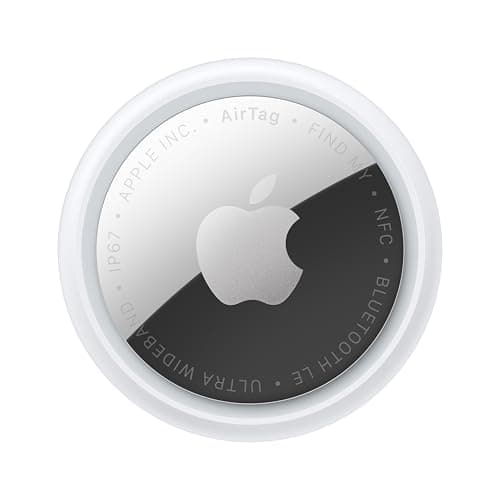
Apple Apple AirTag (2nd generation)
Apple AirTag (2nd generation)

The default for anything lost where there are phones, if you carry an iPhone. Free forever and the largest network there is.

If the answer is 'around people'No monthly fee

$0 + batteries

$24.00Amazon
02
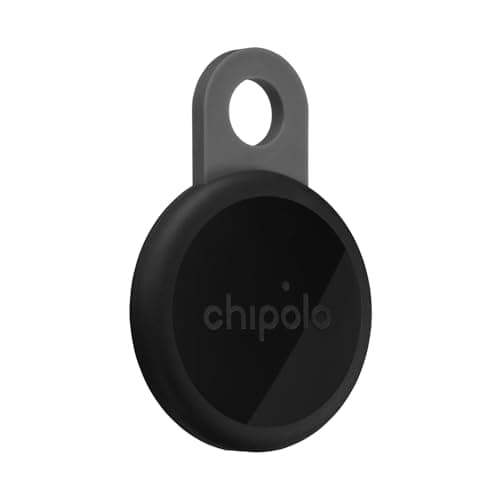
Chipolo Chipolo LOOP
Chipolo LOOP

Find My or Find Hub, chosen at setup and changeable later. The hedge against the one variable you cannot predict.

If you are unsure about your phoneNo monthly fee

$0

$33.15Amazon
03
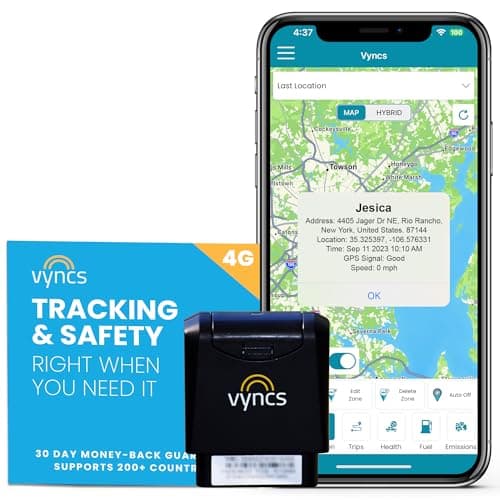
Vyncs VyncsPro 4G
VyncsPro 4G

Real-time cellular tracking with the service prepaid rather than billed monthly, which over three years is the cheaper arithmetic.

If the answer is 'a vehicle'Bundled, then paid

Service prepaid

$99.99Amazon
04
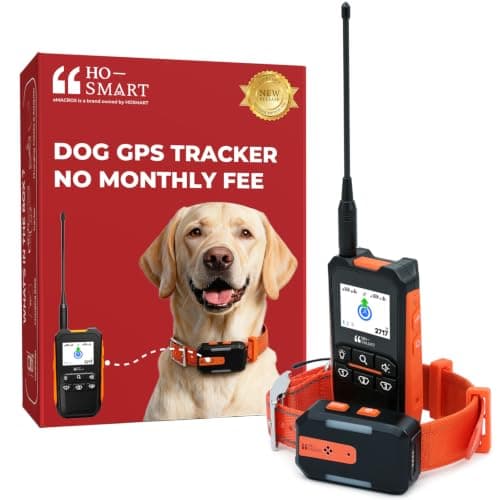
eMACROS eMACROS dog GPS tracker, no subscription
eMACROS dog GPS tracker, no subscription

Radio rather than cellular, so no plan and no coverage dependency. The option most buying guides leave out entirely.

If the answer is 'no signal'No monthly fee

$0

$111.99Amazon

#ad · Live prices from Amazon's product API, as of October 8, 2026. Where we have no verified live price we show none — a gap beats a number that has rotted. Plan figures are the brands' own published rates, cited in Sources below.

In detail

The picks, in full

Apple Apple AirTag (2nd generation)
$24.00View on Amazon

$29.0017% off

Price as of October 8, 2026. Prices move — Amazon's at checkout is the one that counts.

#ad · we may earn a commission from this link to Apple AirTag (2nd generation)

Top pickNo monthly fee#01 · Apple

Apple AirTag (2nd generation)

If the answer is 'around people'

The default for anything lost where there are phones, if you carry an iPhone. Free forever and the largest network there is.

The subscription reality

No subscription. The only recurring cost is a CR2032 roughly once a year, which is pennies.

Over three years:
about $3 in coin cells

Specs, as published by Apple

  • User-replaceable CR2032 coin cell; Apple states it runs more than a year
  • IP67 (1 m for up to 30 minutes, IEC 60529)
  • Ultra Wideband Precision Finding, 1.5x the range of the first generation
  • Speaker 50% louder than the first generation

Good

  • No subscription, and Apple has never charged one
  • The Find My network is the largest crowd network in the world, so a lost AirTag in a populated area usually reports within minutes
  • Precision Finding walks you to it by distance and direction, not just a map pin
  • Battery is a coin cell from any supermarket, not a sealed pack

Not so good

  • iPhone only for setup and full use — there is no Android app
  • It has no GPS of its own: it reports when an Apple device walks past it, so it is a finder, not a tracker
  • No keyring hole, so you are buying a holder as well

Skip it if

you are on Android, or you need to watch something move in real time — an AirTag only knows where it was when someone last walked past it.

Chipolo Chipolo LOOP
$33.15View on Amazon

$39.0015% off

Price as of October 8, 2026. Prices move — Amazon's at checkout is the one that counts.

#ad · we may earn a commission from this link to Chipolo LOOP

No monthly fee#02 · Chipolo

Chipolo LOOP

If you are unsure about your phone

Find My or Find Hub, chosen at setup and changeable later. The hedge against the one variable you cannot predict.

The subscription reality

No subscription, now or later. The purchase price is the whole cost of ownership.

Over three years:
$0

Specs, as published by Chipolo

  • Rechargeable over USB-C; Chipolo states about a year per charge
  • IP67, up to 30 minutes in 1 m of water
  • About 125 dB stated alarm
  • Up to 120 m (400 ft) stated Bluetooth range

Good

  • Works with Apple Find My or Google Find Hub, so it is the one tag you can buy without knowing which phone you will own next
  • No subscription at all, and Chipolo's own app features are free
  • Loud — 125 dB stated is well above an AirTag
  • Built-in loop, so it goes straight on a keyring

Not so good

  • You pick one network at setup; switching later means a reset
  • Rechargeable means a dead tag is a tag you have to find a cable for, not swap a coin cell into
  • USB-C cable is not in the box

Skip it if

you would rather drop in a fresh coin cell than remember to charge a keyring once a year.

Vyncs VyncsPro 4G
$99.99View on Amazon

Price as of October 8, 2026. Prices move — Amazon's at checkout is the one that counts.

#ad · we may earn a commission from this link to VyncsPro 4G

Bundled, then paid#03 · Vyncs

VyncsPro 4G

If the answer is 'a vehicle'

Real-time cellular tracking with the service prepaid rather than billed monthly, which over three years is the cheaper arithmetic.

The subscription reality

Marketed as "no monthly fee", and that is true in the sense that no card gets charged every month: the service is prepaid into the purchase. Renewal is still a real future cost — ask what it is before you buy.

Specs, as published by Vyncs

  • OBD-II port, vehicle-powered
  • Marketed as no monthly fee, with service prepaid into the purchase
  • 60-second reporting interval, trip replay, diagnostics

Good

  • The genuine no-monthly-fee answer in cellular car tracking: nothing is charged to your card each month
  • 60-second updates, which is fast for this class
  • Full trip history and engine diagnostics

Not so good

  • No monthly fee is not no cost — the service term is baked into the price and will need renewing
  • OBD dongle, so visible
  • Costs several times a plan-based dongle up front

Skip it if

you will not still own the car in two years. The prepaid model only pays off if you keep it.

eMACROS eMACROS dog GPS tracker, no subscription
$111.99View on Amazon

$139.9920% off

Price as of October 8, 2026. Prices move — Amazon's at checkout is the one that counts.

#ad · we may earn a commission from this link to eMACROS dog GPS tracker, no subscription

No monthly fee#04 · eMACROS

eMACROS dog GPS tracker, no subscription

If the answer is 'no signal'

Radio rather than cellular, so no plan and no coverage dependency. The option most buying guides leave out entirely.

The subscription reality

Radio direction-finding, not cellular. No SIM, no network, no plan — which is exactly why it still works where there is no signal.

Over three years:
$0

Specs, as published by eMACROS

  • Radio link between a handheld and the collar unit — no SIM, no cellular
  • Manufacturer states up to 3 miles of range
  • Works off-grid where there is no phone signal

Good

  • No subscription, ever, because there is no network involved
  • Works in dead zones, which is precisely where cellular pet trackers fail
  • No app, no account, no servers that can be switched off

Not so good

  • You carry a handheld — there is no phone app and no map you can check from work
  • Range is line-of-sight; hills and trees cut it hard
  • Stated 3 miles is a best case, as every radio range figure is

Skip it if

you want to check on the dog from your desk. Radio direction-finding only works when you are out there holding the handheld.

The secondary questions, once the technology is settled

Which phone do you carry?

For a tag this eliminates most of the field immediately. Find My needs an iPhone. SmartTag2 needs a Galaxy, not merely an Android. Find Hub tags need Android. Tile works on both at the cost of the smallest network. Chipolo and Pebblebee work on either, chosen at setup.

Where will it be lost — inside or outside?

Inside: buy the loudest. Pebblebee states 130 dB and Chipolo about 125 dB, both above an AirTag, and the alarm is what narrows a search indoors where the map cannot.

Outside: network size matters and loudness does not.

Coin cell or rechargeable?

Coin cell for tags you will forget about — luggage, a spare key — because a dead one is a two-minute fix with a supermarket battery anywhere in the world. Rechargeable for tags you handle, because it is tidier and avoids a drawer of dead cells and a toddler hazard.

Will you change phone platform in three years?

If there is a real chance, buy dual-network. Four AirTags and a move to Android means four pieces of plastic; four Chipolos means four tags you reset and re-pair.

The things that do not matter as much as the box suggests

Quoted Bluetooth range. Open-field, line-of-sight figures that collapse through a wall, and largely beside the point: what finds your item is the crowd network, not how far your own phone can hear it.

Precision Finding, mostly. Genuinely useful for an item within a few meters in a cluttered room, and irrelevant for anything lost over distance. Worth the premium for keys and nothing else.

Water ratings beyond IP67. For a keyring or a bag, IP66 versus IP67 will never come up. For a dog collar or anything near water it will.

A worked example

I want to track my dog.

Q1: where it is — she runs. So cellular or radio, not a tag.

Q2: she runs into farmland with patchy signal. Check your own phone there: if it drops out, the collar will too.

Q3: Tractive publishes Basic at $9 a month on a one-year term and $6 on a two-year term — $252 for the cheapest honest route to thirty-six months.

Q4: a cellular collar depends on the brand surviving, and two pet-GPS brands have already changed hands or domains.

Conclusion: if the farmland has signal, Tractive at $252. If it does not, a radio system with no subscription. And a $25 tag on the same collar either way, as the backup for a flat battery.
Questions

Frequently asked

How do I choose between a tag and a GPS tracker?
Ask whether you need to know where the thing is or where it was. For keys, a wallet, luggage, tools, a parked car or a dog that gets lost in a suburb, 'where it was' is the real question and a tag answers it for about $30 over three years. For a stolen vehicle, a dog that works a field or a person at risk of wandering, you need 'where it is', which means cellular and a plan.
What should I check before buying a tracker with a subscription?
The published plan rate, multiplied by thirty-six. A brand that prints its price on a page you can read without an account is doing you a courtesy — Spytec publishes $14.95 monthly or $12.95 annually, LandAirSea puts $8.95 in a product title, Tractive publishes a full tier table. AngelSense publishes a $59 activation fee and no monthly rate at all, which is itself informative.
Does it matter which phone I have?
For a Bluetooth tag it eliminates most of the field immediately. Apple Find My needs an iPhone; Samsung's SmartTag2 needs a Galaxy rather than merely an Android phone; Find Hub tags need Android. Tile works on both platforms at the cost of the smallest network, and Chipolo and Pebblebee work on either, chosen at setup — which is also the hedge if you might switch.
What is the question people forget to ask?
Whether the device still works if the company disappears. A Bluetooth tag does, because the network belongs to Apple or Google rather than the tag maker. A radio system does, because there is no company in the loop. A cellular tracker does not, because the SIM provisioning, servers and app all belonged to the brand — and we checked directly that whistle.com now redirects to tractive.com and tryfi.com to fitracking.com.
Should I buy the loudest tracker or the one with the best range?
Loudest, if the thing is usually lost indoors — which for keys it is. Quoted Bluetooth range is an open-field figure that collapses through a wall, and it is beside the point anyway, because what finds your item over distance is the crowd network rather than how far your own phone can hear the tag. The alarm is what narrows a search inside your own house.

Read next

Where the figures came from

Sources

Every specification and plan price on this page traces to one of these, read on the date shown. Device prices are live from Amazon and stamped separately.

  1. Spytec GPS — plan pricing ($14.95/mo monthly, $12.95/mo paid annually) — accessed 2026-10-05
  2. LandAirSea — service plans — accessed 2026-10-05
  3. Tractive — subscription plans (Basic $9/mo 1-year, $6/mo 2-year; Premium $10/$7/$5) — accessed 2026-10-05
  4. AngelSense — pricing plans explained ($59 activation on month-to-month; rates not published) — accessed 2026-10-05
  5. whistle.com — returns HTTP 301 to tractive.com (checked directly) — accessed 2026-10-05
  6. tryfi.com — returns HTTP 301 to fitracking.com (checked directly) — accessed 2026-10-05
  7. Amazon Product Advertising / Creators API — live prices and product images — accessed 2026-10-05