Of all the small presents you can give someone who flies regularly, a luggage tracker is the one most likely to be genuinely used — and the reason is geography rather than technology.
A bag goes missing in an airport, a baggage sorting hall or a delivery depot, and all three are the densest concentrations of smartphones on the planet. A tag in that environment reports from inside the building, repeatedly, which is why travelers now routinely know where their bag is before the airline admits it is lost.
None of this needs a subscription. Everything on this page is a one-time purchase under fifty dollars.
Check their phone first
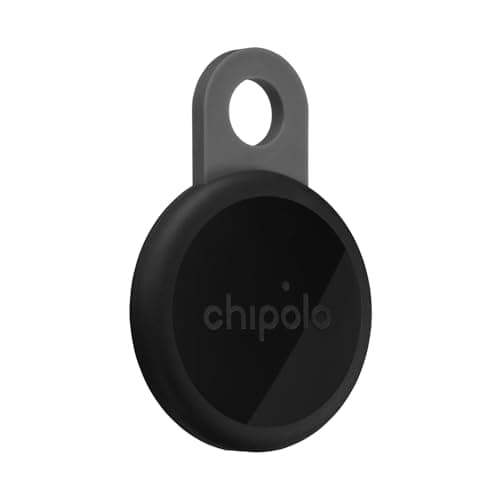
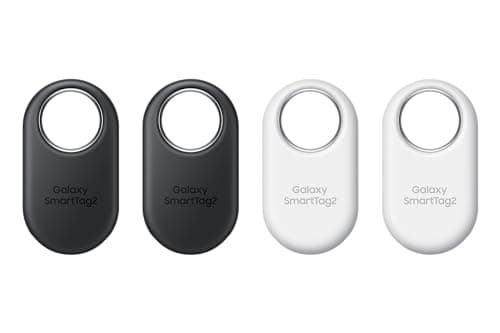
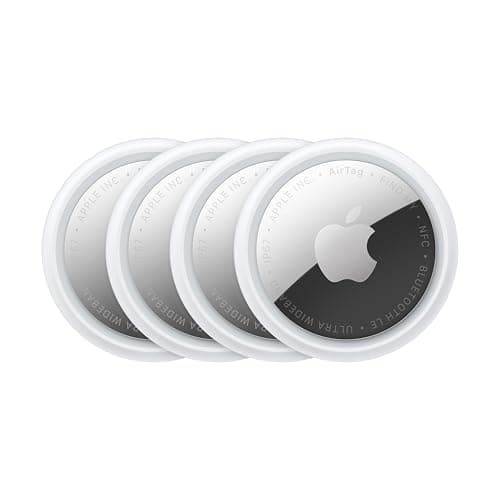
iPhone → an AirTag or any Apple Find My tag. Samsung Galaxy → a SmartTag2. Any other Android → a Chipolo, Pebblebee or Moto Tag. You are not sure → a Chipolo LOOP, which works on either.
An AirTag given to an Android user cannot be set up at all. This is the mistake worth avoiding.
The airline rule, so you can say it in the card
The question every traveler asks is whether a tracker can legally go in a checked bag, and the answer under FAA rules is yes.
The FAA requires spare, uninstalled lithium batteries to be carried in the cabin, not in checked baggage. A battery installed in a device is treated as part of that portable electronic device and is permitted in the hold. Lithium metal cells are limited to 2 grams of lithium content per battery, and a CR2032 coin cell is far below that.
So the tag travels in the suitcase; any spare coin cells travel in hand luggage. Individual airlines can be stricter than the FAA, so the carrier's own policy page is the final word. The rule in full, with sources.
A four-pack beats a single, for travel especially
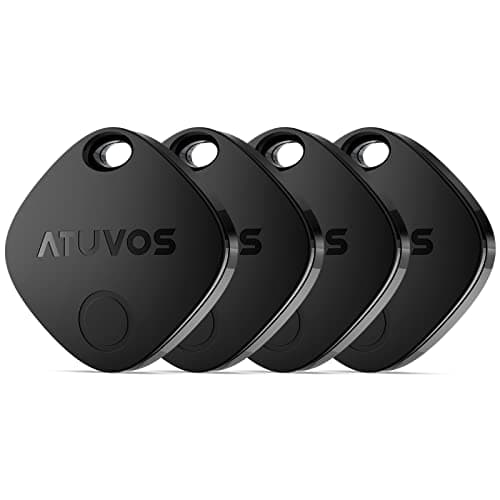
The bag that goes astray is never the one you tagged. A four-pack covers the hold bag, the carry-on, a partner's case and a ski or golf bag — and for Find My tags a four-pack costs about what one first-party tag does.
What you give up at that price is Apple's Precision Finding, which matters for keys in a cluttered room and not at all for a suitcase in a baggage hall. For luggage, cheap tags on a big network are genuinely the right purchase.
Two things to put in the card
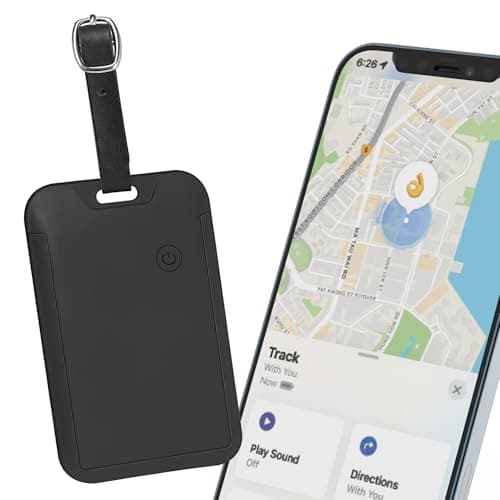
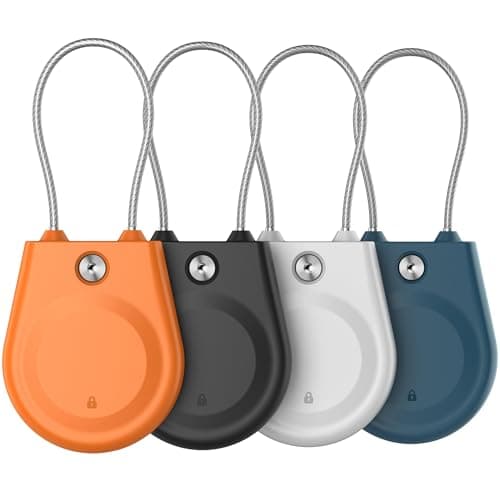
Hide it, do not hang it. A tag clipped to the outside of a handle is one a dishonest handler removes in two seconds. Inside the lining, in the laptop sleeve or under the fabric base panel is far better, and a fabric case does not block the signal meaningfully.
Turn on Lost Mode. With a phone number in the message, anyone who finds the bag — including an Android user — can tap their phone to the tag and see how to contact the owner. Without it, a stranger's phone shows them how to disable the tag instead. One setting, two completely different outcomes, and almost nobody does it in advance.
Coin cell or rechargeable, for a traveler
For travel specifically, coin cells have the edge. A rechargeable tag goes flat somewhere inconvenient, and hunting for a USB-C cable in a hotel at 6am to charge a luggage tag is its own kind of annoying — whereas a CR2032 is available in any airport shop.
Samsung states up to 500 days for the SmartTag2 and Apple states more than a year for an AirTag, both of which cover a great many trips.
What not to give a traveler
A cellular GPS tracker. It sounds like the premium option and it is the wrong one: luggage never goes anywhere without phones, and a cellular tracker adds a $9-to-$15 monthly bill for coverage the recipient will never use. Worse, baggage handling happens in large steel-framed buildings where cellular signal is often poor and staff phones are plentiful — so inside the facility the cheap tag frequently reports and the expensive tracker does not.
A sealed-battery tag. It expires after two or three years, which is a poor thing to give someone.
If you want to spend a little more
Stay under fifty dollars and buy more tags rather than a fancier one. Six cheap tags across every bag in a household does more for a traveler than one premium tag on the suitcase they happened to be thinking about.
Or add a hidden holder designed to sit flat inside a case, which costs a few dollars and genuinely improves the odds the tag is still there when the bag turns up.