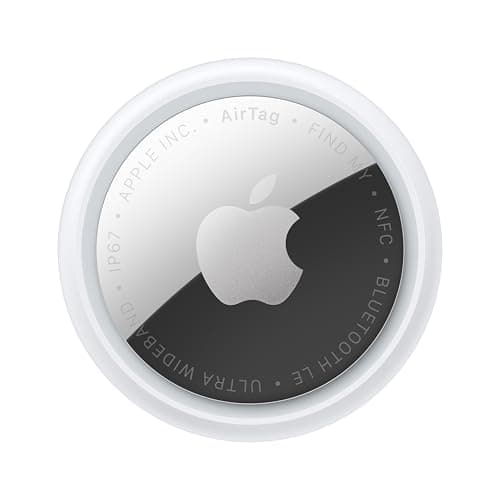
Best overall for luggage
Best luggage trackers
Six luggage trackers, all with no subscription, sorted by which phone you carry. Plus where to hide one and what the FAA actually says.

Travel & trade
The one category where the cheap answer is also the right answer. Bags and tool boxes live among people, and that is exactly where a no-fee tag works best.
By Mike M.Last updated
#ad — we earn a commission if you buy through the links on this page, at no cost to you. It never changes what we recommend, and the structural reason it cannot is that we recommend the no-subscription devices, which pay the least. Full disclosure.
Luggage is the best argument for Bluetooth tags that exists. A suitcase that goes missing goes missing in an airport, a baggage facility or a delivery depot — in other words, in the densest concentration of smartphones on the planet. A tag with no subscription will report its position from the back of a baggage hall with better accuracy than the airline's own system, which is why so many people now find their bag before the airline admits it has lost it.
The same logic covers tools, camera bags, golf clubs and anything else that travels with you and gets left behind. These things get lost around people. Tags work around people. A cellular tracker with a monthly plan solves a problem your suitcase does not have.
There are two exceptions worth naming. Tools stolen from a van and taken to a yard are a recovery problem, not a finding problem, and a thief who knows about tags will look for one — so the mount matters as much as the tag. And high-value gear left somewhere genuinely remote is a cellular job.
There is also a regulatory question that comes up constantly: can a tracker go in a checked bag? Under FAA rules, spare uninstalled lithium batteries must travel in carry-on, while batteries installed in a device fall under portable electronic devices and are permitted; lithium metal cells are limited to 2 grams of lithium content, which a CR2032 is far below. Individual airlines may be stricter, so check your carrier.
Start here
Best overall for iPhone travelers
The largest finding network in the world, which in a baggage hall full of iPhones means positions accurate enough to tell an airline which terminal to search.
#ad · live price from Amazon's product API. Disclosure.
Everything in this section
Best overall for luggage
Six luggage trackers, all with no subscription, sorted by which phone you carry. Plus where to hide one and what the FAA actually says.
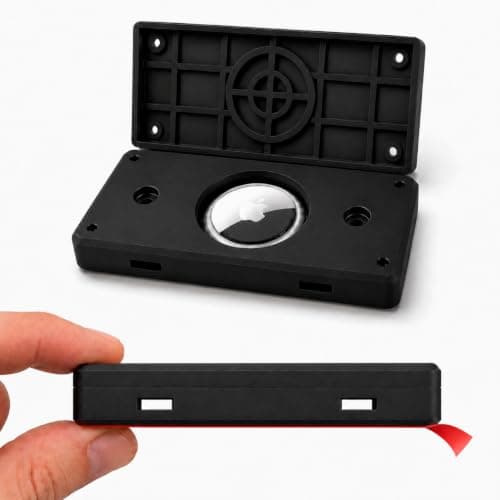
Best for tools
Why a hidden Find My tag recovers stolen tools better than DEWALT's or Milwaukee's own tags, plus the mounts that keep it hidden.
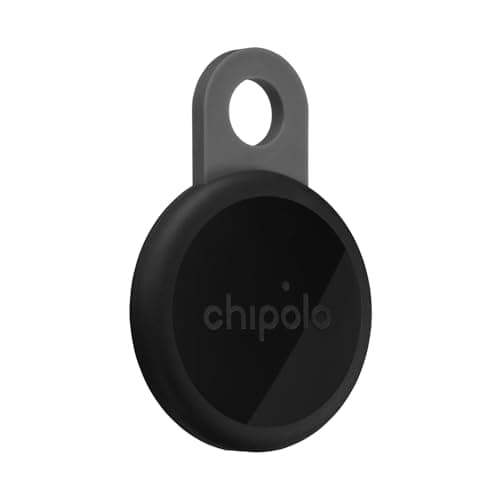
Best luggage tracker for Android
Find Hub luggage tags with no subscription, sorted by which Android phone you carry. Includes why SmartTag2 needs a Galaxy specifically.
Head to head
Five axes compared. For luggage a no-fee tag beats a cellular tracker on coverage where it matters, on cost, and on battery — with one narrow exception.
Guide
Hiding places ranked, Lost Mode set up before you fly, what silence in the air means, and how to present tracker data to an airline.
Guide
The FAA's installed-versus-spare battery rule, the 2-gram lithium limit, why a CR2032 is well under it, and why your airline's page is the final word.
Guide
Mounting a Find My tag in tool cases, why its network beats the manufacturers' own, and the two-tag approach organized tool theft calls for.

Guide
Where to hide a tag in a golf bag and a travel case, why hard cases attenuate the signal, and the two-tag setup that covers both risks.
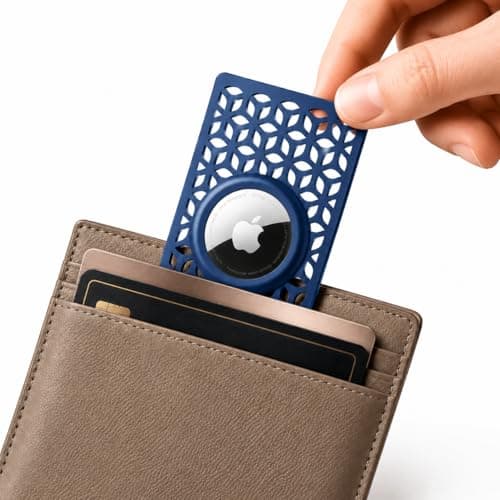
Best for camera gear
Flat card holders that fit divider pockets, the bag-versus-lens question, and the threshold at which expensive glass justifies cellular as well.
Without the monthly fee
Find Hub luggage tags with no subscription, sorted by which Android phone you carry. Includes why SmartTag2 needs a Galaxy specifically.
Crowd-network tags are at their strongest exactly where luggage goes wrong. An airport is the densest concentration of smartphones you will ever stand in. A baggage sorting facility is full of staff carrying phones. A delivery depot likewise. When a bag goes astray in that environment, a tag reports from inside the building, repeatedly, with a position accurate enough to tell an airline which terminal to look in.
That is why the now-familiar story — passenger knows where their bag is before the airline does — keeps happening, and why it almost always involves a tag that cost under forty dollars and nothing a month. There is no cellular tracking plan that improves on this, because the problem was never coverage.
The one adjustment worth making is where you put it. A tag clipped to the outside of a handle is a tag that a dishonest handler can remove in two seconds. Inside the lining, in a laptop sleeve, or under the fabric base is better. Several holders exist specifically to sit flat and out of sight inside a case.
Tools are different from luggage because the scenario is different: a tool box is not mislaid, it is stolen, and the person who took it may know about trackers. That changes what you are optimizing for.
First, the mount matters as much as the tag. A tag rattling loose in the bottom of a tool box gets found and thrown out. A screw-down or adhesive mount inside a case, or a purpose-made mount for a Milwaukee PACKOUT, means a thief has to be looking for it specifically.
Second, be realistic about the manufacturers' own systems. DEWALT's Tool Connect and Milwaukee's ONE-KEY tags are excellent inventory tools: they tell you which van a tool is in and flag what is missing at the end of a job. They are weak at recovery, because their crowd networks consist of other tradespeople running the same app, which is a rounding error against the Find My network. For recovery, hide a Find My tag.
Third, tag the case, not every tool. The realistic outcome of a van break-in is whole cases leaving, and a tag per case covers that at a sane cost.
The question we get asked more than any other in this category is whether a tracker can legally fly in a checked bag. The rule that governs it is the FAA's PackSafe guidance on lithium batteries.
The relevant distinction is installed versus spare. The FAA requires spare, uninstalled lithium batteries — including power banks and charging cases — to be carried in the cabin, not in checked baggage. A battery installed in a device is treated as part of that portable electronic device and is permitted in checked baggage. Lithium metal cells carry a limit of 2 grams of lithium content per battery, and a CR2032 coin cell holds a small fraction of that.
So: a tracker with its battery inside it, in a checked bag, is fine under FAA rules. A spare pack of CR2032s in the same bag is not — those belong in your carry-on.
Airlines may impose stricter rules than the FAA, and a few have tried. Your carrier's own policy page is the document that governs your specific flight. Check it, and check it for the airline you are actually flying rather than the one you usually fly.
Questions
Also worth reading

Everyday carry
Every tracker in this category is genuinely free to run. The decision is not price, it is which crowd network your phone belongs to.

Vehicles
A vehicle tracker is the one category where the subscription genuinely buys you something — and where you can still avoid it if you buy the right shape of device.