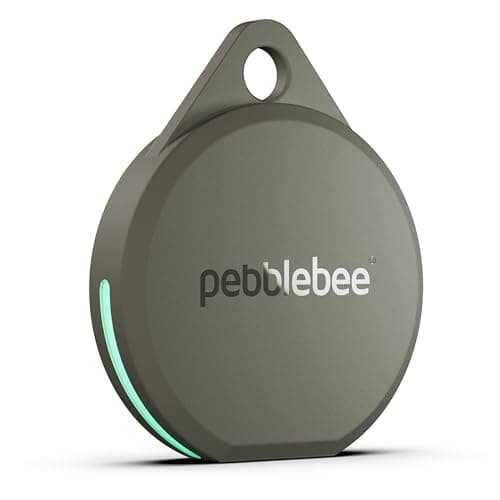
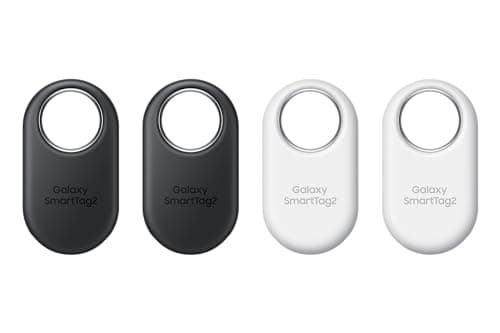
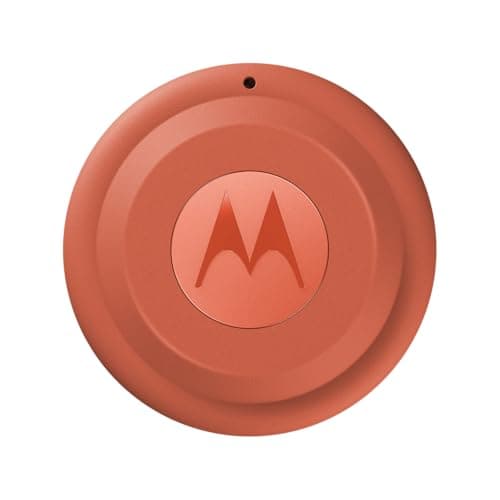
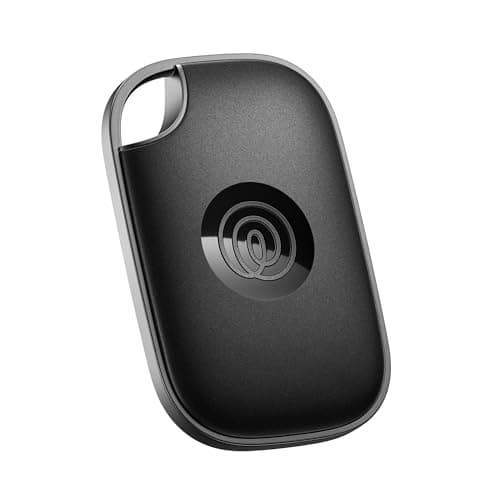
For several years the honest answer to “what is the best item tracker for Android” was “none of these are very good”. Google had no crowd network, Tile's own network was thin, and AirTag — the one with an enormous network — did not work on Android at all.
That is no longer true. Google Find Hub is a real network, open to third-party tags, and there are now several Android tags we would happily recommend. All of them cost nothing to run: Bluetooth tags have no SIM and no data, so Google and Samsung carry the traffic for free.
The trap, first, because it costs people money
The Samsung SmartTag2 needs a Galaxy phone, not just an Android phone. Samsung states the requirement as Galaxy smartphones or tablets running Android 9 or later, with UWB features needing a UWB-enabled Galaxy device.
A Pixel, a OnePlus, a Motorola or a Nothing phone will not set one up, whatever the packaging implies about Android compatibility. This is the single most useful thing to know before buying in this category, and it is the most common returned purchase.
Galaxy owner: the SmartTag2 is excellent and its 500 stated days is the longest battery claim in the business. Any other Android: a Find Hub tag.
And the other thing worth knowing: AirTags are out
An Android phone can detect a nearby AirTag and read its lost-mode message over NFC. That is the unwanted-tracking protection, not a feature — there is no Android app for pairing or using one, and Apple has given no sign there will be.
If you are on Android, stop reading AirTag reviews. The equivalent-quality options are Chipolo, Pebblebee and Motorola on Find Hub.
Find Hub versus SmartThings Find versus Tile
Google Find Hub is the general Android network and the one open to third parties. It is younger and smaller than Apple's Find My, and for a non-Samsung Android user it is comfortably the largest network available — because it is built from Android phones generally rather than one manufacturer's.
Samsung SmartThings Find includes Galaxy devices only. A smaller pool than Find Hub in principle, still a very large one in practice, and on a Galaxy it comes with UWB precision that Find Hub tags generally do not match.
Tile runs its own network made of other Tile users, the smallest of the three. Its genuine advantage is cross-platform parity: one tag, one app, identical on iPhone and Android. For a mixed household that is exactly right, and it is why Tile Pro is on this page despite the network.
Chipolo's dual-network tags are the hedge worth knowing about: one tag, either network, chosen at setup, so a phone platform switch in two years does not turn your tags into landfill.
What Android does better than iPhone here
One genuine advantage worth naming: Android's unwanted-tracker scan is a manual button you can press.
Under Settings, Safety & emergency, Unknown tracker alerts, there is a “Scan now” that takes about ten seconds, covers Find Hub tags and Apple AirTags, and works on Android 11 and later without Location Services enabled. Being able to deliberately sweep a hire car or a hotel room on demand is a better experience than waiting for a passive alert, and it is worth knowing you have it. We walk through it here.
Pick by use, once the network is settled
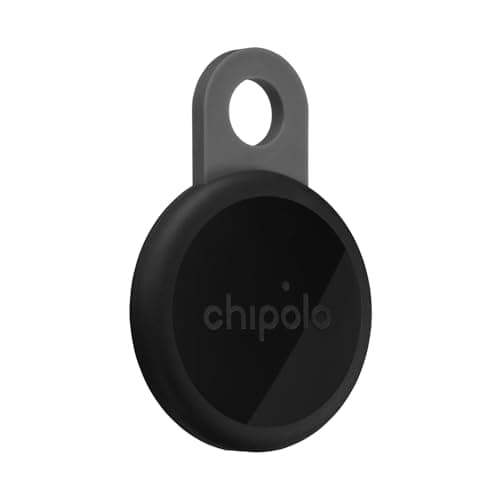
Keys. The loudest option — Pebblebee at a stated 130 dB — because keys are lost indoors where the alarm does the work. Or the Chipolo LOOP, which is nearly as loud and has a hole for the keyring.
Wallet. Chipolo CARD or Pebblebee Card 5. These are the main card options that work on Find Hub; most card trackers are Find My only.
Luggage. Any Find Hub tag, hidden inside the case rather than clipped to a handle. Battery life matters most here, so a coin-cell tag has an edge over a rechargeable one.
Bikes and tools. Find Hub tags in hidden mounts. The network is smaller than Apple's, which matters more for recovery than for anything else on this list — worth knowing rather than worth avoiding.
Battery choice on Android
Samsung states up to 500 days for the SmartTag2's replaceable CR2032, which is the longest figure available on any platform. Chipolo states about a year per charge and Pebblebee states up to 12 months, both rechargeable over USB-C.
For tags you will forget about — luggage, a spare key, a tool case — prefer the coin cell. For tags you handle regularly, rechargeable is tidier and avoids a drawer of dead cells.