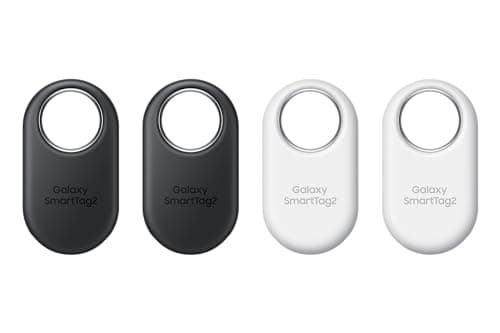
Every manufacturer figure in this category is honest and almost none of them is comparable, because they measure different things under different assumptions. Here is what each one actually says.
The item-tracker claims
Samsung SmartTag2: up to 500 days. On a replaceable CR2032. The longest claim in mainstream item tracking, roughly sixteen months.
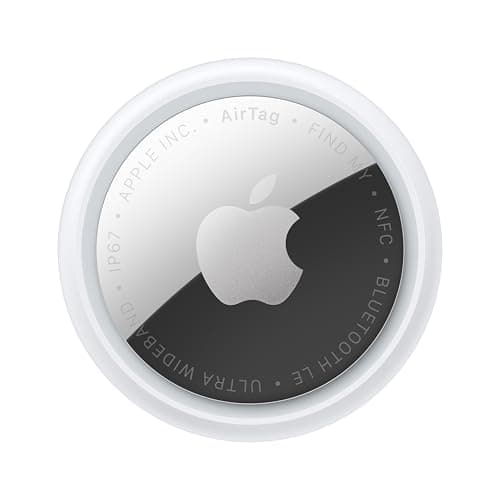
Apple AirTag: more than a year. On a replaceable CR2032 — and Apple publishes its usage model, which is unusually transparent: the figure is based on everyday average usage of playing sound and Precision Finding, with battery life varying by usage, environmental conditions and the replacement battery's manufacturer.
Chipolo LOOP: about a year per charge. Rechargeable over USB-C, with the cable not included.
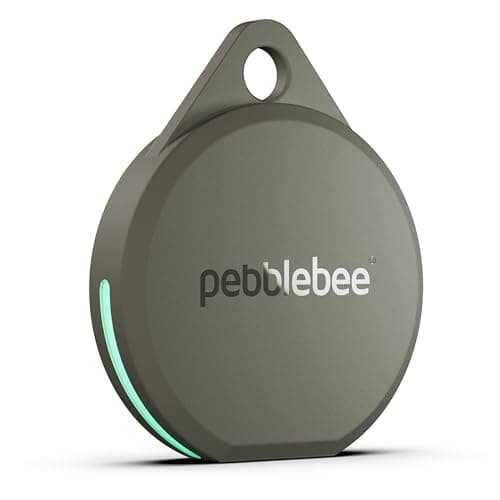
Pebblebee Clip 5: up to 12 months per charge. Rechargeable over USB-C, also without the cable, and Pebblebee frames the rechargeable design as eliminating wasteful coin cells.
Tile: replaceable on the Pro and Mate, sealed on the Slim and Sticker. The sealed ones expire rather than needing a battery, typically after two or three years.
So the honest summary for tags: all of them are roughly annual. Samsung is ahead on paper, the gap is not large, and how often you ring the tag matters more than which brand you bought.
Why the cellular figures cannot be compared at all
For a cellular tracker the dominant variable is not the battery — it is the reporting interval.
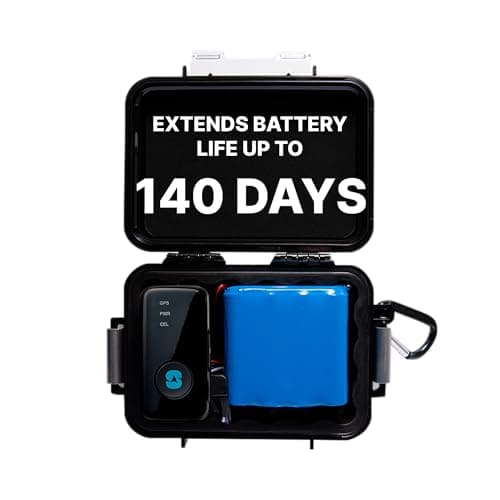
The same hardware can last a week reporting every sixty seconds, or four months reporting twice a day. A manufacturer quoting 140 days is quoting a long interval; one quoting a week is quoting a short one. Neither is lying, and the two numbers are meaningless beside each other without the interval attached.
Which means: when comparing cellular trackers, ask for days at a stated reporting interval, or ignore the battery claim entirely.
What actually drains an item tracker
Ringing it. The speaker is by far the largest draw. A tag you ping fifteen times a day will not reach the quoted figure, and Apple says so in its own footnote.
Precision Finding. The Ultra Wideband radio is power-hungry while active, which is why it is only used at close range and on demand.
Cold. Lithium chemistry performs noticeably worse in cold conditions. A tag on a dog collar through a northern winter will do less than the stated figure, and a tag in a car in freezing weather may report a low battery that recovers when it warms up.
Nothing else, much. The Bluetooth beacon itself is extremely low power — that is the whole point of BLE — which is why a tag sitting in a suitcase for a year barely moves the needle.
What drains a cellular tracker
Reporting interval, overwhelmingly. Every report means waking the GPS receiver, obtaining a fix, waking the modem and transmitting. Each of those is expensive compared with a Bluetooth beacon.
Poor signal. A tracker struggling to reach a tower transmits at higher power and retries. A device in a marginal-coverage area can have dramatically worse battery life than the same device in a city.
Cold GPS fixes. A device that has been off or stationary for a long time takes longer to establish position, which costs more per report.
Motion-triggered modes help enormously. A device that sleeps while stationary and wakes on movement can last many times longer on an asset that does not move — which is why this one setting is worth more than any battery specification on a trailer.
Practical rules
Treat every figure as an order of magnitude. Tags last about a year. Cellular trackers last days to months and you will be charging them.
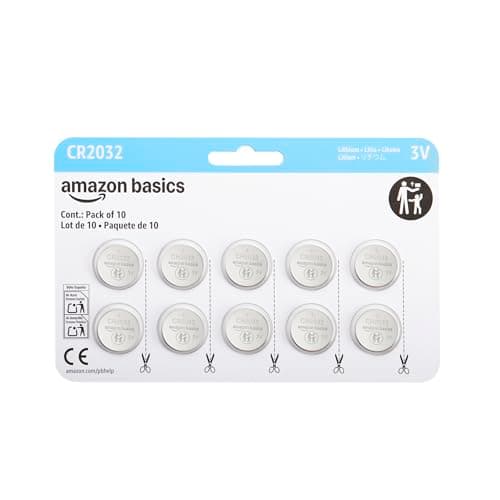
For anything you will forget about, pick a replaceable coin cell. A dead tag revived in two minutes with a supermarket battery beats a slightly longer-lasting one you need a cable for.
For a cellular device on an asset you visit rarely, pick at least three times the gap between visits — because stated figures are best cases and cold weather roughly halves lithium performance.
Ring your tags once or twice a year. A tag that does not ring has a dead battery, and the low-battery notification is easy to dismiss on a busy day without registering.
The safety note
A swallowed coin cell causes severe internal injuries within hours through electrolysis rather than poisoning, and it is an emergency rather than a watch-and-wait. Store spares in their retail card and locked away, treat a loose battery door as a problem to fix today, and in a house with toddlers prefer rechargeable tags — which is a genuine reason to choose them independent of any specification.