Skip to content
Tag & Tether

Head to head · Tracker Comparisons

AirTag vs Tile

One has the largest finding network in the world. The other works on both phone platforms. Which of those you need settles it.

By Mike M.Last updated

#ad — we earn a commission if you buy through the links on this page, at no cost to you. It never changes what we recommend, and the structural reason it cannot is that we recommend the no-subscription devices, which pay the least. Full disclosure.


These two get compared constantly and the comparison usually misses the point, because they are good at different things rather than being better and worse versions of the same thing.

Axis 1: network size — AirTag, decisively

A tag has no idea where it is. Its position only exists because somebody else's phone heard it and reported in, which makes network size the single most important specification in this category.

Apple's Find My network is built from essentially every iPhone in existence. Tile's network is built from other Tile users. That is not a close comparison, and it is why an AirTag in a taxi reports and a Tile in a taxi sometimes does not.

Axis 2: platform — Tile, and it is the reason to buy one

AirTag needs an iPhone. Not just for setup — there is no Android app at all, and the ability of an Android phone to read a found AirTag over NFC is the anti-stalking mechanism rather than a feature.

Tile works identically on iPhone and Android from one app and one account. For a household where one person has an iPhone and another an Android, that is a genuine capability nothing else mainstream offers, and it is the honest case for buying a Tile.

Axis 3: precision — AirTag

Apple's Ultra Wideband Precision Finding walks you to the item by direction and distance in the last ten meters. Tile has no equivalent; you get a map pin and a ring.

For things lost in a cluttered room, that difference is real.

Axis 4: loudness — Tile Pro, marginally; neither, really

Tile markets the Pro as its loudest, and it is louder than an AirTag. Both are beaten comfortably by Pebblebee at a stated 130 dB and Chipolo at about 125 dB, which is worth knowing if the thing you mostly do is hunt for keys indoors.

Axis 5: subscription — AirTag wins on principle

AirTag has no paid tier at all, and the reason is structural: there is no recurring cost for Apple to recover, because the data that finds your tag is carried by strangers' phone plans.

Tile has no subscription for finding either — but smart alerts, 30-day location history and item reimbursement now sit behind Life360 memberships published at $9.99, $16.99 and $24.99 a month. Those are the features in most Tile advertising. $9.99 a month is $359.64 over three years.

Axis 6: battery — a draw with a catch

Apple states more than a year for an AirTag's CR2032, a cell available in any shop. Tile Pro is also replaceable but takes a CR2477, which is thicker and far less commonly stocked. Tile Mate takes a CR2032. The Slim and Sticker are sealed and expire.

Axis 7: form factor — Tile

Tile's tags have a keyring hole. The AirTag does not, so it needs a holder. A small point, and a genuinely annoying one.

The short answer

Quick picks

Ranked by what each one costs to own for three years, not by sticker price. The plan column is the one most comparisons leave out.

#ProductBest forPlan / 3 yrPrice
01
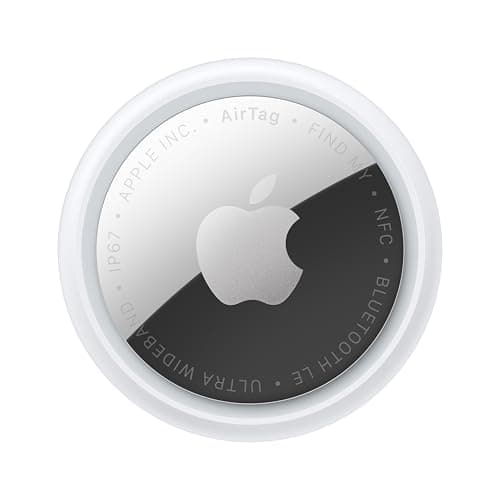
Apple Apple AirTag (2nd generation)
Apple AirTag (2nd generation)

The largest finding network there is, plus Precision Finding on iPhone. No subscription at any tier, and no keyring hole either.

iPhone householdsNo monthly fee

$0 + batteries

$24.00Amazon
02
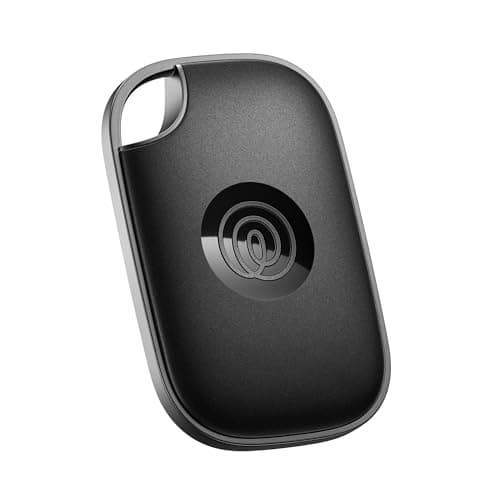
Life360 Tile Pro
Tile Pro

The only mainstream tag that behaves identically on both platforms from one app. Smaller network, and the features in the marketing need a Life360 membership.

Mixed iPhone and Android householdsOptional plan

$0, or from $9.99/mo

$34.20Amazon
03
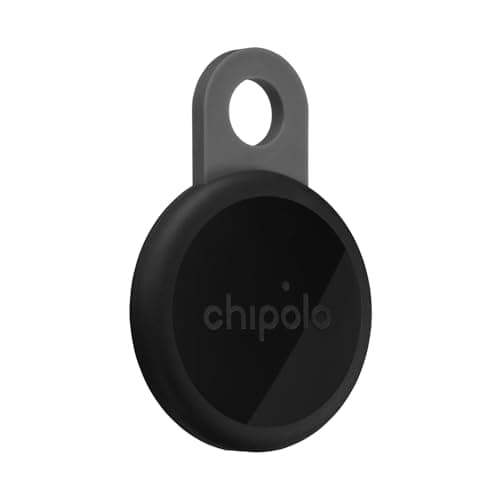
Chipolo Chipolo LOOP
Chipolo LOOP

Dual-network like a Tile, on a far larger network, louder than either, with a loop built in and no paid tier to decline.

Neither: the option that beats bothNo monthly fee

$0

$33.15Amazon
04
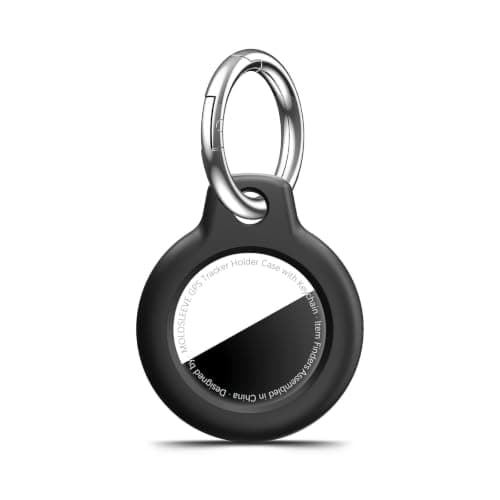
MOLOSLEEVE AirTag keyring case (multi-pack)
AirTag keyring case (multi-pack)

The AirTag has no hole, so budget a few dollars for a shell. Tile's tags have one built in, which is a small but real point in their favor.

If you choose the AirTagNo monthly fee

$0

$4.99Amazon

#ad · Live prices from Amazon's product API, as of October 8, 2026. Where we have no verified live price we show none — a gap beats a number that has rotted. Plan figures are the brands' own published rates, cited in Sources below.

In detail

The picks, in full

Apple Apple AirTag (2nd generation)
$24.00View on Amazon

$29.0017% off

Price as of October 8, 2026. Prices move — Amazon's at checkout is the one that counts.

#ad · we may earn a commission from this link to Apple AirTag (2nd generation)

Top pickNo monthly fee#01 · Apple

Apple AirTag (2nd generation)

iPhone households

The largest finding network there is, plus Precision Finding on iPhone. No subscription at any tier, and no keyring hole either.

The subscription reality

No subscription. The only recurring cost is a CR2032 roughly once a year, which is pennies.

Over three years:
about $3 in coin cells

Specs, as published by Apple

  • User-replaceable CR2032 coin cell; Apple states it runs more than a year
  • IP67 (1 m for up to 30 minutes, IEC 60529)
  • Ultra Wideband Precision Finding, 1.5x the range of the first generation
  • Speaker 50% louder than the first generation

Good

  • No subscription, and Apple has never charged one
  • The Find My network is the largest crowd network in the world, so a lost AirTag in a populated area usually reports within minutes
  • Precision Finding walks you to it by distance and direction, not just a map pin
  • Battery is a coin cell from any supermarket, not a sealed pack

Not so good

  • iPhone only for setup and full use — there is no Android app
  • It has no GPS of its own: it reports when an Apple device walks past it, so it is a finder, not a tracker
  • No keyring hole, so you are buying a holder as well

Skip it if

you are on Android, or you need to watch something move in real time — an AirTag only knows where it was when someone last walked past it.

Life360 Tile Pro
$34.20View on Amazon

Price as of October 8, 2026. Prices move — Amazon's at checkout is the one that counts.

#ad · we may earn a commission from this link to Tile Pro

Optional plan#02 · Life360

Tile Pro

Mixed iPhone and Android households

The only mainstream tag that behaves identically on both platforms from one app. Smaller network, and the features in the marketing need a Life360 membership.

The subscription reality

Finding works on the free tier. Life360's paid memberships add location history, smart alerts and item reimbursement — they are optional, but they are how the brand now makes money from you.

Published monthly:
$9.99 (Silver), $16.99 (Gold), $24.99 (Platinum)
Over three years:
$0, or from $359.64 on the cheapest paid tier

Specs, as published by Life360

  • Replaceable CR2477 coin cell
  • Tile's longest stated Bluetooth range of the range
  • Works on iPhone and Android from the same app
  • Tile's loudest ring

Good

  • The one mainstream tag that works properly on both iPhone and Android with one app
  • Replaceable battery, unlike the sealed Tiles of a few years ago
  • Basic finding does not require a paid plan

Not so good

  • Tile's crowd network is far thinner than Apple's, which matters most when the item is far away
  • The useful extras — Smart Alerts, 30-day history, item reimbursement — are behind a Life360 membership
  • CR2477 is a less common battery than CR2032

Skip it if

everyone in your household has an iPhone. You would be paying for cross-platform support you will never use, on a smaller network.

Chipolo Chipolo LOOP
$33.15View on Amazon

$39.0015% off

Price as of October 8, 2026. Prices move — Amazon's at checkout is the one that counts.

#ad · we may earn a commission from this link to Chipolo LOOP

No monthly fee#03 · Chipolo

Chipolo LOOP

Neither: the option that beats both

Dual-network like a Tile, on a far larger network, louder than either, with a loop built in and no paid tier to decline.

The subscription reality

No subscription, now or later. The purchase price is the whole cost of ownership.

Over three years:
$0

Specs, as published by Chipolo

  • Rechargeable over USB-C; Chipolo states about a year per charge
  • IP67, up to 30 minutes in 1 m of water
  • About 125 dB stated alarm
  • Up to 120 m (400 ft) stated Bluetooth range

Good

  • Works with Apple Find My or Google Find Hub, so it is the one tag you can buy without knowing which phone you will own next
  • No subscription at all, and Chipolo's own app features are free
  • Loud — 125 dB stated is well above an AirTag
  • Built-in loop, so it goes straight on a keyring

Not so good

  • You pick one network at setup; switching later means a reset
  • Rechargeable means a dead tag is a tag you have to find a cable for, not swap a coin cell into
  • USB-C cable is not in the box

Skip it if

you would rather drop in a fresh coin cell than remember to charge a keyring once a year.

MOLOSLEEVE AirTag keyring case (multi-pack)
$4.99View on Amazon

Price as of October 8, 2026. Prices move — Amazon's at checkout is the one that counts.

#ad · we may earn a commission from this link to AirTag keyring case (multi-pack)

No monthly fee#04 · MOLOSLEEVE

AirTag keyring case (multi-pack)

If you choose the AirTag

The AirTag has no hole, so budget a few dollars for a shell. Tile's tags have one built in, which is a small but real point in their favor.

The subscription reality

No subscription, now or later. The purchase price is the whole cost of ownership.

Over three years:
$0

Specs, as published by MOLOSLEEVE

  • Shockproof shell with a keyring
  • Fits 1st and 2nd generation AirTag
  • Multi-pack

Good

  • Solves the AirTag's missing keyring hole for pocket change
  • Protects the shell
  • Multi-pack

Not so good

  • Adds bulk
  • Cheap plastic
  • Does not improve the alarm

Skip it if

you are using a Chipolo or SmartTag2 — those already have a hole.

The recommendation

Everyone in the household has an iPhone: AirTag. The network advantage is large, Precision Finding is genuinely useful indoors, and there is no subscription being dangled. Budget three dollars for a keyring shell.

Mixed iPhone and Android household, one tag for everyone: Tile Pro. It is the only mainstream option that does this, and the smaller network is the price.

Android only: neither. An AirTag will not work and a Tile puts you on the smallest of the four networks. Buy a Find Hub tag.

The third option, which beats both for a lot of people

Chipolo's dual-network tags are the answer most comparisons do not mention, and they dominate Tile on every axis Tile competes on:

  • Cross-platform — works on Apple Find My or Google Find Hub, chosen at setup
  • Much larger network than Tile's, whichever one you pick
  • Louder — a stated 125 dB against Tile's ring
  • Keyring hole built in
  • No paid tier at all, so nothing to decline

The one thing it does not do is serve an iPhone user and an Android user from the same tag and account simultaneously — you choose a network per tag at setup. If that is the exact capability you need, Tile remains the answer. Otherwise Chipolo is the better buy.

On privacy, briefly

Both are reasonable. Apple describes the Find My relaying as anonymous and encrypted, with the relaying phone's owner learning nothing about the tag. Tile's model is similar in principle on a smaller network.

The meaningful privacy difference is on the receiving end. Both platforms now detect trackers that are not yours moving with you, and both Apple's and Google's implementations cover AirTags explicitly. Tile has had unwanted-tracking protections retrofitted rather than designed in from the start. How detection works on both platforms.

What neither one does

Real-time tracking. Both are Bluetooth beacons that report when a phone passes — so for a vehicle, a roaming dog or a person, both are the wrong category and no amount of comparing them helps. That decision is here.
How we picked

We did not lab-test these trackers

Everyone in this category claims to have tested twenty devices. We have not tested any of them, and we say so on every page. What we did instead: read each manufacturer's published specifications and cite them with the date, find the actual subscription price and cite that too, and work out what thirty-six months of ownership costs at those published figures. Device prices come live from Amazon's API and expire after 48 hours rather than going stale. Where a figure could not be sourced to the manufacturer, the page says the spec is unconfirmed rather than borrowing it from a competitor's review. The full method is on the methodology page.

Working out what a tracker really costs? See the three-year cost of every tracker, compared.

Questions

Frequently asked

Which is better, AirTag or Tile?
If everyone in your household carries an iPhone, AirTag, and it is not close — the Find My network is vastly larger than Tile's, Precision Finding walks you to the item by direction, and there is no subscription being dangled. If your household is mixed iPhone and Android, Tile Pro is the honest pick, because it is the only mainstream tag that works identically on both platforms from a single app. You pay for that in network size.
Does Tile work better than AirTag on Android?
It is one of the few that works at all — AirTag has no Android app, so the comparison on Android is between Tile and the Find Hub tags. Against Find Hub tags like Chipolo, Pebblebee and Moto Tag, Tile loses on network size and loudness. Its advantage is parity: one tag, one account, identical on iPhone and Android, which matters for a mixed household and not otherwise.
Is Tile Premium worth it compared to AirTag?
At $9.99 a month for the cheapest Life360 paid tier, that is $359.64 over three years — more than ten Tile Mates — for smart alerts, 30-day location history and item reimbursement. AirTag gives you separation alerts with no subscription at all, which covers the feature most people actually want from that list. If you want the item reimbursement specifically, price it against what you are insuring.
What is the best alternative to both AirTag and Tile?
Chipolo's dual-network tags, which most comparisons omit. They work on Apple Find My or Google Find Hub, so they are cross-platform like a Tile but on a far larger network; they are louder than either at a stated 125 dB; they have a keyring hole the AirTag lacks; and there is no paid tier to decline. The one thing they do not do is serve an iPhone and an Android user from one tag simultaneously.
Do AirTag and Tile use the same kind of battery?
Both are replaceable on the main models, with a catch. The AirTag and the Tile Mate take a CR2032, which is in every supermarket. The Tile Pro takes a CR2477, which is thicker and considerably harder to find at short notice — buy a pack with the tag. The Tile Slim and Tile Sticker have sealed batteries, so they expire after two or three years rather than needing a new cell.

Read next

Where the figures came from

Sources

Every specification and plan price on this page traces to one of these, read on the date shown. Device prices are live from Amazon and stamped separately.

  1. Apple — AirTag product page (battery, IP67, Precision Finding) — accessed 2026-10-05
  2. Life360 — membership pricing (Silver $9.99, Gold $16.99, Platinum $24.99 per month) — accessed 2026-10-05
  3. Chipolo — LOOP product page (battery, IP67, 125 dB, 120 m) — accessed 2026-10-05
  4. Pebblebee — Clip 5 product page (12 months per charge, IP66, dual network) — accessed 2026-10-05
  5. Apple Support — if you get an alert that an AirTag or Find My network accessory is with you — accessed 2026-10-05
  6. Amazon Product Advertising / Creators API — live prices and product images — accessed 2026-10-05