These are the three names most people know, and the comparison is unusually easy because they barely compete. Each is tied to a platform, and the platform requirement eliminates two of the three before you look at a single specification.
Platform: the step that settles it
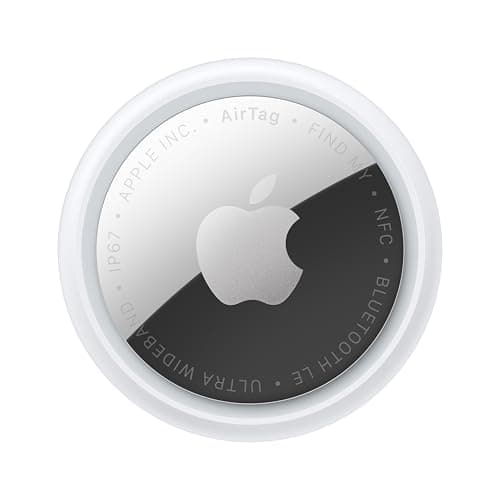
AirTag — iPhone only. There is no Android app. An Android phone can read a found AirTag over NFC, which is the anti-stalking mechanism rather than a feature.
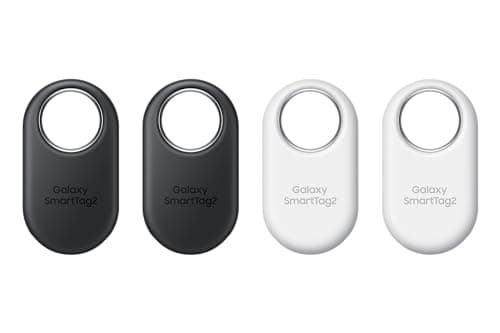
SmartTag2 — Galaxy only. This is the one that catches people out. Samsung states the requirement as Galaxy smartphones or tablets running Android 9 or later, with UWB features needing a UWB-enabled Galaxy device. A Pixel, a OnePlus or a Motorola phone cannot pair one, whatever the packaging implies about Android.
Tile — both. Identical behavior on iPhone and Android from one app and account, which is the only reason to choose it and a genuinely good one for a mixed household.
Network size
AirTag: Apple's Find My, built from essentially every iPhone. The largest by a wide margin.
SmartTag2: SmartThings Find, Galaxy devices only. Smaller than Find My, still very large.
Tile: other Tile users. Smallest of the three by some distance, and the main cost of its cross-platform advantage.
Battery, from the manufacturers
SmartTag2: Samsung states up to 500 days on a replaceable CR2032. The longest claim on this page.
AirTag: Apple states more than a year on a replaceable CR2032, based on everyday average usage of playing sound and Precision Finding.
Tile Pro: replaceable, but a CR2477 — thicker and much harder to find in a shop. Tile Mate takes a CR2032.
Precision and range
AirTag and SmartTag2 both have Ultra Wideband, giving a direction-and-distance walk-to-it mode on compatible hardware. Tile has no equivalent.
On stated range, Samsung quotes up to 120 m over Bluetooth LE 5.3 for the SmartTag2. These are open-field figures that collapse through walls, and the crowd network matters far more in practice.
Water and physical
Both the AirTag and the SmartTag2 are IP67 — Apple cites a maximum depth of 1 meter for up to 30 minutes under IEC 60529, and Samsung the same for freshwater. The SmartTag2 is the physically largest at 28.8 × 52.44 × 8.0 mm and 13.75 g, and the only one of the three with a hole in it.
Subscription
AirTag and SmartTag2: none, at any tier. Tile: finding is free, but smart alerts, 30-day history and item reimbursement sit behind Life360 memberships at a published $9.99, $16.99 and $24.99 a month.
The recommendation, in one line each
iPhone household: AirTag. Largest network, Precision Finding, no paid tier. Add a three-dollar keyring shell.
Galaxy household: SmartTag2. 500 stated days, UWB, and a hole you can thread a keyring through. Confirm your phone is a Galaxy, not merely Android.
Mixed household, one tag for everyone: Tile Pro, with the smaller network understood.
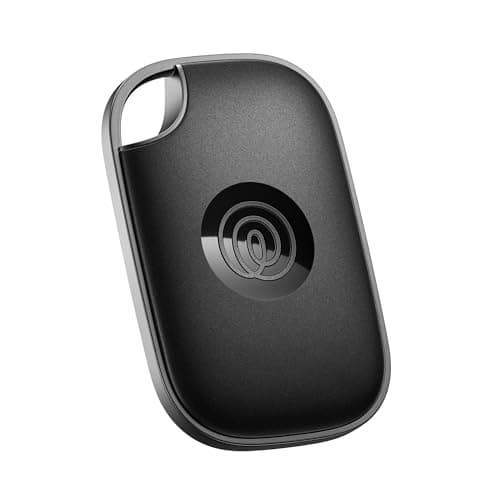
Non-Samsung Android: none of the three. SmartTag2 will not pair, AirTag will not work, and Tile puts you on the smallest network. Buy a Find Hub tag — Chipolo, Pebblebee or Moto Tag.
The fourth option, and why it is often the right one
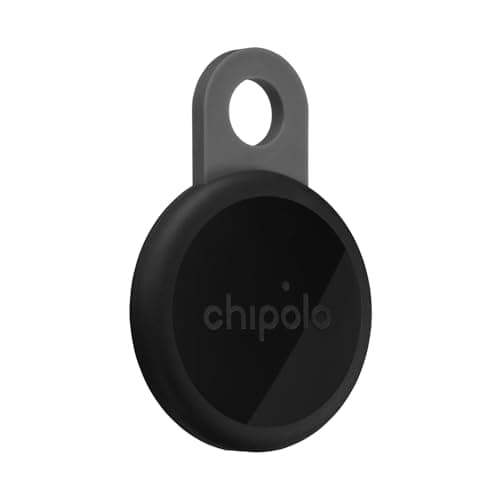
Chipolo's LOOP is not one of the three famous names and it beats all of them on several axes at once: it runs on Apple Find My or Google Find Hub, it is louder than any of them at a stated 125 dB, it has a loop built in, and there is no paid tier.
The strategic advantage people under-value: it survives you changing phone. If you switch from iPhone to Android in two years, your AirTags become landfill and your SmartTags become landfill. A dual-network tag is reset and re-paired to the other network.
It gives up Precision Finding, which only Apple's and Samsung's own tags do on their respective platforms. For most people, most of the time, that is a smaller loss than being locked to a platform.
What all three do equally badly
Real-time tracking. All three are Bluetooth beacons that report when somebody's phone passes, so for a vehicle, a roaming dog or a person, all three are the wrong category. Comparing them more carefully will not help with that problem. The tag-versus-tracker decision is here.
Which one to buy if you cannot decide
Buy the one matching your phone, buy the loudest variant of it, and buy a multi-pack of whichever cheap tag shares that network for everything else. The network is the thing you are buying; the brand on the plastic matters much less than the comparisons suggest.