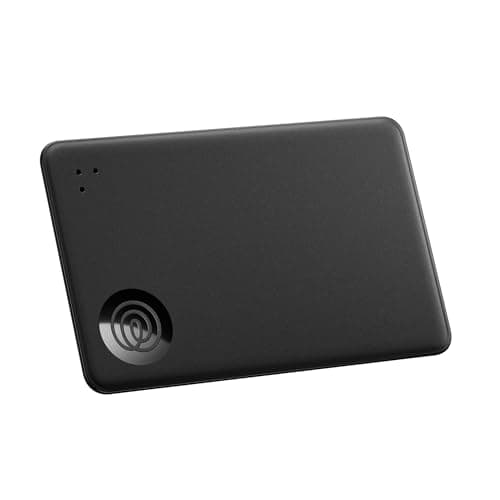
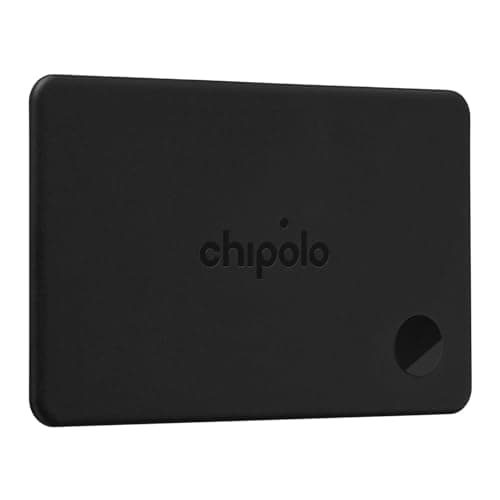
Wallet trackers look like a thickness contest and they are actually a battery contest. The thickness differences between serious card trackers are small; the battery difference is the difference between a one-time purchase and a repeat one.
The sealed-battery problem
The first generation of wallet cards had sealed, non-replaceable batteries. When the battery died — two or three years in — the product was finished, and you bought the same thing again.
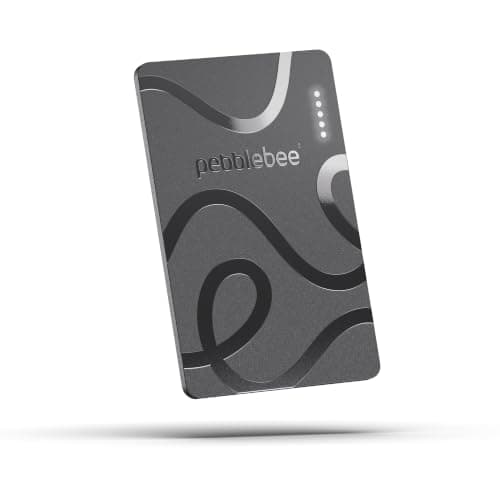
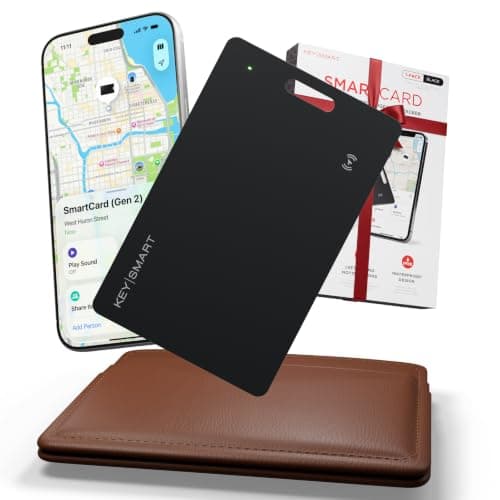
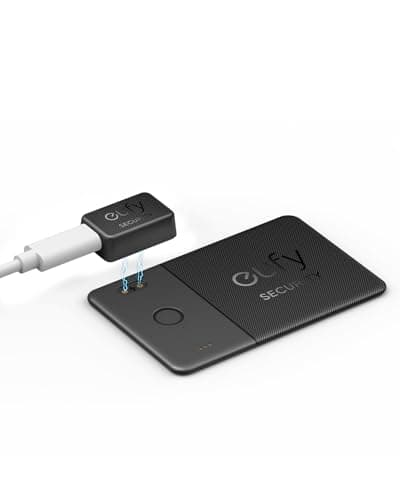
That is a subscription with extra steps, and it quietly undoes the reason people shop for no-fee trackers in the first place. It is also why the rechargeable cards from Chipolo, Pebblebee, KeySmart and eufy are worth their small premium: they are genuinely a single purchase.
The one sealed card we still list is the Tile Slim, and only because it has a capability none of the others do — identical behavior on iPhone and Android from one app and account. If that is what you need, the expiry date is the price.
Then thickness, and what to measure
A card tracker is thicker than a credit card. Not dramatically, but a tight wallet has a budget and the tracker spends several cards' worth of it.
Before buying, do the thing nobody does: take a card out of your wallet and see whether the wallet still closes comfortably. If it does not, no card tracker will fit either, and the answer is a different wallet or a tag on your keys instead.
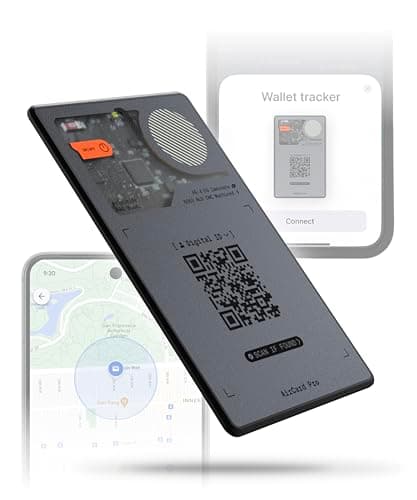
If millimeters genuinely matter, the Rolling Square card is the thinnest here and worth the premium specifically for that.
Accept that it will be quiet
Card trackers are quieter than keyring tags, all of them, because there is no room for a proper speaker in a 2mm card. That is physics, not a brand weakness.
The consequence: a card tracker is good at telling you the wallet is at the restaurant you left an hour ago, and poor at finding it down the back of the sofa. If what you need is the second, a loud keyring tag in the same bag does the job better.
Charging a wallet card, which is the real friction
The honest weakness of rechargeable cards is that a wallet card is the easiest thing in your life to forget to charge. It lives in a wallet, you never look at it, and the low-battery notification arrives on a day you are busy.
Two habits that work. Charge it on a fixed date — the first of a month you will remember, or whenever the clocks change. And when the notification arrives, do it that evening rather than “soon”, because “soon” is how a card ends up flat for six months.
A charge roughly once a year is the typical figure, so this is twice-a-year attention at worst.
What a wallet tracker genuinely does
Worth setting expectations, because this is a category where people are often disappointed for avoidable reasons.
It tells you where you left your wallet. The restaurant, the taxi, the office, the gym. This is the high-value case and it works well, because all of those places have phones in them.
It does not recover a stolen wallet. A pickpocket removes cards and cash and discards the wallet, often within a few hundred meters — so a tracker leads you to a bin. Useful for the police report; not a recovery tool.
It will not find a wallet in your own house quickly, because it is too quiet. For that, a loud keyring tag is the better tool.
Separation alerts: this is the feature to turn on
For a wallet specifically, the alert when you walk away from it is worth more than the finding. Leaving a wallet behind is the actual failure mode, and a notification as you leave the restaurant is far better than a map twenty minutes later.
Set trusted locations up properly on day one so your own home does not generate alerts, and the feature stays on instead of being disabled in annoyance in week two.
Which one, by phone
iPhone. Chipolo CARD or Pebblebee Card 5 — both rechargeable and dual-network, so they survive a platform switch. KeySmart or eufy if you want a lower price and Find My only is fine.
Android. Chipolo CARD or Pebblebee Card 5, in Find Hub mode. These are genuinely the only good options, because most card trackers are Find My only.
Mixed household, one card for both. Tile Slim, with the sealed battery understood and budgeted for.
The alternative nobody mentions
If you carry both keys and a wallet, consider not buying a card at all. One loud keyring tag covers both, because the two are usually in the same bag or pocket, and it is louder, cheaper and has a replaceable battery.
Buy a card when the wallet genuinely travels separately from the keys — which for a lot of people it does not.