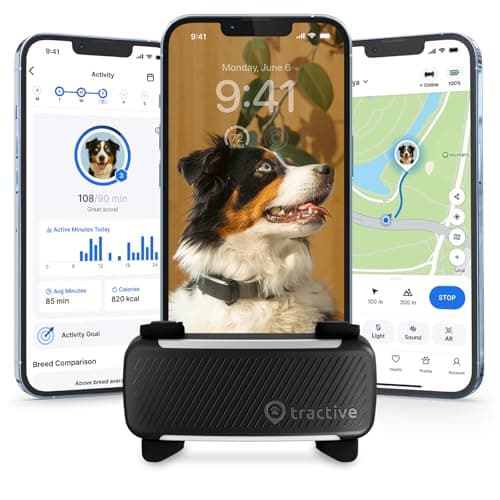
Best overall for dogs
Best GPS trackers for dogs
Seven dog trackers from a $7 collar holder to a $698 radio handheld, each with its real three-year cost. Most owners need less than they are sold.

Pets
This is the category where the subscription is hardest to avoid and where getting the choice wrong costs the most — in money, and occasionally in a dog.
By Mike M.Last updated
#ad — we earn a commission if you buy through the links on this page, at no cost to you. It never changes what we recommend, and the structural reason it cannot is that we recommend the no-subscription devices, which pay the least. Full disclosure.
Start with the question that decides everything: does your animal actually leave? A dog that stays in a fenced garden and bolts once a year through an open gate is a completely different purchase from a dog that works a field or a cat that ranges three streets. The first needs a $25 tag. The second needs cellular, and cellular costs $250 or more across three years before you have bought the collar.
Most people buy the wrong one. The marketing pushes everyone toward a cellular collar, because a cellular collar comes with a subscription and a subscription is the business model. But a Bluetooth tag on a collar genuinely solves the common case — the escape you notice within minutes, in a neighborhood with phones in it — and it costs nothing to run forever.
There is also a third option almost nobody writes about, and it is the right one for rural owners: radio direction-finding. A handheld unit talks straight to the collar with no network in between, so it works in dead zones where every cellular collar fails, and it has nothing to subscribe to. You pay a lot once. You then pay nothing for as long as you own it.
One more thing specific to this category, and it is the reason we exist. Pet-tracker brands disappear. We checked the HTTP responses ourselves while building this site: whistle.com now returns a 301 redirect to tractive.com, a competitor, and tryfi.com redirects to fitracking.com. When the brand behind a cellular collar goes away, the collar goes with it, because the servers were the product. A Bluetooth tag on Apple's or Google's network and a radio collar with no network at all are both immune to that.
Start here
Best overall for a dog that roams
If your dog genuinely runs, this is the one: live tracking, a virtual fence that works, and the most mature platform in pet GPS. The plan is $252 over three years and we would rather say so now.
#ad · live price from Amazon's product API. Disclosure.
Everything in this section
Best overall for dogs
Seven dog trackers from a $7 collar holder to a $698 radio handheld, each with its real three-year cost. Most owners need less than they are sold.
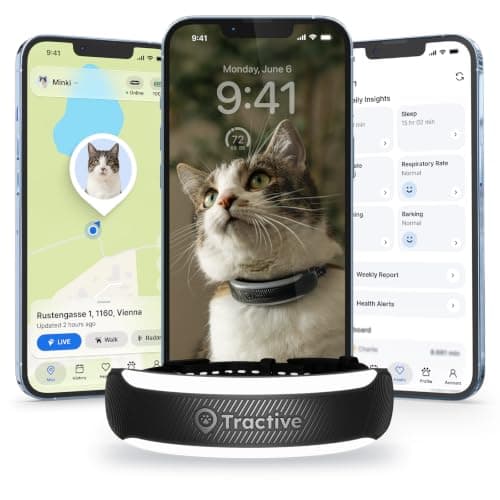
Best overall for cats
Cat trackers that are light enough to actually be worn, from a cellular collar to a 0.28 oz radio tag with no subscription. Plus the breakaway rule.
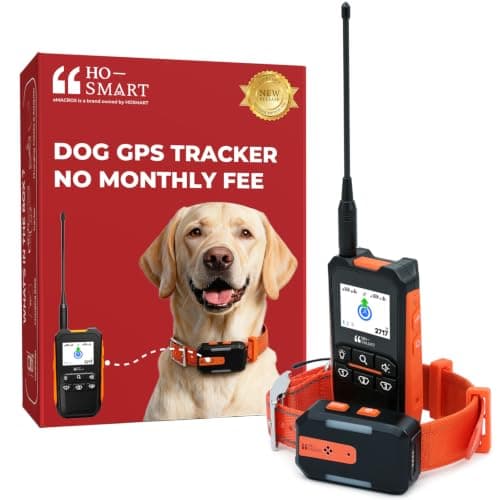
Best dog tracker, no subscription
Radio systems and collar tags: the two dog-tracking technologies with no fee ever. What each does, what it cannot do, and the honest comparison with paying.

Best cat tracker, no subscription
Radio tags and breakaway-collar Bluetooth setups: the cat-tracking options with no fee ever, with weight figures and honest limitations.
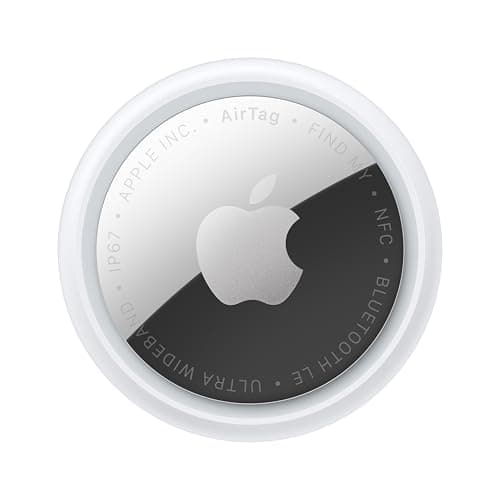
Head to head
Seven axes compared, and a clear recommendation per dog. Includes the case for buying neither, which applies more often than you would think.
Guide
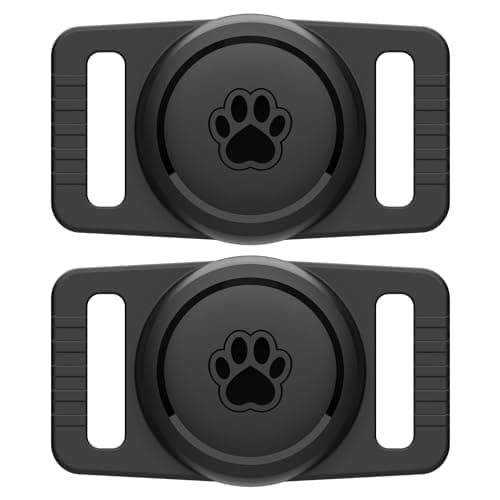
Which holder, where on the collar, and the failure modes nobody warns you about. Plus an honest line on what a tag cannot do for a dog.
Guide
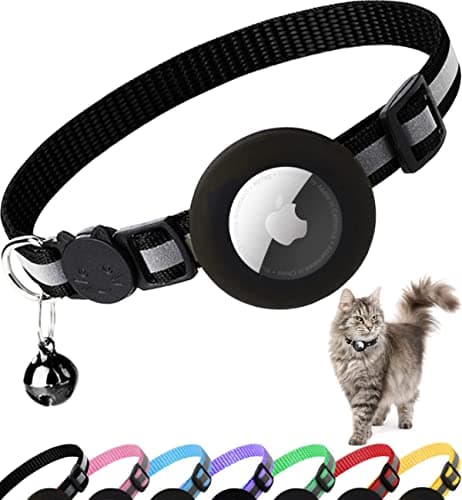
Breakaway collars, weight limits and holders. Why a tag covers the shut-in-a-shed scenario completely, and why that is the scenario that matters.
Guide
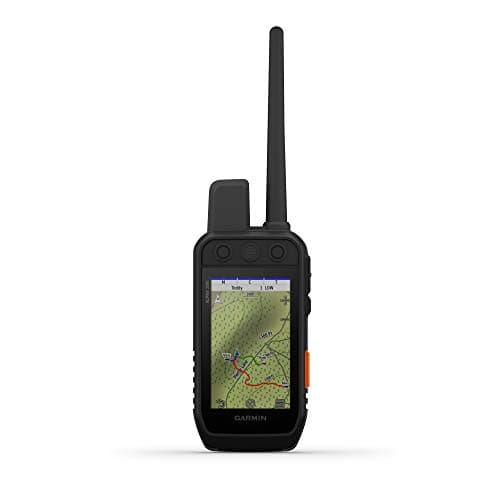
Why both popular technologies fail off-grid, and why radio direction-finding — with no SIM and no subscription — is the rural answer.
Best wireless dog fence
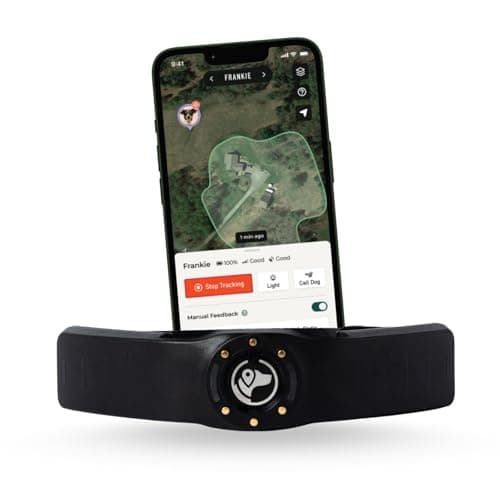
GPS containment collars compared, with an honest account of where the technology fails. Subscription tiers named, and the cheaper alternative considered.
Best gift for a dog owner
What to give a dog owner without accidentally handing them a monthly bill — and the one question to ask before buying anything cellular.
Without the monthly fee
Radio systems and collar tags: the two dog-tracking technologies with no fee ever. What each does, what it cannot do, and the honest comparison with paying.
Does the animal leave, and if it leaves, does it leave where there are people?
A dog that bolts out of the front door into a suburban street is lost among phones. A Bluetooth tag in a waterproof collar holder will report its position within minutes and costs nothing to run forever. Buying a $250 three-year subscription for that dog is buying a capability you will not use.
A dog that works a field, jumps a fence into woodland, or disappears on a hike is lost away from phones. No tag helps. You need either cellular — which gives you a live map anywhere there is signal, for $252 or more across three years — or radio, which gives you a direction and distance from a handheld you carry, with no subscription at all and no dependence on signal.
Cats split the same way, with weight as an extra constraint. A cat that goes two gardens over is a tag job. A cat that genuinely ranges needs the cat-specific cellular trackers, because the dog modules are too heavy, or a featherweight radio tag.
This is the one thing we would most like pet owners to understand before they buy, and it has nothing to do with specifications.
A cellular pet tracker is not a device you own. It is a terminal for a service. The collar contains a SIM provisioned by the brand, it talks to the brand's servers, and the app that shows you the map is the brand's app. When the brand goes away, all three go with it and the collar becomes a plastic lump on a strap.
This is not a theoretical risk. While building this site we checked the HTTP responses ourselves: whistle.com returns a 301 redirect to tractive.com, a competitor, and tryfi.com returns a 301 to fitracking.com. Whistle was one of the two serious US pet-GPS platforms and its own front door now points at a rival. Anyone who bought a Whistle collar on a multi-year plan has learned something about subscription hardware the hard way.
Two kinds of device are immune. A Bluetooth tag runs on Apple's or Google's network, which belongs to Apple or Google and is not going anywhere. A radio collar has no network at all — the handheld talks straight to the collar, and there is no company in the loop that can fail. If you want a pet tracker you will still be using in five years, those are the two categories to look at.
On cats, use a breakaway collar. This is not a tracker opinion, it is a safety one: a cat collar that cannot release when it snags on a branch or a fence is a genuine strangulation hazard. Every cat collar we link to has a breakaway buckle, and if you already own a collar you like, check that it does before you add weight to it.
On dogs, check the weight against the dog, not against the collar. A 30 g cellular module is nothing on a labrador and a lot on a whippet, and a dog that is uncomfortable will work at it until it comes off.
GPS containment fences deserve a specific warning. They work by reading the collar's own GPS position and comparing it against a boundary you drew in an app, which means the boundary is only as accurate as the GPS fix. Under heavy tree canopy, GPS accuracy degrades to tens of meters, and a boundary that wanders by that much is worse than no boundary — it corrects the dog at random and teaches it nothing. On open land they do what they claim. Look up at your own trees before you spend five hundred dollars.
Questions
Also worth reading

The whole point
Five different things get sold as "no monthly fee". Only two of them are. Here is the difference, and what each actually costs across three years.

People
The category where the device matters least. What matters is whether it gets worn, whether it gets charged, and whether the person wearing it agreed to it.