The cost table
Every tracker subscription, costed over three years
Device price is close to meaningless in this category. Here is what each tracker actually costs to own for three years, using each brand's own published plan rates.

The whole point
Five different things get sold as "no monthly fee". Only two of them are. Here is the difference, and what each actually costs across three years.
By Mike M.Last updated
#ad — we earn a commission if you buy through the links on this page, at no cost to you. It never changes what we recommend, and the structural reason it cannot is that we recommend the no-subscription devices, which pay the least. Full disclosure.
"No monthly fee" is the most abused phrase in this category. It gets printed on the box of a device that bundles twelve months of cellular service into the purchase price and then charges $9 a month forever once that year runs out. It gets printed on devices that genuinely never charge you anything. And it gets printed on devices where the fee is real but prepaid, so nothing hits your card monthly and the marketing is technically true.
Those are three different purchases with three different three-year costs, and the box does not tell you which one you are holding. So this hub does.
We sort every tracker into five categories by how it is funded, not by how it is marketed: Bluetooth crowd-network tags that are genuinely free forever, cellular devices with a mandatory plan, cellular devices with the service prepaid into the purchase, bring-your-own-SIM devices, and radio direction-finding gear that has no network to pay for at all. Then we price each one over thirty-six months using the brand's own published figures, cited on the page.
The short version: if you want a tracker and you never want to be billed again, you are shopping for a Bluetooth tag or a radio system. Everything else is a subscription with hardware attached, and the hardware is the cheap part.
Start here
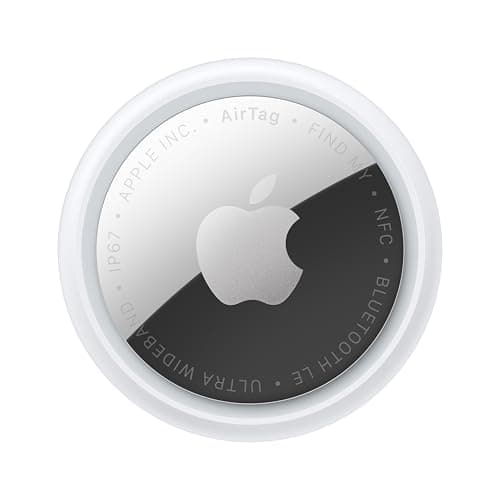
iPhone owners, almost anything
The default no-fee pick if you carry an iPhone. Largest finding network in the world, a coin cell you can buy anywhere, and Apple has never charged a subscription for it.
#ad · live price from Amazon's product API. Disclosure.
Everything in this section
The cost table
Device price is close to meaningless in this category. Here is what each tracker actually costs to own for three years, using each brand's own published plan rates.
Best with no subscription
The devices that genuinely never bill you again, from a $25 keyring tag to a radio system that tracks a hunting dog off-grid forever.
Best one-time payment
Pay once, keep tracking. Prepaid-service cellular devices, radio systems and tags, with the renewal question each one leaves open.
Cheapest no-fee pick
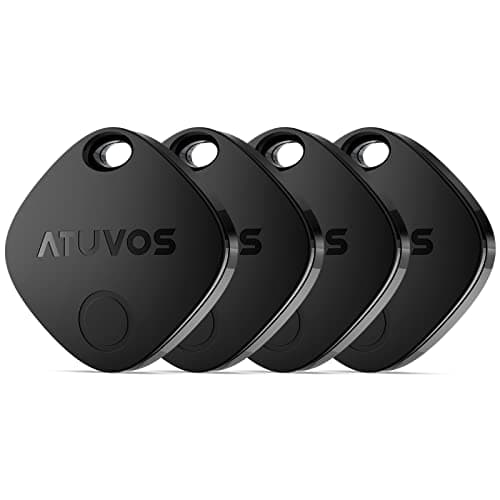
Five genuinely cheap no-fee options, including the multi-packs that bring the per-tag cost under ten dollars. What you give up at this price, stated plainly.
Best no-fee for Android
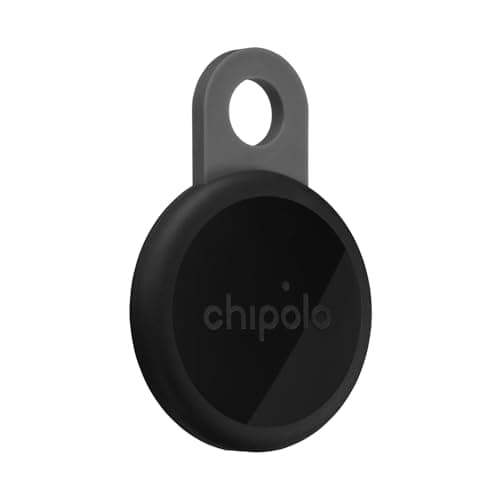
Five no-fee tags that work properly on Android, sorted by network. Includes the Samsung trap: SmartTag2 needs a Galaxy, not just Android.
Guide
Cellular GPS needs a data plan, always. Bluetooth tags and radio systems never do. The confusion between them is the most expensive mistake in this category.
Guide
No subscription, ever. About a dollar a year in coin cells is the entire running cost. The confusion comes from Tile and from cellular GPS trackers.
Guide
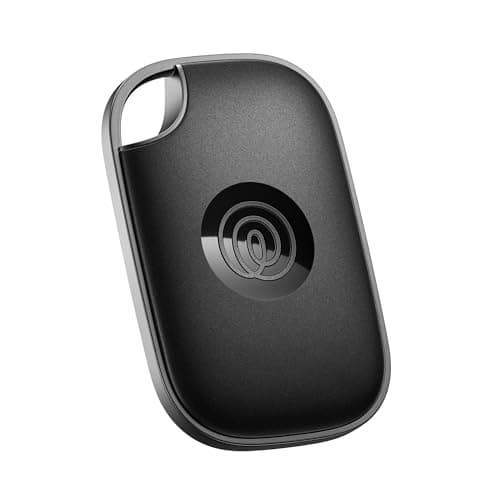
Basic finding is free forever. Smart alerts, location history and item reimbursement sit behind a Life360 membership from $9.99 a month.
Guide
Three SIM-free technologies: Bluetooth crowd networks, radio direction-finding and satellite messaging. What each one can and cannot do.
Guide
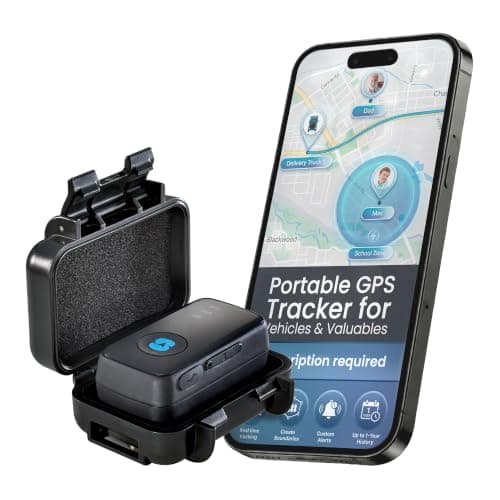
Cellular data costs money, hardware is sold near cost to acquire you, and the plan is the revenue. Once you see the model, the category reads differently.
Without the monthly fee
The devices that genuinely never bill you again, from a $25 keyring tag to a radio system that tracks a hunting dog off-grid forever.
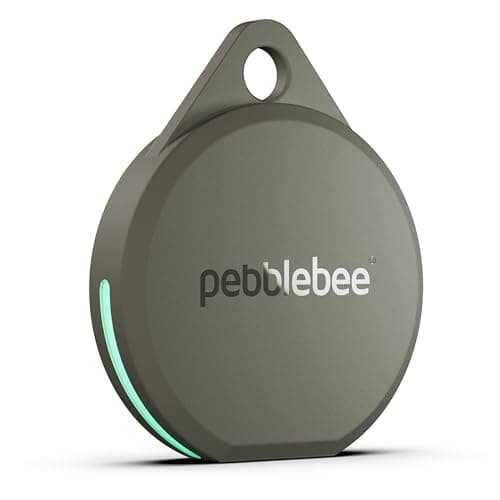
Bluetooth crowd-network tags. Genuinely free, forever. An AirTag, SmartTag2, Chipolo or Pebblebee has no SIM and no data cost, so Apple, Google and Samsung carry the network traffic at no charge to you. Your entire recurring cost is a coin cell about once a year, or a USB-C charge if you bought a rechargeable one. The limitation is structural rather than commercial: these devices do not know where they are, so they only report when somebody else's phone walks past them.
Cellular with a mandatory plan. The honest majority of real GPS trackers. There is a SIM inside, a carrier is being paid, and when you stop paying the device goes silent. Spytec publishes $14.95 a month, or $12.95 paid annually — $466 across three years against a device under twenty dollars. LandAirSea puts $8.95 a month in its Sync product title, which is $322 over the same period. These are not bad products; they are subscriptions, and the device is the sign-up bonus.
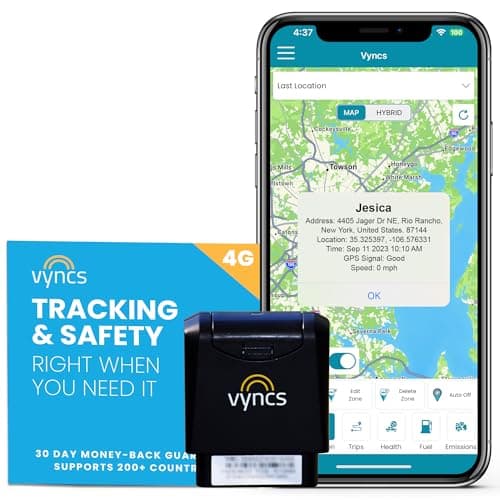
Cellular with the service prepaid. This is where the phrase gets stretched. Vyncs and several newer brands sell devices advertised as "no monthly fee", and nothing does hit your card monthly — the service term is baked into a higher purchase price. Over three years that is frequently the cheaper option and we often recommend it. But "no monthly fee" is not "no future cost": find out what renewal costs before you buy, because that question has an answer and the box does not print it.
Bring your own SIM. A smaller category where the device takes a standard SIM and you supply the data, typically from a cheap IoT or pay-as-you-go plan. Cheapest possible running cost if you are willing to manage it, and genuinely unsupported if anything goes wrong.
Radio direction-finding. The forgotten category and the only true no-fee answer that gives live tracking. Garmin's Alpha handhelds, Dogtra's Pathfinder, Marco Polo and the eMACROS off-grid dog tracker all put a radio link between a handheld and the collar. No SIM, no network, no company in the loop, and it works where there is no phone signal at all. You pay a great deal once and nothing ever again.
The arithmetic is deliberately simple, because the point is that it is simple and nobody does it. Device price, plus the plan price multiplied by thirty-six months, plus any activation fee or mandatory accessory. That is the number that belongs next to a tracker and almost never appears next to one.
Thirty-six months rather than twelve because a tracker is not an annual purchase — people buy one and keep it until it breaks — and because twelve months is exactly the window that bundled-service devices are designed to look good inside. A device with a free first year and a $9 monthly plan afterwards looks free over twelve months and costs $216 over thirty-six.
Where a brand publishes a multi-year discount, we use the cheapest honest route to thirty-six months rather than the headline monthly figure. Tractive, for example, publishes Basic at $9 a month on a one-year term and $6 a month on a two-year term; the cheapest legitimate way to cover three years is a two-year term at $144 plus a one-year at $108, so $252. That is the figure we quote, and it is lower than the headline rate.
Device prices are not included in the plan figures we quote, because device prices move. Every price on this site comes live from Amazon with the date it was checked attached, and disappears if it is more than 48 hours old. Add the live price to the plan figure and you have the real number.
We are not against subscriptions, we are against hidden ones. There are three situations where a monthly plan is straightforwardly the right purchase.
The first is a dog that genuinely roams. If your dog works a field or jumps a fence and runs, you need to see where it is right now, from wherever you are, and nothing free does that. $252 across three years is a reasonable price for that capability and we say so on the pet pages.
The second is a vehicle you would be seriously hurt by losing. Live tracking plus a remote starter disable is the difference between knowing your van was stolen and getting it back, and no Bluetooth tag provides it.
The third is a person who cannot call for help. A non-verbal child or an adult at risk of wandering needs a device that works away from home and has an SOS path, and that requires cellular data. Price it, budget for it, and do not let anyone tell you a tag will do.
Everything else — keys, wallets, luggage, tools, a cat that stays on the street, a car you keep forgetting which level you parked on — is a job a no-fee tag does properly.
Questions
Also worth reading

Head to head
Most comparisons in this category are a feature grid with a winner at the bottom. These compare the thing that decides it: what each one costs you over three years, and which phone you own.

Vehicles
A vehicle tracker is the one category where the subscription genuinely buys you something — and where you can still avoid it if you buy the right shape of device.