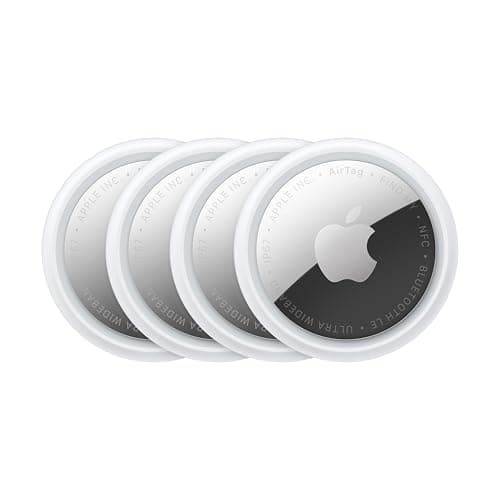
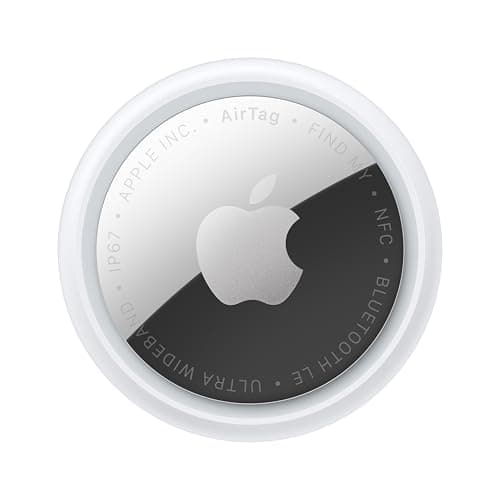
If you carry an iPhone, you have the easiest version of this decision, because you have access to the largest finding network in the world and every option on this page costs nothing to run.
Apple's Find My network is built from essentially every iPhone in existence. Any Find My tag — Apple's own or a third party's — rides that same network, which is the single most important thing to understand here: a $5 Find My tag and a $25 AirTag are heard by the same phones.
So what does the premium buy?
One thing, and it is worth being precise: Ultra Wideband Precision Finding. Only Apple's own AirTag does it. With a compatible iPhone, instead of a map pin you get a direction and a distance, and the phone walks you to the item in the last ten meters.
Apple also states the second-generation AirTag has a speaker 50% louder than the first and 1.5 times the Precision Finding range of the original.
Precision Finding genuinely matters in exactly one situation: a cluttered room where the item is within a few meters and you cannot work out where the sound is coming from. For keys that is the common case, so an AirTag is worth it. For a suitcase in a baggage hall it is irrelevant, and a cheap tag on the same network does the job identically.
And the thing the premium does not buy
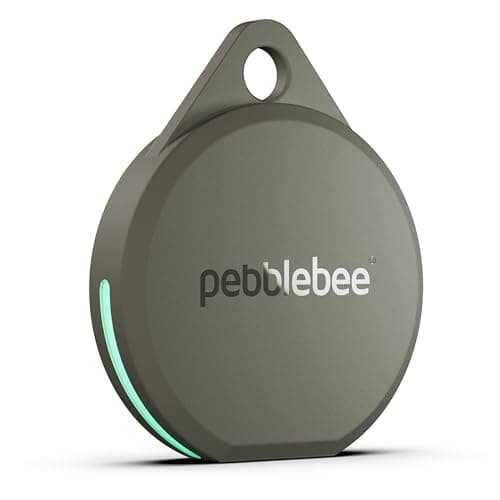
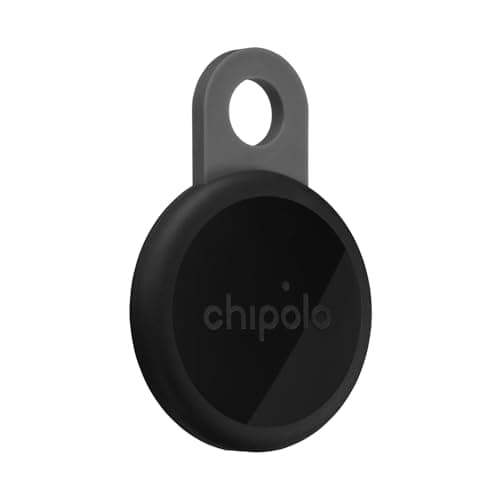
Loudness. Pebblebee states 130 dB for the Clip 5 and Chipolo states about 125 dB for the LOOP, both comfortably louder than an AirTag. For finding something behind a sofa cushion, a siren you can hear from the next room beats an arrow you have to be in the same room to use.
Or a keyring hole, which the AirTag does not have and both of those do.
The arrangement we would actually buy
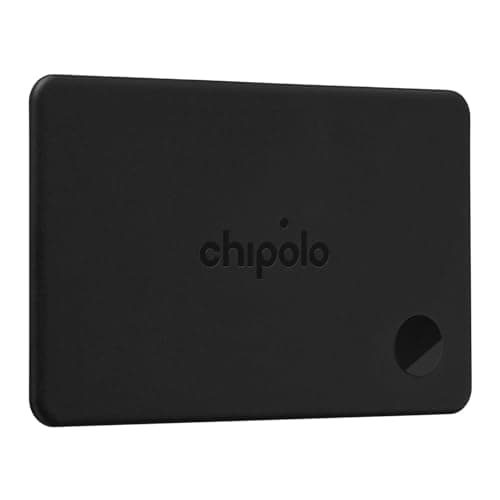
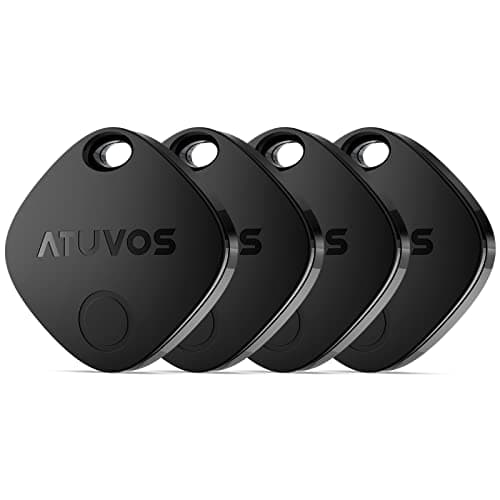
One AirTag for the item you lose most and search for in a panic — usually keys. A cheap multi-pack for the suitcase, the spare keys, the tool bag and the bike. A card tracker for the wallet if it travels separately.
That gets Precision Finding where it earns its place and coverage everywhere else, for considerably less than four AirTags.
Set these two things up on day one
Lost Mode, with a phone number. If someone finds your item and taps their phone against the tag — including an Android user — they see your contact message. Without Lost Mode configured, they see instructions for disabling the tag instead. One setting, two completely different outcomes, and almost nobody does it in advance.
Separation alerts, with trusted locations. Find My can notify you when you leave somewhere without a tagged item, which for keys and a wallet is the alert you actually want. The reason people turn it off is false positives from items deliberately left at home — so add home and work as trusted locations during setup rather than after the third annoying notification.
Precision Finding: the honest limits
It needs a UWB-capable iPhone, it needs you to be within roughly the same room, and it needs line of sight — point the phone at a wall and the arrow becomes a suggestion.
What it is excellent at: a tagged item under a cushion, inside a bag in a pile of bags, or behind a box in a garage. What it does not help with: anything more than a few meters away, which is where the map and the network take over.
Which battery, for iPhone users
Apple states more than a year per CR2032, based on everyday average usage of playing sound and Precision Finding. A rechargeable Chipolo states about a year per charge; Pebblebee states up to 12 months.
The practical difference is the failure mode. A coin cell means a two-minute fix with a supermarket battery, anywhere in the world. A rechargeable means finding a USB-C cable. For tags you forget about — luggage, a spare key — coin cell wins. For tags you handle, either is fine.
The coin-cell warning that has nothing to do with tracking: these cause severe internal injuries if swallowed by a small child. Store spares locked away, and prefer rechargeable tags in a house with toddlers.
The holder question
An AirTag has no hole, so every AirTag on keys is an AirTag plus a holder. Apple's leather loop costs most of another AirTag; a three-dollar shell does the same job.
Budget for it, and buy the cheap one unless you specifically want the leather. Or buy a Chipolo LOOP, which has the hole built in and is louder, and accept giving up Precision Finding.
One Apple-specific advantage worth knowing
Find My works globally with no roaming charge, because the relaying is done by local iPhones on their own plans. For a traveler that is a real advantage over cellular trackers, whose plans often exclude or surcharge international coverage — and it is free.