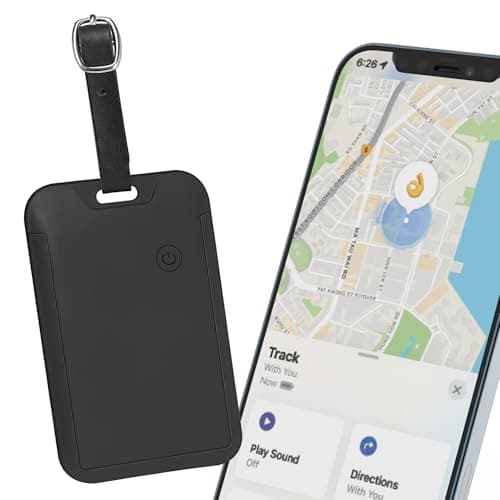
Luggage is the strongest argument for no-fee Bluetooth tags that exists, and the reason is geography rather than technology. A suitcase that goes missing goes missing in an airport, a baggage sorting facility or a delivery depot — in other words, in the densest concentration of smartphones on the planet.
A crowd-network tag in that environment reports from inside the building, repeatedly, with accuracy good enough to tell an airline which terminal to look in. Which is why the now-familiar story keeps happening: the passenger knows where their bag is before the airline will admit it has lost it.
There is no cellular tracking plan that improves on this, because the problem was never coverage. Every pick on this page costs nothing to run.
Pick by phone, then by placement
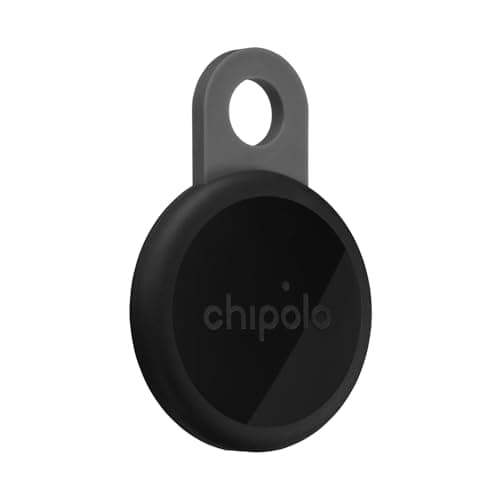
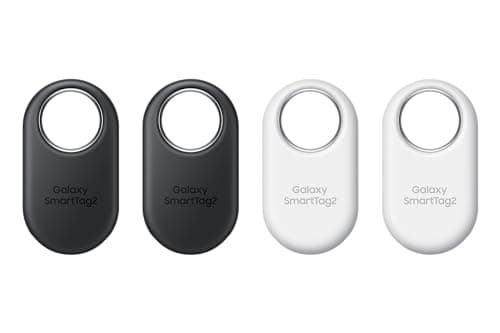
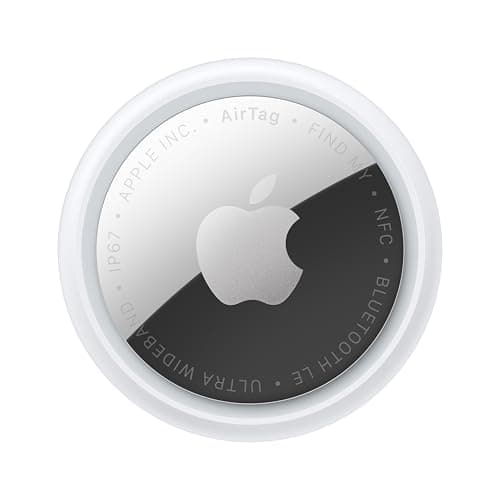
The choice is almost mechanical. iPhone: an AirTag or a cheap Find My tag. Android: Chipolo, Pebblebee or a Moto Tag on Find Hub. A Galaxy specifically: SmartTag2, with the longest stated battery life of anything here at 500 days.
Then the decision that actually matters, and the one nobody covers: where to put it.
Hide it, do not hang it
A tag clipped to the outside of a handle is a tag a dishonest handler removes in two seconds. Inside the lining, in the laptop sleeve, under the fabric base panel, or taped inside a corner is far better — and the bag is a fabric box, so Bluetooth gets out without difficulty.
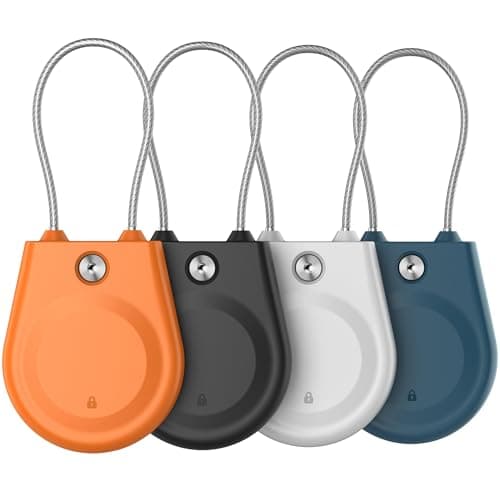
The one argument for a visible tag is deterrence, and it is not a bad one: a locking case with a steel cable says “this bag is tracked” before anything happens. If that is what you want, buy the locking holder; if you want the bag found after it goes, hide it.
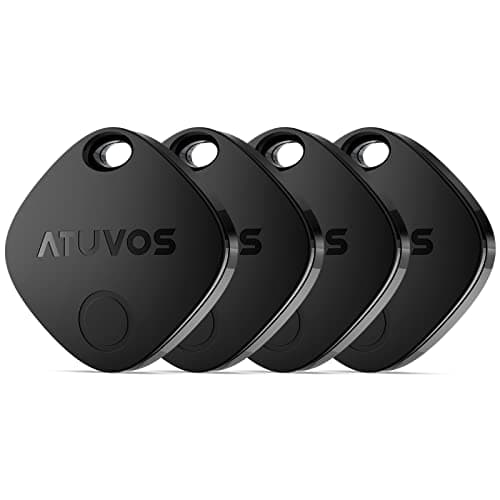
Two tags is better than either. One visible, one hidden, in different parts of the case. At multi-pack prices that costs almost nothing.
What the FAA actually says about batteries
The most-asked question in this category, so here is the rule from the source rather than from forum folklore.
The FAA's PackSafe guidance requires spare, uninstalled lithium batteries — including power banks and charging cases — to be carried in the cabin, not in checked baggage. A battery installed in a device is treated as part of that portable electronic device and is permitted in checked baggage. Lithium metal cells carry a limit of 2 grams of lithium content per battery, and a CR2032 holds a small fraction of that.
So: a tracker with its battery inside it, in a checked bag, is fine under FAA rules. A spare multi-pack of CR2032s in that same bag is not — those belong in your carry-on.
Individual airlines can impose stricter rules than the FAA and a few have tried. Your carrier's own policy page is the document that governs your specific flight, so check it for the airline you are actually flying.
What to expect in the air
The hold is a metal box, so expect no updates while the aircraft is flyingand a sudden position report when the bag reaches the terminal. That is normal rather than a fault, and it is worth knowing so you do not spend the flight worrying about a silent tag.
On the ground the behavior is excellent. Baggage halls, aprons and sorting facilities are full of staff carrying phones, so a bag that gets routed to the wrong city often reports from that city within an hour of landing.
Using it properly when a bag goes missing
Three practical points, learned from how these situations actually go.
Screenshot everything. The position, the timestamp, the map. A screenshot is far more useful at a baggage desk than a phone you are scrolling, and the position will change.
Report it formally anyway. A tag position is not a claim. File the missing bag report, get the reference number, and then offer the tracker data as supporting information. Airlines compensate against the report, not against your screenshot.
Be reasonable with staff. The agent at the desk did not lose your bag and frequently cannot see what you can see. “My tracker shows it at the airport, in baggage area 3” is useful; insisting they act on it immediately is usually not.
Which tag for which kind of travel
Frequent flyer, one case. One good tag hidden in the lining, fitted once and forgotten. Battery life matters most, so a SmartTag2 at 500 stated days or an AirTag at Apple's stated year-plus.
Family travel, several bags. A four-pack. The marginal value of the fourth tag is high because the bag that goes missing is never the one you tagged.
Mixed-platform household. A dual-network Chipolo, so the tag works whoever is holding the phone, or Tile Pro if one tag genuinely has to serve both platforms from one account.
Ski or golf travel. The hard case is the problem — a tag inside a rigid ski tube or golf travel case has worse signal than in a fabric suitcase. Put it in an external pocket rather than deep inside.