Tool tracking splits into two problems that get sold as one, and buying for the wrong one is why so many tradespeople are disappointed with the tags they bought.
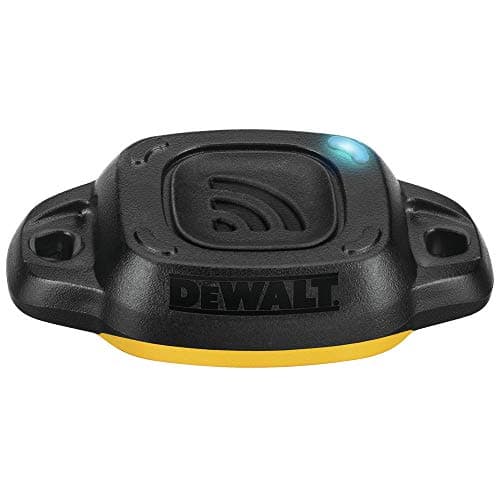
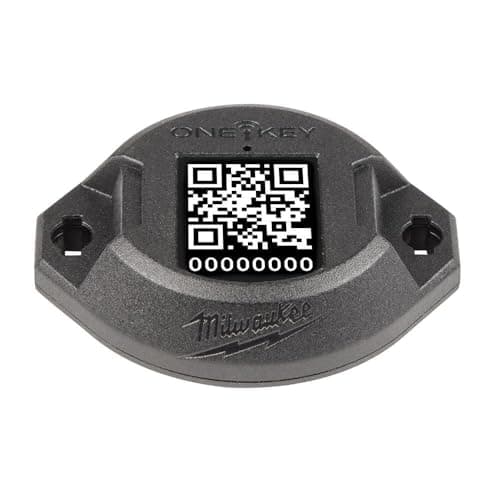
Inventory. Which van is the SDS drill in? What is missing at the end of the job? Did the second-fix kit come back? This is what the manufacturers' own systems are built for, and DEWALT's Tool Connect and Milwaukee's ONE-KEY are genuinely good at it.
Recovery. The van was broken into on Tuesday night. Where are the tools now? This is a different problem, and the manufacturers' systems are weak at it for one structural reason.
The network is the whole argument
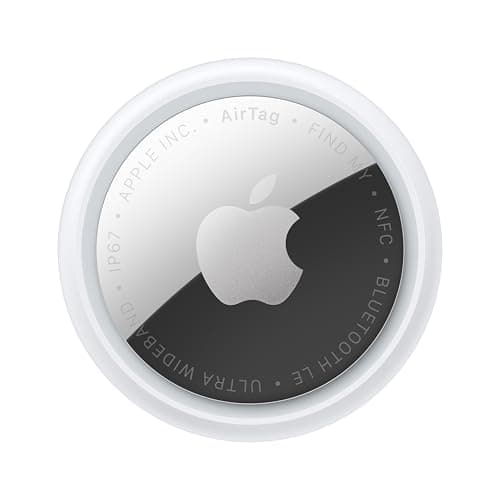
A crowd-network tag is only as good as the number of participating phones near it. Apple's Find My network is built from essentially every iPhone in the world. Milwaukee's ONE-KEY network is built from other tradespeople running the Milwaukee app. DEWALT's is the same shape.
For inventory that does not matter — you are the phone that walks past your own tools. For recovery it is everything: stolen tools go to a yard, a lock-up, a car boot, a second-hand outlet, and the question is whether anyone with a participating phone passes within Bluetooth range. One of those networks has hundreds of millions of participants and one has thousands.
So for recovery: hide a Find My tag. Keep the manufacturer tags for knowing what is in which van.
Tag the case, not every tool
The realistic outcome of a van break-in is whole cases leaving, not individual tools being selected. Tagging cases rather than tools covers that at a sane cost, and a four-pack of tags covers four cases for the price of one first-party tag.
The exception is the one or two highest-value items that live outside a case — a laser level, a core drill — which are worth their own tag.
Mounting: the part that decides whether it survives
A tag rattling loose in the bottom of a tool box gets found and thrown out, or simply lost among the drill bits. The mount matters as much as the tag.
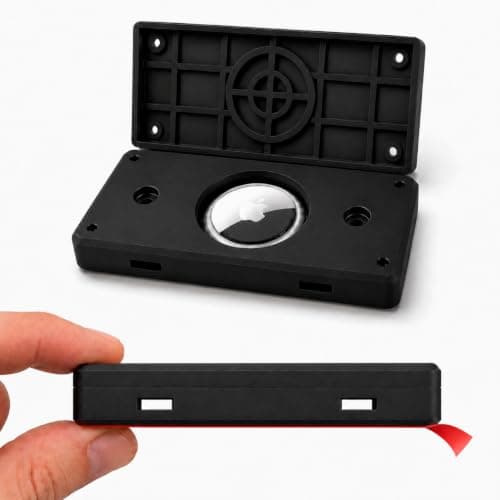
Screw-down cases are the best general answer: a heavy-duty holder fixed inside a lid or under a tray. It cannot shake out, and a thief rifling the box does not see it.
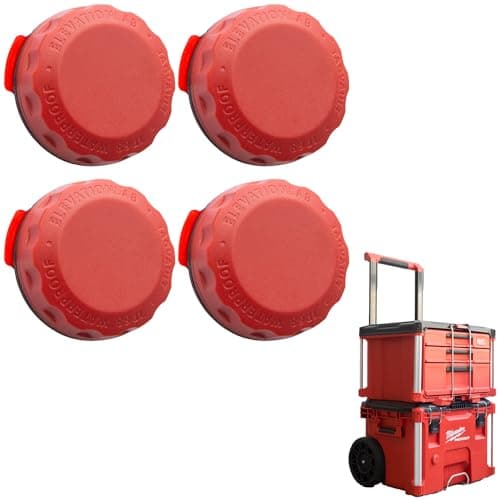
Purpose-made mounts where they exist — the Elevation Lab mounts for Milwaukee PACKOUT use the box's own mounting pattern, which is cleaner and more concealed than anything improvised.
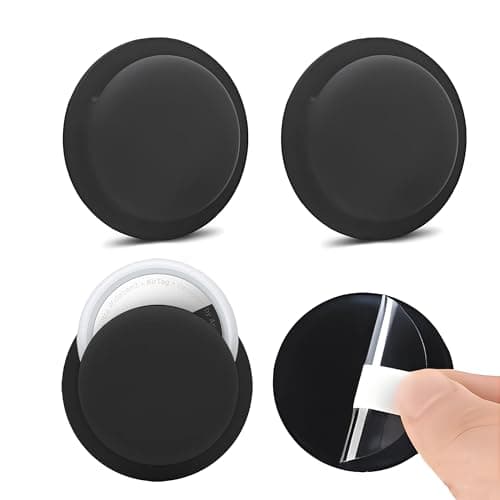
Adhesive pads for anything with no fixing point. Treat it as permanent, and avoid surfaces that get hot or oily.
Inside foam inserts. If a case has a cut foam insert, a tag hidden under the foam is close to invisible and needs no fixing at all.
Van security, which matters more than any tag
Worth saying because it is true: a tag is a recovery tool and most van tool theft is preventable with locks. Slam locks, deadlocks, an alarm and — most of all — not leaving tools in the van overnight will do more than any tracker.
Where a tag earns its place is the theft that happens anyway, and the second-order benefit people under-value: insurers and police both respond better to a report with a location attached than to one without.
Two tags per high-value case
Organized tool theft is a real category, and organized thieves do sweep for trackers. The standard counter is two tags in each important case: one findable, one not.
A thief who finds a tag in the obvious place assumes the job is done and leaves the second reporting. At multi-pack prices this is close to free, and on a case of tools worth four figures it is an obvious trade.
What to do if tools are stolen
Do not go and get them. Recovering property from a stranger's address is how a property crime becomes a violent one. Report the position to the police and let them act.
Have the serial numbers already. A tag tells the police where the tools are; serial numbers are what proves they are yours. Photograph tool plates and keep the list somewhere not in the van.
Screenshot the positions. With timestamps. Positions change and a screenshot is evidence of a pattern.
Should you pay for cellular on tools?
Usually not, and the reasoning is the same as for luggage. Stolen tools go where people are — yards, lock-ups, vans, second-hand outlets — which is exactly where a crowd-network tag reports. A cellular tracker adds coverage in places with no phones, which is not where tools end up.
The exception is plant and machinery left on remote sites, which is genuinely a cellular case. Our trailer page covers that shape of problem.