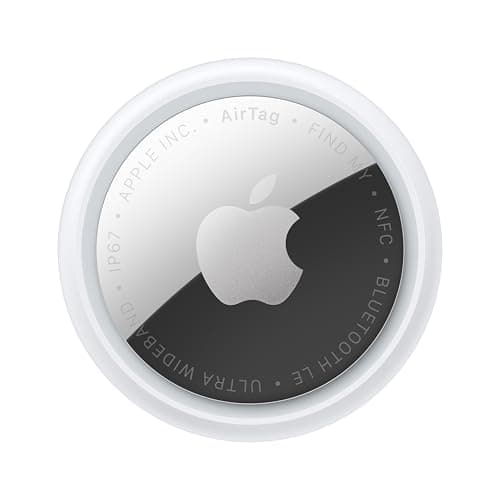
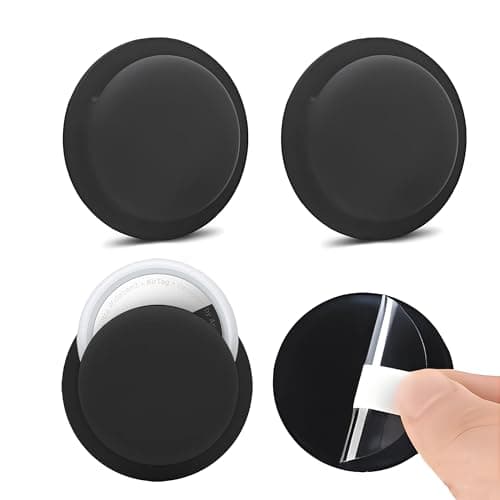
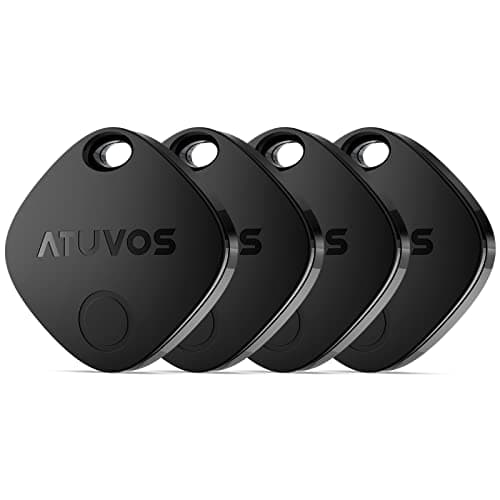
Golf clubs face two quite different risks, and they want the tag in different places. Most advice collapses them into one and gets both slightly wrong.
Risk one: the airline loses the travel case
A golf travel case is checked baggage, and it goes missing in exactly the way suitcases do — mis-tagged onto the wrong flight, left in a transfer hall, delayed by a day.
A tag handles this well, because the places it happens are full of phones. The complication is physical: a rigid travel case attenuates Bluetooth considerably more than a fabric suitcase does, and a tag buried in the middle of a dozen graphite shafts is worse again.
So for the travel case, put the tag in an outer pocket rather than deep in the body. A side or top pocket has far better signal out, and the whole point is to be heard.
Risk two: the bag walks off at the club
Clubs, ranges and buggy parks are the other half. A bag left by the first tee, a trolley left at the bag drop, a set lifted out of a buggy.
Here a tag works very well — clubhouses and courses are full of phones — but you want it hidden and attached to the bag you actually play with, not the travel case sitting in the garage at home.
A tag in a zipped valuables pocket is the easy version. Better is adhesive-mounted inside the bag's base or under a pocket lining, where someone going through the bag does not find it.
So: two tags
One in the travel case's outer pocket for the airline risk, one hidden in the playing bag for the club risk. A multi-pack makes this nearly free, and it is the setup that actually covers what happens.
Signal through a golf bag, practically
Graphite shafts, a rigid travel-case shell and a tightly packed bag all attenuate Bluetooth. Not fatally — a tag in a golf bag in an airport will still be heard — but placement makes a real difference to how often.
Best to worst: an outer pocket on the bag, the top of the bag near the opening, a zipped valuables pocket, adhesive-mounted inside the base, buried in the middle of the clubs themselves.
A pocket also has a practical advantage on a travel case: you can get at it to swap the battery without unpacking.
Individual clubs?
A fair question, because the thing people actually lose on a course is a single wedge on a green rather than a whole bag.
A tag does not solve that, honestly. There is nowhere sensible to mount one on a club, a grip-end tag changes the swing weight, and the realistic recovery route for a forgotten wedge is the clubhouse lost property. The one thing that genuinely helps is writing your name and phone number on the shaft, which costs nothing.
Where a tag earns its place is the bag, the trolley and the travel case — things that go missing as a unit.
Push trolleys and powered caddies
Worth a tag of their own, particularly electric trolleys, which are expensive and spend time unattended in storage sheds. A magnetic holder on the frame, or a tag taped inside the battery housing, works well.
Storage sheds are a weak spot for crowd-network tags, because a shed at the end of a clubhouse may have little footfall. That is a genuine limitation rather than something to work around, and it is worth knowing before you rely on it.
Set up Lost Mode
Put a phone number in the Lost Mode message. A golf bag found at an airport or handed in at a club is the kind of thing a well-meaning stranger will try to return, and Lost Mode turns a tap of their phone into your number rather than instructions for disabling the tag.
Combine it with a luggage label. Between the two, a bag in a transfer hall has a decent chance of reaching you before the airline's system catches up.
The FAA rule, briefly
A tag with its battery installed is permitted in checked baggage under FAA rules; spare, uninstalled lithium cells must travel in the cabin. So the tag goes in the travel case and any spare coin cells go in your hand luggage. The rule in full is here.