A Find My tag is the best recovery tool available for stolen trade kit, and the reason is not the hardware — it is the network.
DEWALT's Tool Connect and Milwaukee's ONE-KEY tags are well-made and well integrated. Their crowd networks, though, are built from other tradespeople running the same manufacturer app. Apple's Find My network is built from essentially every iPhone in existence.
For inventory — which van is the drill in, what is missing at the end of the job — the network does not matter, because you are the phone walking past your own tools. For recovery it is the entire question: stolen tools go to a yard, a lock-up, a car boot or a second-hand outlet, and whether you find them depends on whether anyone with a participating phone passes within Bluetooth range.
So: manufacturer tags for inventory, hidden Find My tags for recovery. They are not competing products.
Tag cases, not tools
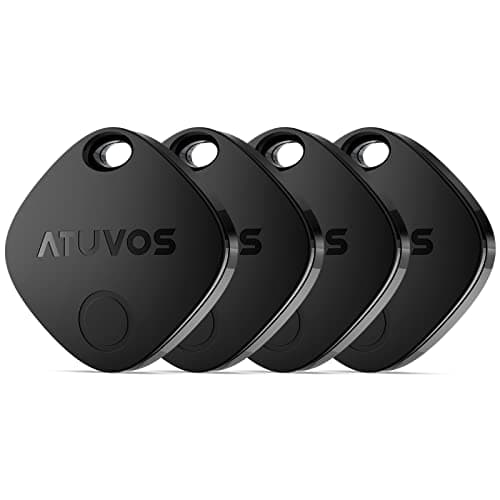
The realistic outcome of a van break-in is whole cases leaving. Tagging cases covers that at a sane cost, and a four-pack covers four cases for the price of one first-party tag.
Give a separate tag to the one or two high-value items that live outside a case — a laser level, a core drill, a generator.
Mounting, in order of how long it takes a thief to find
Under a cut foam insert. If the case has fitted foam, lift it, set the tag into a scalpel-cut recess, and put the foam back. Invisible, no fixings, and nobody rifling the case will see it.
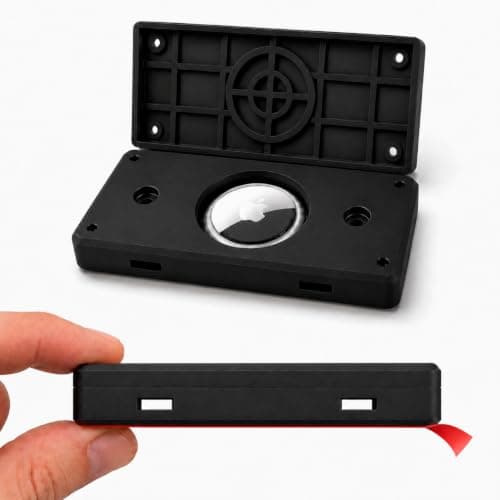
Screwed into the lid or under a tray. A screw-down holder in a lid rib or beneath a removable tray. Cannot shake out on a rough road, and takes tools to remove.
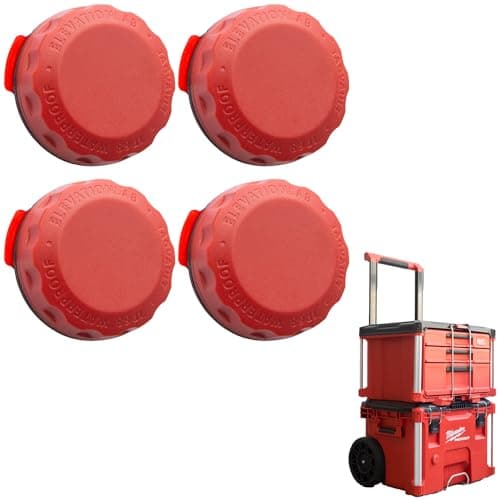
In a purpose-made mount. Where one exists for your system — the Elevation Lab mounts use the Milwaukee PACKOUT pattern — it is cleaner and better hidden than improvisation.
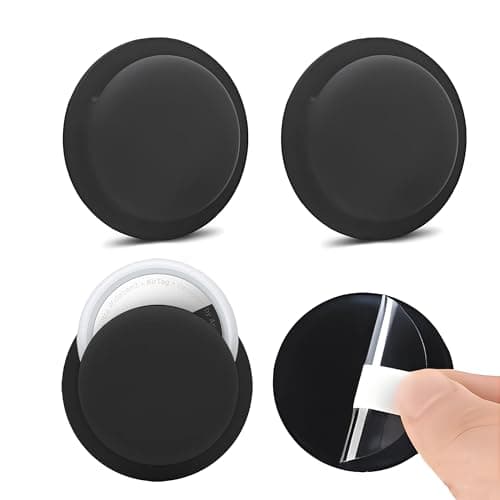
Adhesive, inside a void. For plastic cases with no fixing point. Clean the surface properly with alcohol first; adhesive on a dusty site case fails.
Loose in the bottom of the box. Do not. It gets lost among the bits or thrown out with the packaging, and it is the first thing a hand finds.
Two mounting cautions specific to tools: keep tags away from anywhere that gets hot, and away from oil, which defeats adhesive and degrades silicone over time.
Two tags per important case
Organized tool theft is a real category and organized thieves do sweep for trackers. The counter is two tags in each case that matters: one findable, one not.
A thief who finds a tag in the obvious place — the lid, a side pocket — generally assumes the job is done and leaves the one under the foam reporting. On a case of tools worth four figures, the second tag costs almost nothing.
Before anything is stolen: do these two things
Photograph the serial plates. A tag tells the police where the tools are; serial numbers are what proves they are yours and what gets them returned rather than held as unidentified property. Photograph every plate and keep the album somewhere that is not in the van.
Set up Lost Mode on each tag with a phone number. A tool case recovered by a member of the public — which happens — becomes a phone call rather than a shrug.
If tools are stolen
Do not go and get them. Collecting property from a stranger's address is how a property crime becomes a violent one. Report the position to the police and let them act.
Screenshot every position with its timestamp. Positions change, and a pattern over several hours — a yard, then a residential address — is far more actionable than a single pin.
Tell your insurer the location is known. It affects how a claim is handled and, in some cases, whether recovery is attempted at all.
What a tag does not fix
Van security. Most tool theft from vehicles is preventable with slam locks, deadlocks, an alarm and — above all — not leaving tools in the van overnight. A tag is what you have left when prevention has already failed, and it is worth having for exactly that reason. It is not a substitute for the locks.