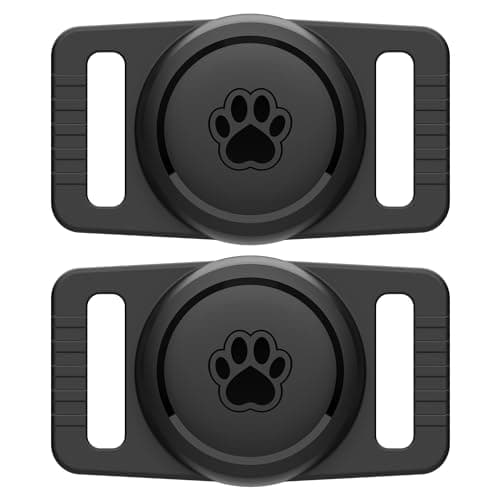
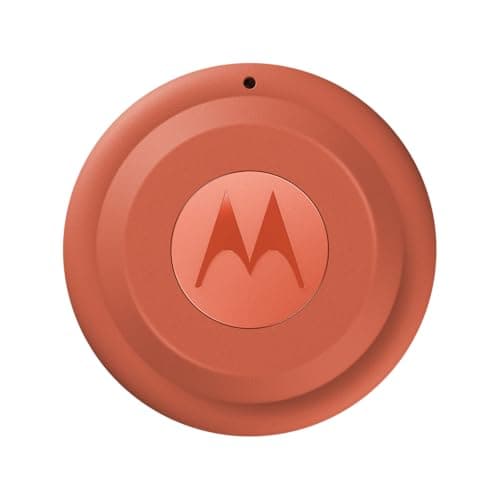
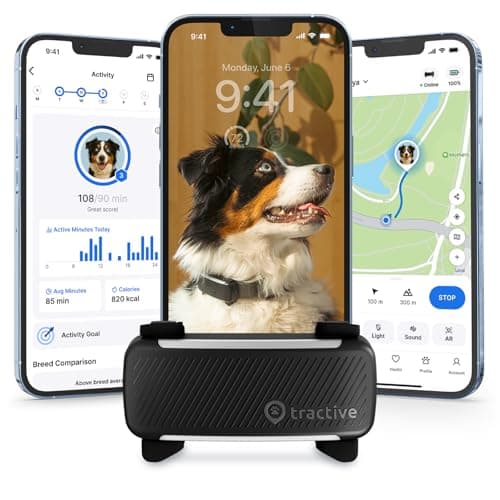
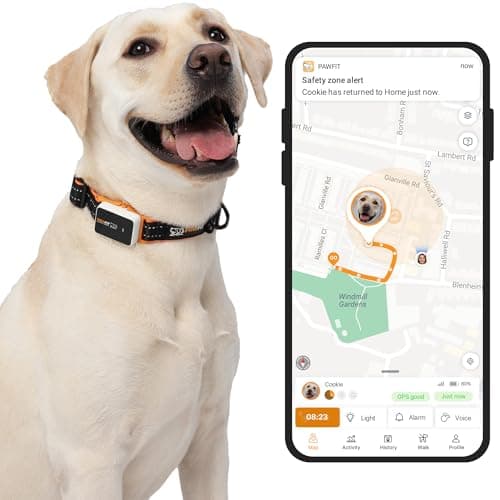
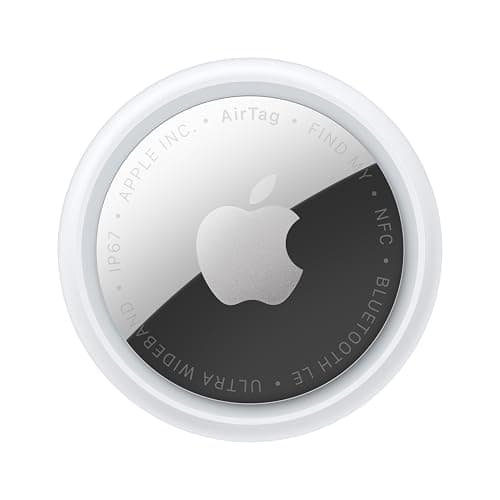
For most dogs the right answer is an Apple AirTag in a collar holder, or a Motorola Moto Tag 2 if the house runs on Android — total cost around thirty dollars, no subscription, ever. If your dog actually runs, none of those will help and you want Tractive, which is $252 of plan across three years before the hardware. Everything on this page hangs off a collar and most of it is not GPS. That is the one thing worth understanding before you spend anything.
The phrase “GPS dog tag” describes a shape, not a technology, and the market has quietly let the two blur together. A tag is a small flat thing that hangs or threads onto a collar. GPS is a satellite positioning system that needs a radio, an antenna, a cellular modem and a battery big enough to run all three. Those requirements are why real GPS collar units are the size of a matchbox and need charging every few days, and why anything genuinely tag-shaped and tag-priced is doing something else entirely.
What you are actually choosing between
There are three technologies in this category and they are not price tiers — they are different answers to different problems. The three kinds of tracker, and what each one physically cannot do is the longer version; the short version follows.
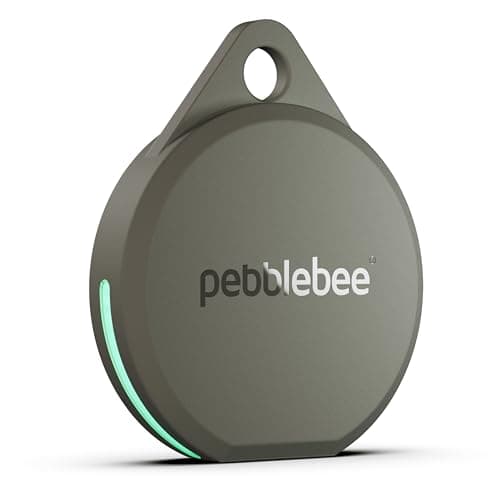
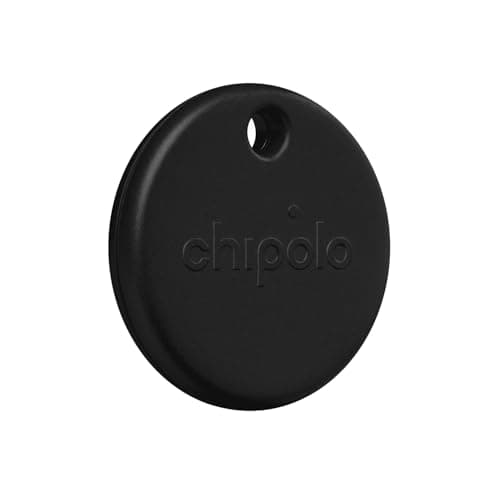
Bluetooth crowd-network tags. An AirTag, a Moto Tag 2, a Chipolo or a Pebblebee has no idea where it is. It shouts its identity over Bluetooth, and any phone on the matching network that walks within range reports the position back to you anonymously. In a suburb at 6pm that is a position within minutes and it costs nothing forever. In a cornfield at 2am it is silence, because the mechanism requires a stranger. These are genuinely good products being sold under a misleading noun.
Cellular GPS. A SIM inside the unit, a carrier being paid, and a live position on a map from anywhere with coverage. This is the only thing on this page that will follow a moving dog. It costs money every month or it stops working, and the device price is close to irrelevant next to that. Every plan rate we can cite, multiplied out to thirty-six months.
Radio direction-finding. A handheld that talks straight to the collar with no network in between, so it works where there is no phone signal at all and there is nothing to subscribe to. It is bulky, it has no app, and you have to be outside holding the handheld. For a rural or hunting dog it is frequently the correct purchase and it almost never appears in a “dog tag” search result, because nothing about it is tag-shaped.
The four questions that decide this, in order
1. Does your dog actually leave, or does your dog occasionally get out? This is the whole decision and almost nobody asks it honestly. A dog that bolts through an open gate twice a year, in a neighborhood, and is usually found two streets over, is solved completely by a $23 tag and a $7 holder. A dog that clears a fence and is gone for six hours across open country needs cellular, and the plan is the purchase. Buying cellular for the first dog is an expensive insurance policy against a problem you do not have; buying a tag for the second dog is a false sense of security, which is worse.
2. How much can the dog carry? Weight is the constraint everyone discovers after buying. The usual veterinary rule of thumb for a collar and its attachments is to keep the whole assembly light relative to the animal, and the practical version is simple: a coin-cell tag in a silicone holder is a few grams and disappears on almost any dog, while a cellular module is an order of magnitude heavier and hangs below the neck. On a 12 lb terrier that module is a real imposition and on a 70 lb retriever it is nothing. What actually fits a small dog, with the weight problem stated goes through that properly.
3. Where does the tag attach, and will it survive a dog? There are two mounting positions and they behave differently. Threaded flat onto the collar webbing, a tag cannot be reached by teeth, does not rattle and does not catch on brush — which is why the silicone case is on this list as a pick rather than a footnote. Hung from the D-ring alongside the license and rabies tags, it swings, it jingles, it is in a dog’s mouth within a week and it is the first thing to go when the dog squeezes through a fence. Clip-shaped tags like the Pebblebee are the exception: they are designed for the ring.
4. iPhone or Android, in the whole household? Crowd networks do not cooperate. An AirTag is useless to set up without an iPhone, and the Moto Tag 2 has no Apple path at all. Chipolo POP and Pebblebee Clip 5 support both networks but you pick one at setup, per tag, and switching means starting over. The relevant question is not what phone you carry but what phone the person most likely to be looking for the dog carries. How the two crowd networks differ in size and behavior matters more here than any specification on the tag itself.
Why “GPS dog tag” results are mostly not GPS
Search the phrase and you will get pages of flat silicone discs at under twenty dollars with “GPS” in the title. Some are Bluetooth tags, correctly described further down the listing. Some are QR-code tags — a plate with a code that a stranger scans to reach a web page with your phone number on it, which is a genuinely useful thing and contains no electronics whatsoever. A few are Bluetooth tags from unnamed brands that will not join Apple’s or Google’s networks at all, which makes them a beeper with a range of about thirty feet.
The test that cuts through all of it: a device that reports its own position needs a cellular subscription. If a listing claims live GPS tracking, no monthly fee and a tag-sized package, two of those three claims are doing work the product cannot support. The exceptions are real but they are not tags — they are radio systems with a handheld, and they cost more than every tag on this page combined.
What a tag will and will not do when the dog is gone
It is worth being concrete, because the gap between what people expect and what happens is where the disappointment lives. A Bluetooth tag on a collar does three things well. It tells you the last place a phone saw your dog, which collapses a search radius from a neighborhood to a street. It makes a noise on command, which finds a dog that is under a porch rather than two miles away. And on recent iPhones and Android handsets with Ultra Wideband it will walk you in by distance and direction over the last fifty feet, which is genuinely the part that ends the search.
It does not follow a moving animal, it reports nothing where there are no people, and it goes silent the instant the collar comes off — which, on a breakaway collar, is exactly the moment the dog snags on something and gets free. The same comparison run as a straight head to head puts numbers against both sides.
What we would buy, by dog
The suburban dog that gets out twice a year. AirTag plus the silicone collar holder if the house is on iPhones, Moto Tag 2 if it is not. Thread it onto the webbing, not the ring. Put your phone number on a physical tag as well, because a neighbor who finds the dog in ten minutes beats any electronics on this page.
The dog that hides rather than runs. Pebblebee Clip 5, for the 130 dB siren Pebblebee states. Sound is the right mechanism for an animal within a hundred yards and the wrong one for an animal in a car, and you should know which dog you have.
The fence-clearer, the sight hound, the working dog. Tractive, and budget the plan properly — $252 over three years on Basic, which is what Tractive publishes, plus the collar. If that figure stops you, the honest answer is a better latch and a longer line rather than a cheaper tracker, because a tag will not do this job.
The rural dog with no cell coverage at home. Neither a tag nor a cellular collar is right, and this is the case the whole category handles badly. What works where there is no signal and nobody walking past covers the radio systems that do.
The cat, since the query brings people here too. Weight rules out almost everything cellular, and a breakaway collar is not optional. Collars that take a tag without endangering the cat is the page for that, and the rule there is the inverse of the dog rule: fit the collar first, choose the tag second.
Fitting a tag to a collar without losing it
Four things go wrong, in roughly this order of frequency, and all four are avoidable.
The tag is chewed off. A disc hanging from a D-ring is a toy. Threaded into a silicone case against the webbing it is not reachable. If your only option is the ring, use a clip-shaped tag designed for it rather than a disc in a keyring loop.
The collar comes off with the tag on it. Breakaway collars exist for a good reason and this is the cost of them. The mitigation is a second identifier that is not electronic — a stamped plate or an embroidered collar with your number — and a microchip, which is the only thing on any of these lists that cannot fall off.
The battery was dead and nobody knew. Coin-cell tags warn you in the app and people ignore it for weeks. Pick a date — the dog’s annual vet visit works — and change the cell whether it needs it or not. What each brand’s battery claim is actually measuring explains why the stated figures run optimistic in practice.
The tag got wet. Apple states IP67 for the AirTag, Motorola states IP68 for the Moto Tag 2, and Pebblebee states IP66 for the Clip 5 — which is rain, not a lake. A dog that swims needs the better rating or a sealed holder, and a silicone case is not an IP rating.
The anti-stalking side of putting a tag on an animal
Worth knowing before you are surprised by it: both crowd networks now actively warn people who are being followed by someone else’s tag. If your dog walks past the same person repeatedly — a dog walker, a neighbor, a boarding kennel — their phone may alert them that an unknown tag is traveling with them. This is a feature working correctly, not a malfunction, and the fix is to tell the people who handle your dog that the collar has a tag on it. The free scan built into both phone platforms is the same mechanism seen from the other side.
Where the money actually goes
The arithmetic on this page is unusually stark. A tag and a holder is a one-off purchase and then roughly a dollar a year in coin cells — call it thirty dollars to own outright, forever. Tractive’s Basic plan, routed the cheapest honest way to thirty-six months, is $252 of subscription on top of the hardware. The cellular device is not eight times better than the tag; it is doing a job the tag cannot do at all, and if you do not need that job done you are buying a monthly bill for nothing.
That is the only reason this site exists, and the pet category is where it bites hardest: the marketing pushes every owner toward a collar with a subscription attached, because the subscription is the business. For a dog that stays home, a $30 tag and a latch that works is the better purchase and we will keep saying so.