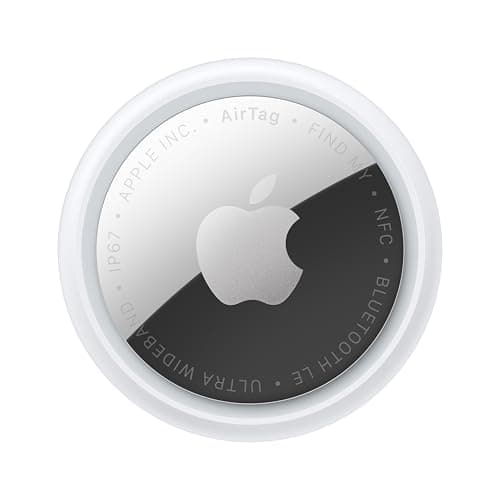
An AirTag on a dog collar is a good purchase and a frequently misunderstood one. It costs about thirty-five dollars all in with no running cost, and it genuinely solves the single most common way a dog goes missing: the front door left open, in a town.
What it does not do is anything in a field. An AirTag has no GPS and no cellular radio — it reports only when a passing iPhone hears its Bluetooth signal. Suburban street: positions every few minutes. Open farmland: nothing, for as long as the dog stays there.
If you are clear about that trade, everything below is how to fit one so it works.
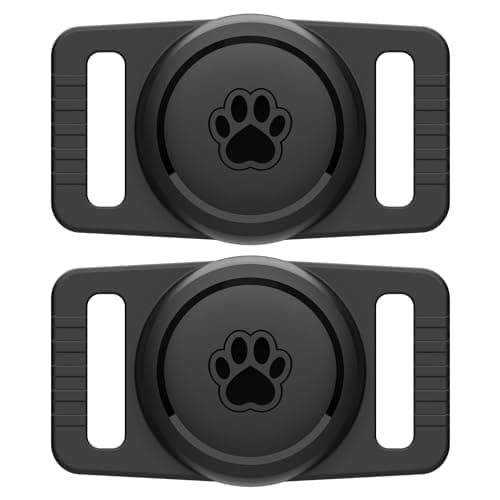
Which holder
Three requirements, and most cheap holders fail at least one.
Waterproof, properly. Dogs swim, roll in wet grass, and drink enthusiastically. A silicone case rated for water is the baseline; a hard plastic shell with a seam is not.
Threaded onto the strap, not clipped to a ring. This is the one that matters most. A holder that clips to the D-ring will eventually unclip on a bramble; one that the collar strap passes through cannot come off unless the collar does.
Flat. A protruding lump gets chewed, caught on fences and worried at by other dogs. Low profile against the strap survives.
Where on the collar
Underneath, at the throat, with the tag face outward. Two reasons: it sits away from the dog's own mouth and from a playmate's teeth, and it is not pressed against the dog's body, which would attenuate the Bluetooth signal.
Avoid the top of the neck, where it rubs under a harness, and avoid positioning it so it swings — a tag that moves wears through its own mount.
The weekly check, which is the whole trick
The failure mode of a tag on a dog collar is silent. The holder splits, or the seam opens, or the tag works loose — and nothing tells you. You discover it on the day the dog is missing, which is the day it matters.
So build a thirty-second habit: when you top up the water bowl, run a thumb over the holder. Is the tag in it? Is the seam closed? Does the holder still grip the strap?
And once a month, open Find My and ring the tag. A tag that does not ring has a dead battery, and your iPhone's low-battery notification is easy to swipe away without registering.
Two tags beats one
On a dog that genuinely matters, fit two in different places — one on the collar, one sewn or taped inside a harness. Collars come off, and a harness and a collar do not come off at the same moment.
At twenty-five dollars with no running cost, the second tag is close to free insurance against the most likely failure: the collar in a hedge and the dog two miles further on.
What a tag tells you that is genuinely useful
Beyond “the dog is on Mill Street”, a tag gives you one piece of information people overlook: whether the dog is stationary.
If the last-seen position has not changed in four hours, the dog is not wandering. It is shut in a garage, tangled in something, or has been taken in by somebody. That changes what you do next — you knock on doors at that location rather than widening the search — and it is the single most useful thing a tag has told anybody.
The anti-stalking notification, and dogs
Both platforms now alert someone when a tracker that is not theirs has been moving with them over time. That has an odd consequence for dogs: if a stranger takes your dog in, their phone may well tell them there is an AirTag on it, along with instructions to disable it.
In practice this is more often helpful than harmful — the notification includes the lost mode message, so a well-meaning finder gets your contact details. Set up Lost Mode on the tag with a phone number, which turns the anti-stalking alert into a found-dog alert.
When to stop reading this page and buy a collar instead
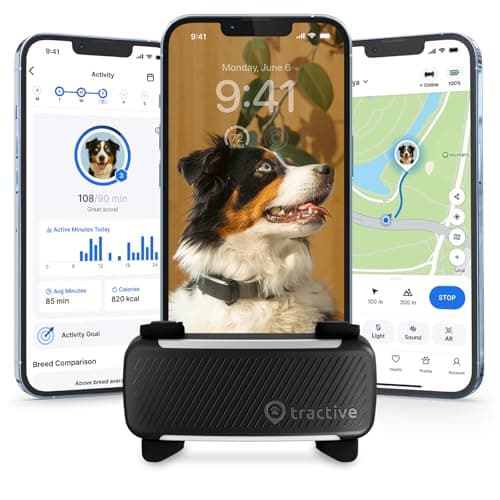
Be honest with yourself about the dog. If any of these is true, a tag is the wrong primary purchase and you should be looking at the cellular options:
- The dog has run off before and not come back on its own
- You walk anywhere you could not search on foot
- The dog has a high prey drive and goes off-lead
- Your area is rural enough that you rarely see pedestrians
For those dogs the tag is a useful backup and a dangerous primary. $252 of plan over three years is the honest cost of the real thing, and for a dog that runs it is worth it.