These are not two price tiers of the same product. They are different technologies that fail in different places, and choosing between them on price is how people end up with a dog tracker that is silent at the one moment it was bought for.
Axis 1: how each one knows where it is
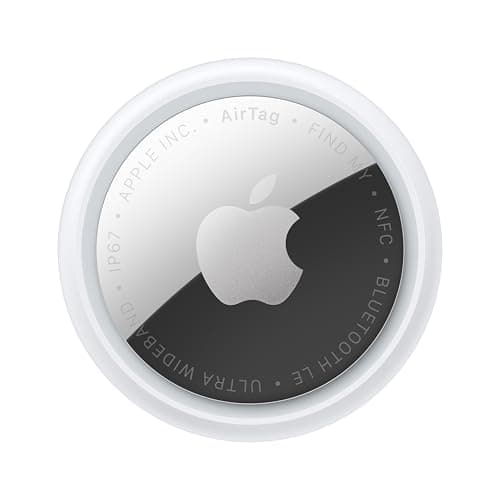
AirTag: it does not. It broadcasts an encrypted Bluetooth identifier, and any passing iPhone relays what it heard. The position is secondhand and arrives when a stranger happens to walk by.
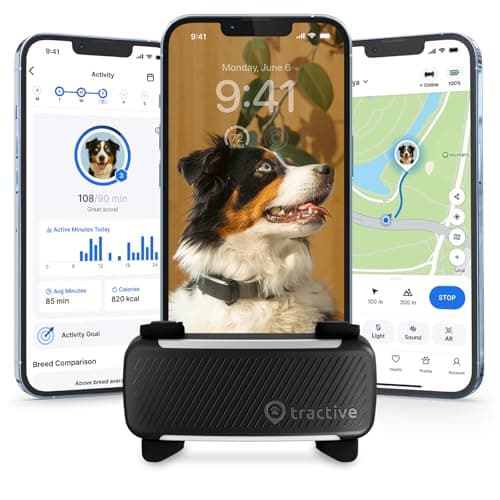
GPS collar: a satellite receiver works out its own position and a cellular modem sends it. No bystanders required.
Everything else on this page follows from that one difference.
Axis 2: where each one works
AirTag: anywhere with pedestrian traffic. Suburban streets, town centers, parks with people in them — excellent, with updates every few minutes. Fields, woodland, rural lanes, moorland — nothing, for hours.
GPS collar: anywhere with cellular coverage, which is most of the populated world and a good deal of the countryside. Fails in genuine dead zones, where it stores the track and uploads it on regaining signal.
Axis 3: live or last-seen
AirTag: last-seen only. There is no “where is my dog now” button that works; there is a map pin with a timestamp on it.
GPS collar: live, with a walk-to-it mode that updates continuously while you close the distance. For a dog that is actively moving, this is a different kind of information.
Axis 4: cost over three years
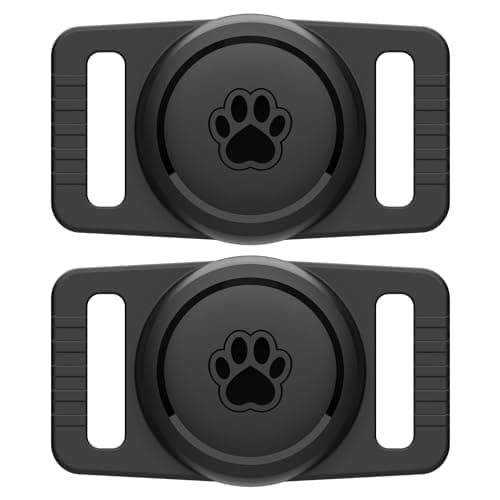
AirTag: the tag, about seven dollars for a waterproof collar holder, and roughly three dollars of coin cells. Call it $35 all in.
GPS collar: the collar plus $252 of plan on Tractive's published Basic rate, taking the cheapest honest route of a two-year term at $144 plus a one-year at $108. Two dogs doubles the plan.
Axis 5: alerts and fencing
AirTag: none that help. Apple's separation alerts are designed for items you leave behind, not for a dog going over a fence, and there is no geofence.
GPS collar: a virtual fence with a push alert when the dog leaves it. This is genuinely the strongest argument for cellular and it is the feature people under-value when shopping: knowing the dog has left within a minute is worth more than knowing exactly where it got to an hour later.
Axis 6: battery and maintenance
AirTag: Apple states more than a year on a replaceable CR2032. You will forget it exists, which is the correct relationship to have with a tracker.
GPS collar: charging every few days. Fine if the dog sleeps indoors and the charger is by the door; a genuine failure point if the dog is kennelled.
Axis 7: what happens if the company goes
AirTag: nothing. The network is Apple's.
GPS collar: it stops. The SIM, the servers and the app all belong to the brand. We checked directly: whistle.com now 301-redirects to tractive.com, a competitor, and tryfi.com redirects to fitracking.com.
The recommendation, by dog
Buy the AirTag if…
Your dog is reliable off-lead or always on one, lives in a town or suburb, and the realistic failure mode is the front door being left open. You are buying insurance against a neighborhood wander, and the tag covers that completely for about thirty-five dollars.
Buy the GPS collar if…
Your dog has ever run and not come back, works land, jumps fences, has a high prey drive, or you walk somewhere you could not search on foot. The geofence alert alone justifies it, and $252 over three years is a reasonable price for knowing where a running dog is right now.
Buy the radio system if…
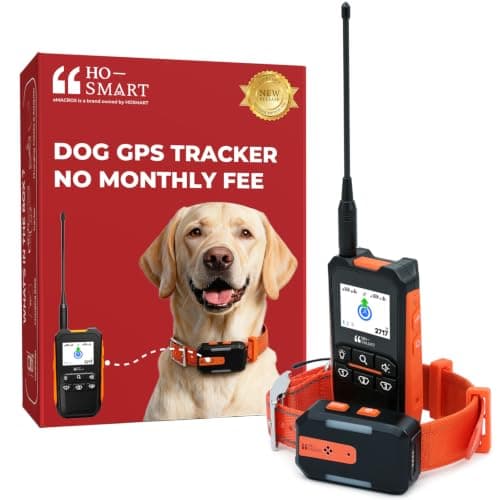
Your dog gets lost in places with no phone signal — moorland, forestry, farmland — or you have several dogs and the per-tracker subscription maths has stopped making sense. This is the option most comparisons leave out, and for a rural owner it is frequently the right one.
Buy neither if…
Your dog has never been off a lead outside a fenced garden and the gate has a working latch. In that case the highest-value purchase is a better latch and a microchip registry entry with your current phone number on it. We would rather say that than sell you a collar.
Why not both?
For a dog that genuinely roams, both is the strongest setup and the second half is almost free. The GPS collar does the live tracking and the fence alerts. A tag on the same collar — or better, sewn into a harness — is your backup for the two cases the collar cannot cover: a flat battery, and the collar coming off in a hedge.
A dog recovered because the GPS collar was lying in a field with a tag beside it is not a hypothetical. The tag costs twenty-five dollars and has no running cost.
What a tag does well that nobody mentions
One underrated use: a tag tells you a dog has been stationary. If the last-seen position has not changed in four hours, the dog is not wandering — it is shut in, tangled, or has been picked up by someone. That is actionable information a live GPS feed gives you too, but a tag gives it to you for nothing.