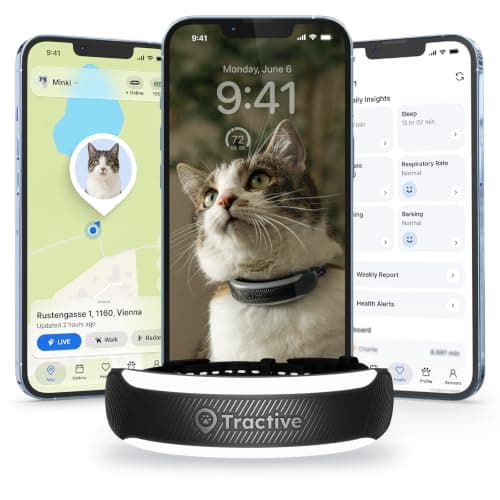
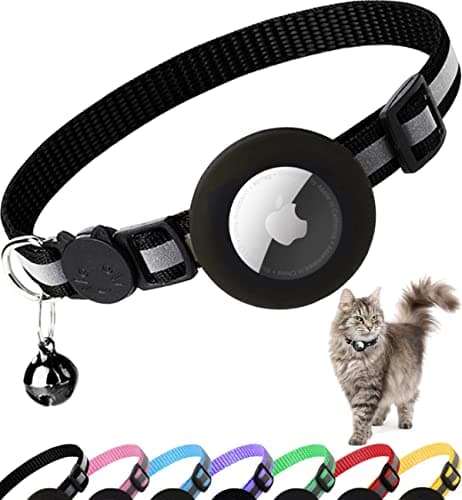
If you are buying a tracker collar for a cat, buy a breakaway collar first and choose the tracker second. A breakaway buckle releases under load if the collar catches on a branch or a fence, and that single feature matters more than any specification on any tracker — the cheap breakaway collar with an integrated tag pocket is the right default for most cats. For a cat that genuinely ranges rather than escaping occasionally, the Tractive cat unit comes on its own cat-weight collar and gives live tracking for $252 of plan over three years.
The reason this page leads with the collar is that the search term is about the collar and almost every answer online is about the tracker. On a cat they are not the same question. A cat climbs, squeezes through gaps and goes under fences. A fixed buckle collar that catches on something holds the cat there; a breakaway buckle lets go. Vets and rescues are consistent on this, and no tracking feature compensates for getting it wrong.
The weight budget, and what it rules out
The general guidance people apply to animal wearables is to keep the total load under roughly 5% of body weight, collar included. On a 9 lb cat that is a small allowance, and it eliminates most dog GPS collars before you read a single specification. It is why the lightest hardware in pet tracking is built and sold for cats, and why a cat-rated device is usually the right choice even for a small dog.
In practice there are three weight tiers: a Bluetooth tag and holder, which almost any cat will carry; a featherweight radio tag at well under an ounce; and a cellular cat tracker, which is the heaviest option and the only one that reports from anywhere.
Four combinations that work
Breakaway collar with an integrated tag pocket. The cheapest safe setup. Covers the indoor cat that gets out twice a year, in a neighborhood with phones in it. The caveat is structural: a breakaway collar can come off, and when it does it takes the tag with it — so what you find is the collar, not the cat.
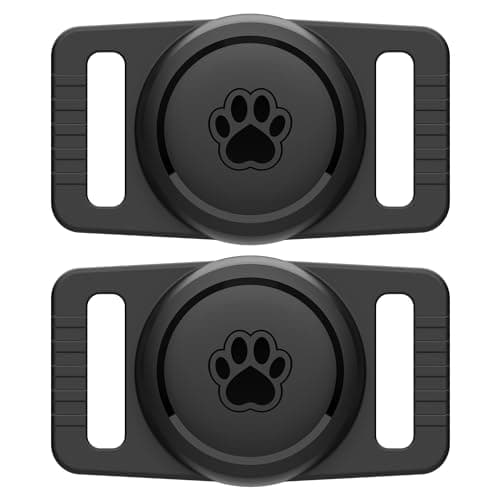
Existing collar plus a waterproof silicone holder. If your cat already wears a collar it tolerates, thread a holder onto that strap rather than changing everything. Keep the holder on the underside of the neck where it is least likely to catch.
A cat-specific cellular tracker on its own collar. The correct answer for a cat that actually ranges — live position over any distance with coverage, on hardware built to a cat's weight budget. You charge it every few days, which is the real-world difficulty with a cat you may not see daily.
A radio tag and handheld. The lightest and the only genuinely no-fee live option. Works where there is no cell signal, which matters on a rural property, and only while you are outside holding the receiver.
What a tag on a cat collar does and does not do
A Bluetooth tag has no GPS and no SIM. It reports when somebody else's phone passes within range, so in a dense suburb a missing cat often turns up as a pin on a map within hours, and on a smallholding it does not turn up at all. That is not a flaw to be fixed by a better holder; it is the technology. The full AirTag-on-a-cat assessment covers the anti-stalking alerts too, which behave in a way cat owners should know about before they rely on one.
Fitting a tracker collar on a cat
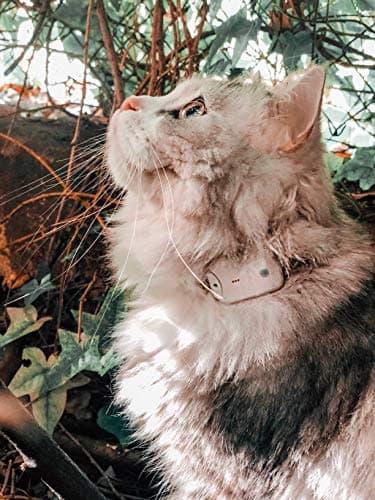
Two fingers of slack between strap and neck — tight enough that it cannot be pulled over the jaw, loose enough not to rub. Check it weekly rather than monthly, because a cat's winter coat changes the fit and a young cat is still growing. Put the device on the underside of the neck, where it is least exposed to branches and least visible to anyone who would remove it.
If your cat will not wear a collar at all
Some will not, and the answer is not to force it. Microchipping gives you identity without a collar — a shelter or vet who scans a found cat can return it to you, which is the single highest-value thing you can do for an outdoor cat. It tells you nothing about location, so pair it with whatever lightweight tracking the cat will accept, even if that is only a tag on a collar for the months it tolerates one.
Breakaway versus harness
A harness holds a tracker more securely and does not release, which is exactly the problem: a harness on a free-roaming cat is a snag risk, and a cat that catches a harness on a fence cannot get out of it. Harnesses are for supervised walks. For a cat that goes out alone, a breakaway collar is the setup, and accepting that it may come off is part of the deal.
The honest cost comparison
A breakaway collar plus a no-fee tag is a one-off purchase of pocket change plus a tag, with about a dollar a year in coin cells if the tag uses them. A cellular cat tracker is hardware plus $252 of plan over three years at Tractive's published Basic rates. A radio system is a larger one-off outlay and nothing afterward. Pick on the cat's actual behavior: paying a subscription for an indoor cat that bolted once is the most common mistake in this category. The no-subscription cat options in full.