Skip to content
Tag & Tether

Pets · Dog & Cat Trackers

GPS dog fences, and the canopy problem

Wire-free containment works on open land and struggles under trees. Read the second part before you spend five hundred dollars.

By Mike M.Last updated

#ad — we earn a commission if you buy through the links on this page, at no cost to you. It never changes what we recommend, and the structural reason it cannot is that we recommend the no-subscription devices, which pay the least. Full disclosure.


A GPS dog fence has no buried wire. You draw a boundary in an app, the collar reads its own GPS position, and when the dog crosses the line the collar warns and then corrects. It is a genuinely clever product and it has one hard limitation that the marketing does not lead with.

The canopy problem, stated plainly

The boundary is only as accurate as the collar's GPS fix. Under open sky a consumer GPS fix is good to a few meters. Under heavy tree canopy — mature woodland, dense conifers, a garden with large trees — accuracy degrades to tens of meters.

A boundary that wanders by twenty meters is worse than no boundary at all. It corrects the dog while it is lying in its usual spot, and fails to correct when the dog crosses the real line. The dog learns nothing except that the collar is unpredictable, which is both a training failure and a welfare problem.

So: look up at your own trees before you spend five hundred dollars. On open land these systems do what they claim. Under canopy, be skeptical of every brand equally — this is physics rather than a quality difference.

What you are actually choosing between

A correcting fence. SpotOn and Halo. The collar delivers a warning tone and then a correction. This is the only option that actually contains a dog without a physical barrier, and it needs open sky.

An alerting geofence. Tractive and most cellular trackers. No correction — the collar simply tells your phone the dog has left the area you drew. For a lot of gardens this is what people actually wanted, it is far cheaper, and it has no welfare question attached.

Neither: a findable dog. If containment is unreliable on your land, the honest alternative is to accept that the dog will sometimes leave and make sure you can find it. A radio system works under canopy where GPS containment does not, and has no subscription.

The short answer

Quick picks

Ranked by what each one costs to own for three years, not by sticker price. The plan column is the one most comparisons leave out.

#ProductBest forPlan / 3 yrPrice
01
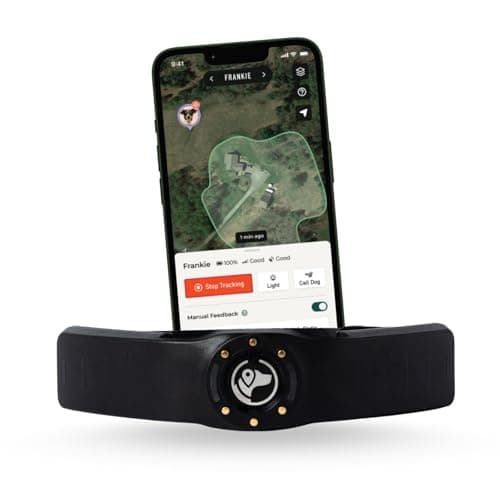
SpotOn SpotOn Nova GPS dog fence
SpotOn Nova GPS dog fence

App-drawn boundaries anywhere, built for working breeds, and it also tracks the dog away from the fence. Expensive, and it still needs open sky to be accurate.

Best on open landPlan required

Plan required

$999.00Amazon
02
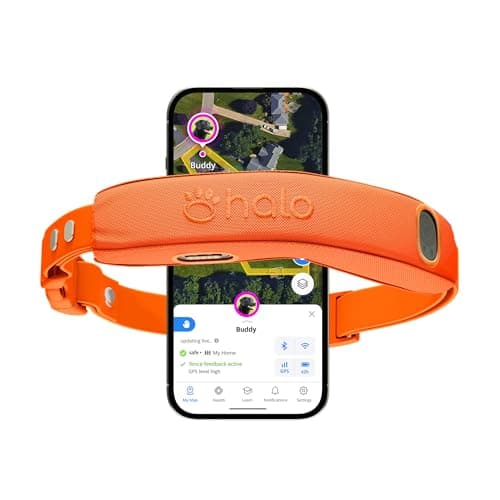
Halo Halo Collar 5
Halo Collar 5

The most polished app and the best training program in the category. Features are tiered behind a subscription, which is exactly the model this site is skeptical of.

Best app and training contentPlan required

Plan required

Check price →
03
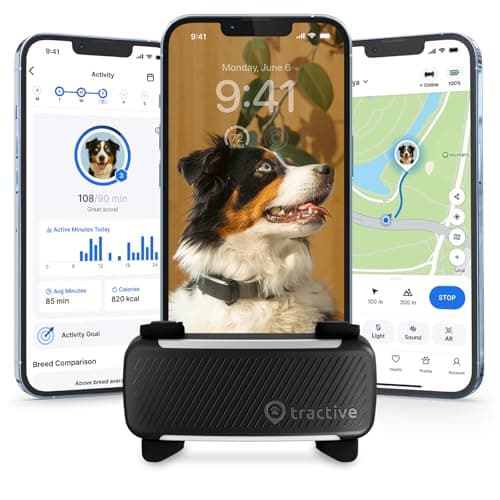
Tractive Tractive Smart Dog GPS tracker
Tractive Smart Dog GPS tracker

Not a fence: a virtual geofence that tells you the dog has left rather than correcting it. For many gardens that alert is what you actually wanted, at $252 of plan over three years.

Alerts instead of correctionPlan required

+$252 / 3 yr

$47.40Amazon
04
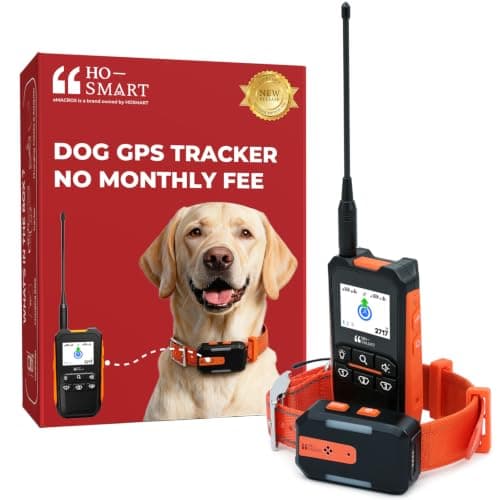
eMACROS eMACROS dog GPS tracker, no subscription
eMACROS dog GPS tracker, no subscription

If containment is unreliable on your land, the honest alternative is to accept the dog will leave and be able to find it. Radio, no subscription, works under trees.

No fence, no fee, find the dogNo monthly fee

$0

$111.99Amazon

#ad · Live prices from Amazon's product API, as of October 8, 2026. Where we have no verified live price we show none — a gap beats a number that has rotted. Plan figures are the brands' own published rates, cited in Sources below.

In detail

The picks, in full

SpotOn SpotOn Nova GPS dog fence
$999.00View on Amazon

Price as of October 8, 2026. Prices move — Amazon's at checkout is the one that counts.

#ad · we may earn a commission from this link to SpotOn Nova GPS dog fence

Top pickPlan required#01 · SpotOn

SpotOn Nova GPS dog fence

Best on open land

App-drawn boundaries anywhere, built for working breeds, and it also tracks the dog away from the fence. Expensive, and it still needs open sky to be accurate.

The subscription reality

A cellular tracker needs a data plan to report its position. This brand does not publish a plan rate we can cite, so treat the device price as a deposit rather than the cost.

Specs, as published by SpotOn

  • App-drawn GPS containment fence with no buried wire
  • Also tracks the dog when it is away from the fence
  • Rugged, weatherproof collar

Good

  • Containment without digging a wire, which is the whole appeal
  • Fences can be drawn anywhere, including away from home
  • Built for working breeds

Not so good

  • Very expensive collar
  • Away-from-home tracking relies on a cellular plan
  • GPS containment needs open sky; it is unreliable under heavy tree cover

Skip it if

your property is wooded. GPS containment accuracy falls apart under canopy, and a fence that drifts is worse than no fence.

Halo Halo Collar 5
Check price on Amazon →

No buyable offer at the last price check (October 8, 2026). We show nothing rather than a stale number.

#ad · we may earn a commission from this link to Halo Collar 5

Plan required#02 · Halo

Halo Collar 5

Best app and training content

The most polished app and the best training program in the category. Features are tiered behind a subscription, which is exactly the model this site is skeptical of.

The subscription reality

A cellular tracker needs a data plan to report its position. This brand does not publish a plan rate we can cite, so treat the device price as a deposit rather than the cost.

Specs, as published by Halo

  • GPS wireless fence with app-drawn boundaries
  • Activity tracking and training program
  • Subscription tiers gate features

Good

  • Polished app and training content
  • Wire-free containment
  • Activity tracking

Not so good

  • Features are tiered behind a subscription
  • Expensive
  • Same GPS-under-canopy limitation as every wireless fence

Skip it if

you object to paying monthly for features already built into hardware you bought. That is exactly the model here.

Tractive Tractive Smart Dog GPS tracker
$47.40View on Amazon

$79.0040% off

Price as of October 8, 2026. Prices move — Amazon's at checkout is the one that counts.

#ad · we may earn a commission from this link to Tractive Smart Dog GPS tracker

Plan required#03 · Tractive

Tractive Smart Dog GPS tracker

Alerts instead of correction

Not a fence: a virtual geofence that tells you the dog has left rather than correcting it. For many gardens that alert is what you actually wanted, at $252 of plan over three years.

The subscription reality

The collar is useless without a plan — the subscription pays for the SIM inside it. The cheapest honest route to three years on Basic is $252.

Published monthly:
$9 Basic (1-year), $6 Basic (2-year)
Over three years:
$252 on Basic (a 2-year term at $144 plus a 1-year at $108)

Specs, as published by Tractive

  • Clips to any collar, cellular with built-in SIM
  • Virtual fence alerts
  • Live tracking with a walk-to-it mode

Good

  • The best-supported pet GPS on the market, and the one most likely to still exist in three years
  • Genuinely live tracking, which is what you need for a dog that runs
  • Virtual fence alerts actually work

Not so good

  • Needs a plan. $252 over three years on Basic is the realistic figure, and that is before the collar
  • Charge every few days
  • The plan is per tracker, so two dogs is two plans

Skip it if

your dog never leaves a fenced garden. For that dog a $25 Bluetooth tag and a sturdy latch is the better purchase.

eMACROS eMACROS dog GPS tracker, no subscription
$111.99View on Amazon

$139.9920% off

Price as of October 8, 2026. Prices move — Amazon's at checkout is the one that counts.

#ad · we may earn a commission from this link to eMACROS dog GPS tracker, no subscription

No monthly fee#04 · eMACROS

eMACROS dog GPS tracker, no subscription

No fence, no fee, find the dog

If containment is unreliable on your land, the honest alternative is to accept the dog will leave and be able to find it. Radio, no subscription, works under trees.

The subscription reality

Radio direction-finding, not cellular. No SIM, no network, no plan — which is exactly why it still works where there is no signal.

Over three years:
$0

Specs, as published by eMACROS

  • Radio link between a handheld and the collar unit — no SIM, no cellular
  • Manufacturer states up to 3 miles of range
  • Works off-grid where there is no phone signal

Good

  • No subscription, ever, because there is no network involved
  • Works in dead zones, which is precisely where cellular pet trackers fail
  • No app, no account, no servers that can be switched off

Not so good

  • You carry a handheld — there is no phone app and no map you can check from work
  • Range is line-of-sight; hills and trees cut it hard
  • Stated 3 miles is a best case, as every radio range figure is

Skip it if

you want to check on the dog from your desk. Radio direction-finding only works when you are out there holding the handheld.

Questions to ask before buying any wireless fence

What does my tree cover look like?

The single most important question and the one the sales process never asks. Open grassland: fine. Scattered mature trees: variable, and test the boundary carefully. Dense woodland: do not buy a GPS fence.

What is behind the boundary?

A GPS fence is not a barrier — it is a deterrent that depends on the dog respecting it. If twenty meters of drift puts the dog on a road, the consequence of a bad fix is not an inconvenience. Wireless containment is for land with forgiving edges.

What happens when the collar battery dies?

The fence stops existing. A physical fence does not have a battery. This is worth building a routine around rather than discovering once.

Which features are behind a subscription?

Halo in particular tiers its features, and the tiers include things people reasonably assume are part of the hardware. Read the tier list before buying, not after — a fence whose boundary-count or alert features lapse with a payment is not the product you thought you bought.

Will this dog respect a boundary at all?

Some dogs will not. A high prey-drive dog mid-chase does not care about a tone, and a dog that breaches once and is not corrected learns that breaching works. If your dog has already defeated a physical fence, a virtual one is unlikely to succeed.

The honest comparison with a buried wire

A traditional buried-wire fence has no GPS accuracy problem at all, works identically under canopy, and costs considerably less than a premium GPS collar. What it costs you is a weekend with a trencher and permanence: the boundary is where you dug it.

The real advantages of GPS are flexibility — you can redraw the boundary, and you can create one away from home — and installation, which is zero. If you will use the flexibility, GPS is worth it. If you want one boundary around one garden forever, a wire is the more reliable and cheaper technology, and we would rather say so.

Training matters more than the hardware

Every manufacturer says this and it is true. These systems work when the dog has been taught the boundary with flags and supervision over a couple of weeks, and they fail when a collar is fitted and the dog is let out.

If you are not going to do the training program, do not buy a correcting fence. Buy an alerting geofence instead — it asks nothing of the dog, it tells you when it has gone, and nobody gets corrected for something they were never taught.

Where we land

On open land, with forgiving edges, and an owner who will do the training: a GPS fence is a good product and SpotOn is the one we would look at first.

Under trees, near a road, or without the training time: do not buy one. Buy a geofencing tracker that alerts you, or a radio system that finds the dog, and spend the difference on a gate latch.
How we picked

We did not lab-test these trackers

Everyone in this category claims to have tested twenty devices. We have not tested any of them, and we say so on every page. What we did instead: read each manufacturer's published specifications and cite them with the date, find the actual subscription price and cite that too, and work out what thirty-six months of ownership costs at those published figures. Device prices come live from Amazon's API and expire after 48 hours rather than going stale. Where a figure could not be sourced to the manufacturer, the page says the spec is unconfirmed rather than borrowing it from a competitor's review. The full method is on the methodology page.

Working out what a tracker really costs? See the three-year cost of every tracker, compared.

Questions

Frequently asked

Do GPS dog fences actually work?
On open land with a clear view of the sky, yes. Under heavy tree canopy, no — GPS accuracy degrades to tens of meters under dense cover, and a boundary that wanders by twenty meters is worse than no boundary because it corrects the dog at random and teaches it nothing. That is physics rather than a brand difference, so be equally skeptical of every manufacturer if your land is wooded.
Is there a GPS dog fence with no monthly fee?
Not among the correcting fences we would recommend — SpotOn and Halo both have subscription elements, and Halo in particular tiers features people assume are part of the hardware. If no-fee is the requirement, the honest alternatives are a traditional buried-wire fence, which has no subscription and no canopy problem, or accepting that the dog will sometimes leave and using a no-fee radio system to find it.
Is a GPS fence better than a buried wire?
Only if you will use the flexibility. A buried wire has no GPS accuracy problem, works identically under trees, has no subscription, and costs less than a premium GPS collar — what it costs you is a weekend with a trencher and a boundary that is permanently where you dug it. GPS wins when you want to redraw the boundary or create one away from home. For one boundary around one garden forever, the wire is more reliable.
What happens if the GPS fence collar battery dies?
The fence stops existing, which is a difference from a physical barrier worth building a routine around rather than discovering once. Most systems alert you at low battery, but an alert you swipe away at 7am is not a safeguard. If the consequence of a failed boundary is the dog on a road, a virtual fence is the wrong tool regardless of battery management.
Will a GPS fence contain a dog with high prey drive?
Often not. A dog mid-chase does not weigh a warning tone against a rabbit, and a dog that breaches once without being corrected learns that breaching works. If your dog has already defeated a physical fence, a virtual one is unlikely to succeed. For those dogs the realistic plan is secure physical containment plus a tracker that finds them when it fails.

Read next

Where the figures came from

Sources

Every specification and plan price on this page traces to one of these, read on the date shown. Device prices are live from Amazon and stamped separately.

  1. Tractive — subscription plans (Basic $9/mo 1-year, $6/mo 2-year; Premium $10/$7/$5) — accessed 2026-10-05
  2. Amazon Product Advertising / Creators API — live prices and product images — accessed 2026-10-05