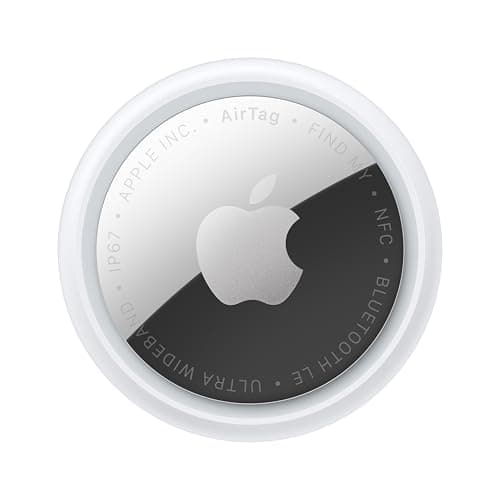
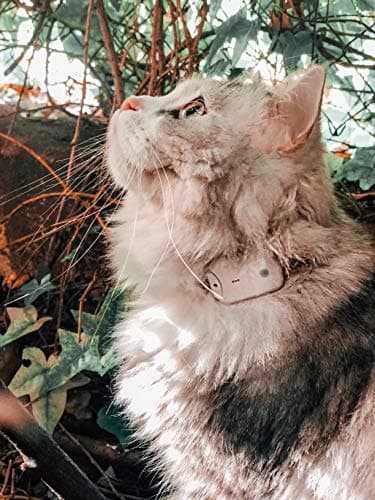
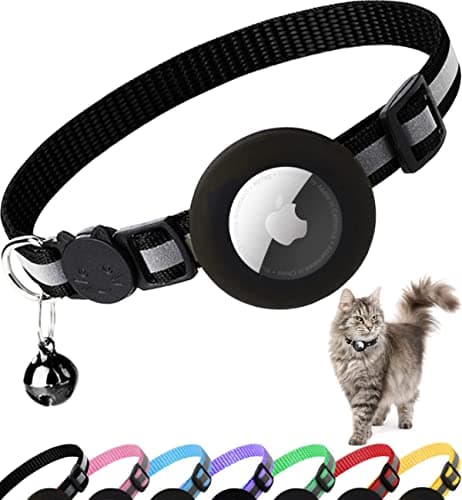
Yes, with one non-negotiable condition: a breakaway collar. A collar that cannot release when it snags on a branch, a fence or a fence post is a genuine strangulation hazard, and outdoor cats snag collars regularly. That condition matters more than everything else on this page put together.
With that in place, an AirTag on a cat is better than most people expect, for a reason worth understanding.
Why a tag suits cats specifically
Cats do not usually vanish into the countryside. The overwhelmingly common way an outdoor cat goes missing is that it gets shut in — a neighbor's garage, a shed, a garden room, a van, under a parked car in a quiet street.
All of those places are surrounded by houses and phones, which is exactly where a crowd-network tag reports. And the tag gives you the one piece of information that solves the case: a position that has not changed in six hours. A cat that is wandering moves. A cat whose last-seen position has been identical since lunchtime is behind a door.
That is the realistic win, and it is why a thirty-dollar setup with no running cost genuinely covers most outdoor cats.
What it will not do
Report from farmland, woodland, or a rural village where the nearest iPhone is a quarter of a mile away. Update continuously while the cat is moving. Give you an alert when the cat leaves the garden — Apple's separation alerts are built for items you leave behind, not for a cat going over a wall.
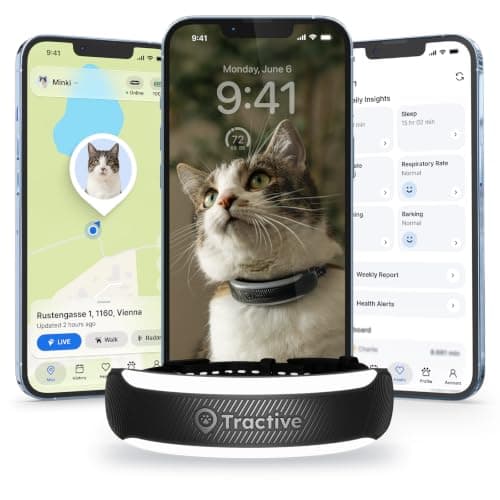
If your cat ranges across fields rather than gardens, a tag will be silent at the moment it mattered, and the honest options are a cellular cat collar or a radio tag.
The breakaway rule, in detail
A breakaway buckle releases under sustained pressure, so a cat that hooks its collar on a branch pulls free instead of hanging. Every cat collar we link to has one.
Two things people get wrong. First, a tight breakaway collar is effectively a normal collar — the buckle only releases if the collar is loose enough to apply pressure to it, so fit it with two fingers' clearance. Second, accept the consequence: a breakaway collar comes off, and when it does your tag goes with it. That is the right trade, and it is a strong argument for also having the cat microchipped.
If you find the collar on the lawn, that is the system working. Replace it.
Weight, and whether your cat will accept it
A tag plus a holder plus a collar is light — far lighter than any cellular cat tracker — but it is not nothing on a small cat. The general guidance for anything a cat wears is to keep the total to a very small fraction of body weight, and on a four-kilogram cat the collar itself uses up a meaningful part of the allowance.
Introduce it in stages. Collar alone for a week, with nothing attached, so the cat gets used to the sensation. Then add the tag. A cat that first encounters the collar with a lump already on it will fight both.
If after several patient weeks the cat still rejects it, that is real information rather than a failure of persistence. The next thing to try is the lightest device available — the 0.28 oz radio tag — rather than a different brand at the same weight. And if the cat accepts nothing, a microchip and keeping it in at night are the honest fallbacks. A collar fought off and lost in a hedge protects nobody.
Which holder for a cat
Lower profile matters more on a cat than on a dog, because cats squeeze through gaps. A flat pocket sewn into the collar webbing is better than a case hanging off a ring, and a hanging case is also more likely to snag — which on a breakaway collar means the collar releases, which means you lose it.
Waterproofing is less critical than on a dog but still worth having: cats go out in rain and sit in wet grass.
Set up Lost Mode before you need it
Turn on Lost Mode for the tag and put a phone number in the message. Here is why it matters specifically for cats: both platforms now alert someone when a tracker that is not theirs is traveling with them, and a neighbor who takes in your cat will likely get that notification. With Lost Mode configured, the alert shows them your number. Without it, they get instructions on how to disable the tag.
That one setting turns the anti-stalking system into a found-cat system, and almost nobody does it in advance.
The thing that matters more than the tag
A microchip, with current registry details. It locates nothing — it is a passive identifier readable at a few centimeters — but it is how a cat comes home three weeks later from a rescue forty miles away, which is the outcome that most often actually happens.
Chip the cat, update the phone number on the registry today, and then add the tag for the separate problem of finding one this afternoon. Only one of those survives the collar coming off.