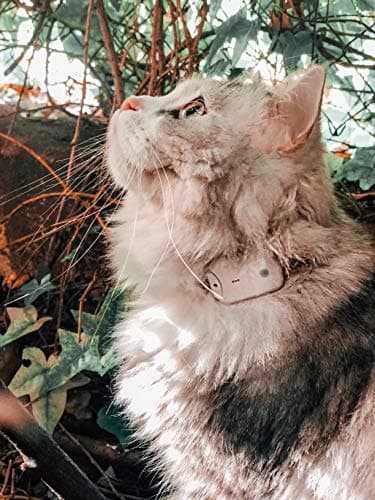
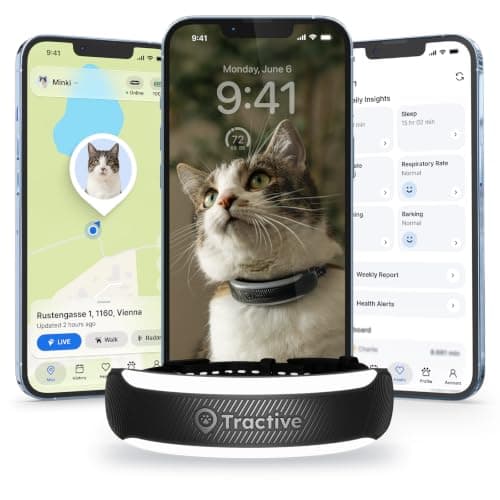
Cat tracking has one constraint that dominates everything else, and it is not price. It is weight. A cat will not tolerate a module designed for a labrador, and a cat that will not tolerate the collar is a cat with no tracker on it.
That is why cat-specific cellular trackers exist as separate products rather than as a marketing variant: the dog versions are physically too heavy. It is also why the lightest option on this page is a radio tag at 0.28 oz with no subscription, rather than anything cellular.
The safety rule that comes first
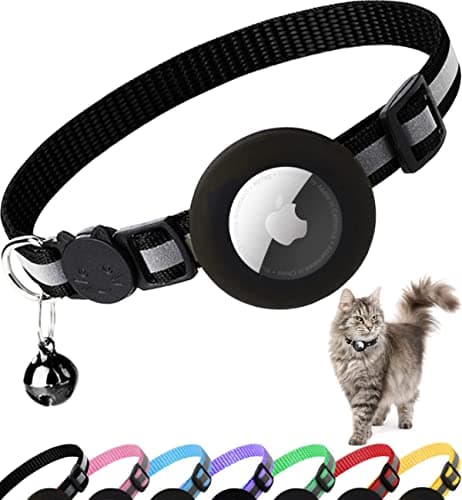
Use a breakaway collar. This is not a tracker opinion, it is a cat-safety one: a collar that cannot release when it snags on a branch, a fence or a fence post is a genuine strangulation hazard, and outdoor cats snag collars regularly.
Every cat collar we link to has a breakaway buckle. If you already own a collar you like, check that it does before you add weight to it. And accept the trade-off this creates: a breakaway collar can come off, and when it does it takes the tracker with it. That is the correct trade — a lost tracker is better than a hurt cat — but it means a collar tracker is never a guarantee.
Which cat are you buying for?
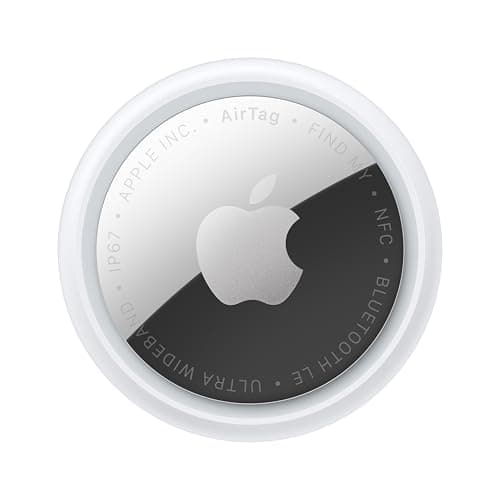
An indoor cat that escapes occasionally. A breakaway collar with an AirTag. The escape happens in a neighborhood, the Find My network is dense there, and it costs nothing to run. This is the right answer for most indoor cats and almost nobody sells it to you, because there is no subscription in it.
An outdoor cat that stays within a few gardens. Still a tag, honestly. You will get positions as neighbors' phones pass, which is enough to find a cat shut in somebody's shed — the single most common way an outdoor cat goes missing.
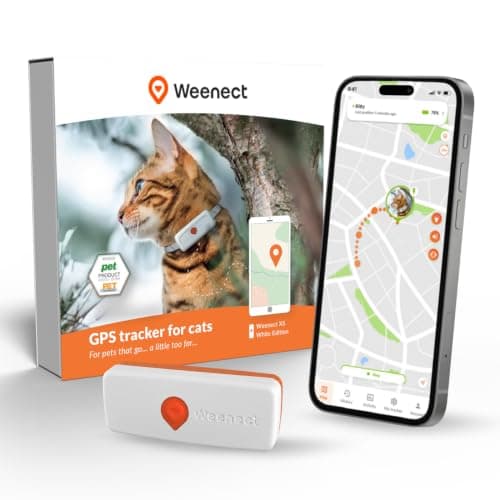
An outdoor cat that genuinely ranges. Now you need live tracking, and that means cellular — Tractive's cat version or Weenect — with the subscription that comes with it. Or radio, if you are prepared to walk with a handheld.
A cat that will not wear anything substantial. The 0.28 oz radio tag, and accept that you will be outside with a handheld rather than looking at a phone.
The charging problem, which is worse on cats
Cellular cat trackers need charging every few days, and the obstacle is that you may not see your cat every day. An outdoor cat that comes home for food at unpredictable times is not a reliable charging schedule, and a flat tracker on a missing cat is the worst possible outcome.
Two practical mitigations. Keep the charger wherever the cat eats, so charging is attached to a routine that already happens. And prefer a device with a low-battery alert that actually reaches your phone, so you find out before it dies rather than after.
This is one of the strongest arguments for a tag on a cat: a CR2032 lasts over a year, so the problem simply does not arise.
What the tag will and will not do
Worth being specific, because “it only works near phones” is too vague to act on.
A tag will locate a cat shut in a neighbor's garage or shed, tell you which street it is on, show you that it has been in the same spot for six hours (which is how you learn it is trapped), and do all of that for no running cost for years.
A tag will not report from fields, woodland or anywhere without pedestrian traffic, update continuously while a cat is moving, or help at all in a rural village where the nearest iPhone is a quarter of a mile away.
For a suburban cat the first list is almost everything you need. For a rural cat the second list is fatal.
Radio tracking for cats, which is underrated
The Girafus system is an unusual product and worth understanding, because it solves a problem nothing else on this page solves: a very light tag, live distance and direction, and no subscription, working with zero phone coverage.
How it works in practice: you carry a handheld, it points toward the tag and gives you a distance, and you walk until you find the cat. Range collapses around buildings, so in a dense street it is less useful than the quoted figures suggest; in open ground behind a house it is exactly the right tool.
The honest limitation is the same as every radio system — there is no map on your phone and no alert while you are at work. It is a finding tool for when you are out looking, not a monitoring tool.
Microchips are not trackers, and the distinction matters
A microchip is a passive identifier readable by a vet or a shelter at a few centimeters. It is the single most important thing you can do for a cat that goes missing, and it has nothing to do with location: it does not transmit, it has no battery, and nobody can find your cat with it.
Get the cat chipped and keep the registry details current, then buy a tracker for the finding problem. They solve different halves and the chip is the one that gets a cat home from a shelter three weeks later.