Skip to content
Tag & Tether

Pets · Dog & Cat Trackers

Best GPS trackers for livestock

Nothing you can buy at a listed price was designed for cattle. Here is what actually works on open ground, what it costs per animal, and where each option stops.

By Mike M.Last updated

#ad — we earn a commission if you buy through the links on this page, at no cost to you, from Amazon and from brand partner programs. It never changes the order: our top pick is routinely the cheapest option to own over three years rather than the best-paying one. Full disclosure.


If your ground has no cell coverage - which is most grazing - the only thing that genuinely works is radio direction-finding: a handheld and a collar, no subscription, the Garmin Alpha system at the top end and eMACROS at the budget end. If you have coverage and you only need to tag one or two animals, a cellular collar like Tractive puts them on your phone for $252 of plan across three years per animal. Nothing retail works across a whole herd at a sane price. That is the honest shape of this category, and the rest of this page is why.

Start with the thing no other page about this will tell you: there is no consumer livestock tracker. The hardware sold at a listed price is pet hardware and vehicle hardware. Purpose-built livestock systems - the ear tags and virtual fencing collars designed for cattle at herd scale - are sold as farm systems through dealers, with per-head subscriptions quoted on request rather than published. We do not list them here because we only cover products with a price you can see before you commit. Everything below is something you can buy today, used for a job it was not specifically built for, and the limits of that are stated on every pick.

The coverage problem decides this before anything else

A cellular tracker works out its own position from satellites and then needs a mobile network to send it. Grazing land is where that breaks: the collar knows exactly where the animal is and has no way to tell you. Most devices store the track and upload it when they regain signal, which gives you a precise record of where a cow was two hours ago. Useful afterwards, useless during.

This is the same physics that drives our page on rural dog trackers and dead zones, and the conclusion is the same: where there is no signal, radio direction-finding is not a compromise, it is the only technology that functions. A radio system has no network at all. The collar transmits, the handheld receives, and the distance between them is the whole system. No SIM, no carrier, no subscription, and nothing to switch off.

So before you compare any specification, go and stand in the far corner of the pasture with your phone. If you have one or two bars, cellular collars are on the table. If you have nothing, they are not, no matter what the listing promises.

The arithmetic that kills cellular at herd scale

Cellular pet trackers are billed per device. Tractive’s own published rates come to $252 across three years on the Basic plan, routed the cheapest honest way, and that is per tracker, not per account. One tracker on one animal is a reasonable purchase. Ten animals is ten plans. Forty is a conversation with your accountant.

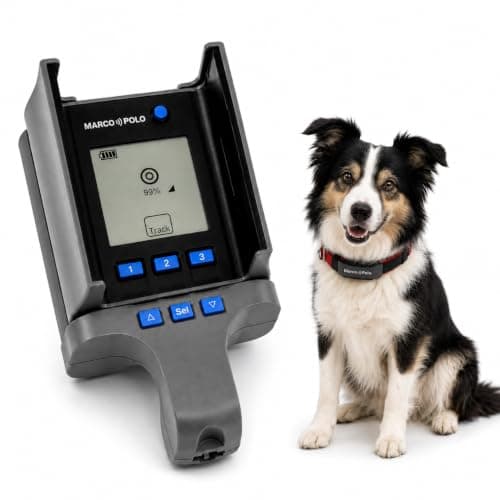
Radio systems invert that. The handheld is the expensive part and you buy it once; additional collars cost money but nothing recurring. Marco Polo follows several collars off one handheld and the Garmin Alpha handheld follows up to twenty, with no fee for the tracking either way. Past a handful of animals, the no-fee systems are not just philosophically nicer, they are arithmetically unavoidable - the three-year table for every tracker we cover is where those numbers live side by side.

Tag the right animals, not all of them

Nobody tags a whole herd, and you do not need to. Stock moves together, which means a tracker on the right one or two animals tells you where the group is.

Shepherds have used the bellwether principle for centuries: fit the device to the animal the others follow. For sheep and goats that is the lead ewe or doe. For cattle it is often the one that finds the gap in the fence first, and every stockman knows which cow that is. Tag her, and the escape alert arrives before the rest of the herd has walked through the hole.

Then tag the exceptions separately: the animal that is sick, the one that is about to calve, the bull that walks the boundary, the goat that treats a fence as a suggestion. Two or three devices chosen this way cover a surprising amount of a working herd.

Fit, durability and the things that actually break

Everything here was designed for a dog, so fit is the first practical problem. A pet collar strap will not go around a mature cow or a horse, and the normal answers are a halter, a dedicated neck strap, or the device attached to an existing collar or cattle strap. Weight is not the constraint it is on a cat - a 1,200 lb animal does not notice a tracker - but what the animal does to it is.

Livestock rub. Hard, deliberately, against posts, gates, trees and each other, and that is how a module clipped to a strap ends up in the mud in the far corner. Mount anything snug and under the jaw line rather than loose on the top of the neck, check it at every handling, and treat the first lost device as tuition rather than a defect. Water is the other one: troughs, creeks and rain mean waterproofing is mandatory, and a charging port flap that has been chewed is no longer a seal.

Charging is the quiet dealbreaker on cellular collars. Live reporting costs battery, and these devices are rated in days rather than months, so the device has to come off the animal and go on a charger regularly. On a dog that happens in your kitchen. On a range cow it means gathering her first, which is the thing you bought the tracker to avoid. Radio collars and the big-battery units are where that problem goes away.

Theft and strays are two different purchases

Animals leave for two reasons and the hardware answers them differently.

Strays and escapes are the animal-borne tracker’s job: a gate left open, a tree down on a fence, a spooked horse. That is what the radio and cellular picks above exist for.

Theft is almost never the animal walking anywhere. Stock is loaded into a trailer at night and driven, and the fastest route to a recovery is tracking the trailer, the truck and the gate rather than the livestock. A cellular vehicle tracker on the stock trailer, and cheap tags in the tack room and on the equipment, cover that far better than a collar does - our trailer tracker roundup is the right page for that half, and the new mower and ground-equipment page covers the machinery that goes out of the same yard. Either way, keep your identification in order - brands, ear tag numbers, registration papers and photographs. A location without proof of ownership is only half of a recovery.

Top pickPlan required

Best for livestock

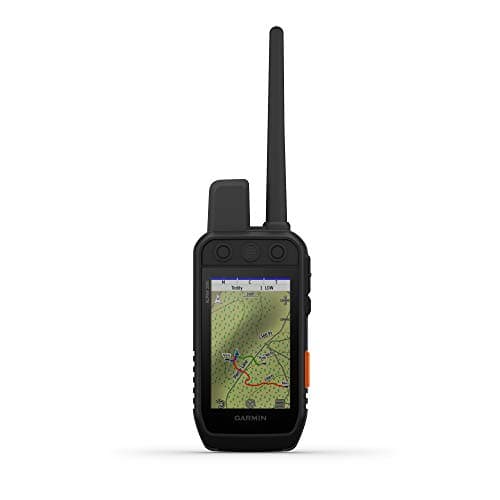
Garmin Alpha 200i handheld

The ceiling of off-grid animal tracking, and the only kind of system that genuinely does not care whether your pasture has coverage.

$499.99Garmin Alpha 200i handheld on Amazon

$749.9933% off

Price as of November 20, 2026. Prices move — Amazon's at checkout is the one that counts.

#ad · we may earn a commission from this link to Garmin Alpha 200i handheld

Read the full write-up on the Garmin Alpha 200i handheld

The short answer

Quick picks

Ranked by what each one costs to own for three years, not by sticker price. The plan column is the one most comparisons leave out.

#ProductBest forPlan / 3 yrPrice
01
Garmin Garmin Alpha 200i handheld
Garmin Alpha 200i handheld

The ceiling of off-grid animal tracking, and the only kind of system that genuinely does not care whether your pasture has coverage. It is a handheld radio tracker that follows up to twenty collars at once, with topographic mapping on the screen, and the tracking itself has no subscription at all - the radio link is free forever. Two honest things about using it on livestock. It is professional hunting-dog equipment, so the collars are dog collars and you are adapting them to a larger animal. And the price is professional too: the handheld alone costs more than most people expect to spend on an entire herd, and collars are sold separately.

Best overall for open ground, no fee to trackPlan required

Plan for satellite

$499.99Amazon
02
Garmin Garmin Alpha TT 25 collar
Garmin Alpha TT 25 collar

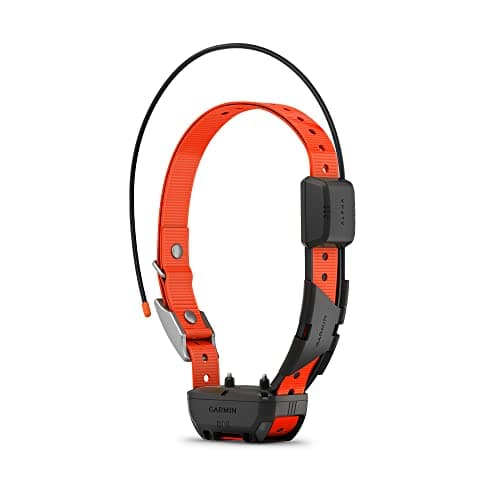
Useless on its own and excellent with the handheld, which is the thing to understand before you add one to a cart. This is the animal-worn half of the Alpha system: rugged, radio-linked, no subscription for tracking, and the way you add a second or third animal once you own a handheld. It is a dog device with training stimulation built in, a feature that has no place on livestock and that you simply leave alone. Budget per animal rather than per herd, because that is how the cost scales.

The collar half of the Garmin systemNo monthly fee

$0

$299.99Amazon
03
eMACROS eMACROS dog GPS tracker, no subscription
eMACROS dog GPS tracker, no subscription

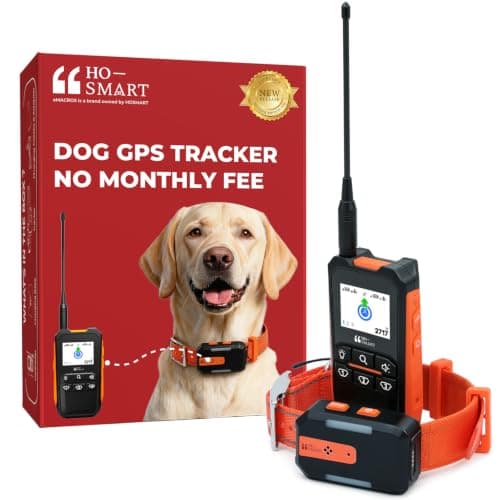
The cheapest honest route to tracking an animal where there is no cell signal. A radio link runs directly between a handheld and the collar unit - no SIM, no carrier, no account and nothing to cancel - and the manufacturer states up to three miles of range. For a stock dog, a bellwether ewe or a goat that goes through fences, that is a one-off purchase that keeps working during an outage and after a company folds. What you give up is real: there is no app and no map you can check from the house, the stated range is open-country best case that hills and brush cut hard, and you have to be out there holding the handheld for it to help at all.

Budget pick - radio tracking with no plan, everNo monthly fee

$0

$111.99Amazon
04
Marco Polo Marco Polo Advanced pet tracker
Marco Polo Advanced pet tracker

The answer to the per-animal billing problem, because there is no billing. One handheld follows several collar units over its own radio link with no SIM and no plan, and the range in open terrain is the longest claim of the no-fee systems here. On a smallholding with a few goats or sheep that is exactly the shape of the problem. It is expensive up front - that is where the subscription money went instead - the collar units are bulky, and like every radio system it only helps somebody standing in the field with the handheld, not somebody checking a phone in town.

Several animals on one handheld, no subscriptionNo monthly fee

$0

$329.95Amazon
05
Tractive Tractive Smart Dog GPS tracker
Tractive Smart Dog GPS tracker

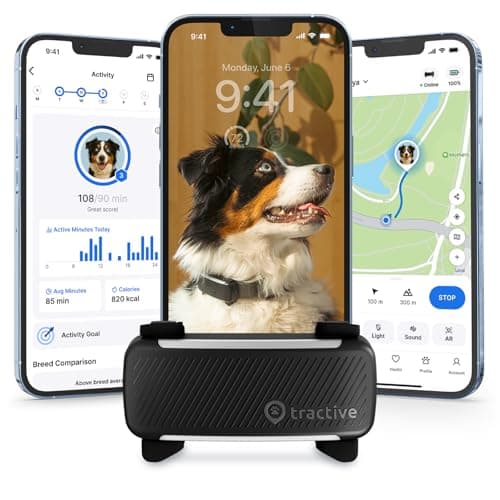
The option that puts the animal on a map you can open from the kitchen, which no radio system here can do. A cellular module with its own SIM clips to a collar or a neck strap and reports a live position over LTE, with virtual fence alerts that tell you the moment an animal leaves a boundary you drew. It is also the best-supported pet tracking platform in the category. Two constraints decide whether it fits. It needs a mobile signal at the animal, which is the exact thing most pasture does not have. And the plan is per tracker - $252 across three years on Basic by Tractive's own published rates - so one tagged animal is affordable and forty is not.

A live position on your phone, where there is coveragePlan required

+$252 / 3 yr

$47.40Amazon
06
Tracki Tracki Pro 4G
Tracki Pro 4G

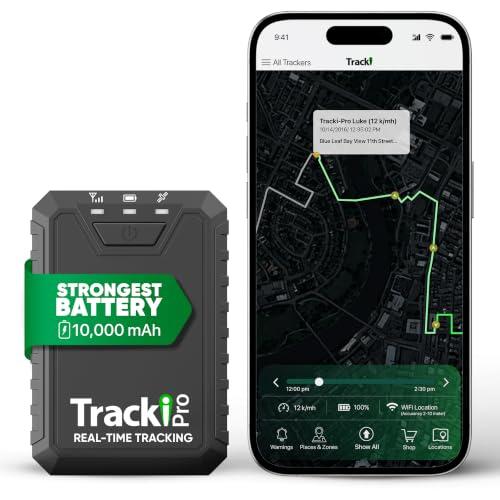
The long-battery cellular unit, and on a farm the honest best use for it is not an animal at all: it is the stock trailer, the gate, the water tank pump or the quad. Tracki states a 10,000 mAh battery at two to twelve months per charge depending on mode and network, with a magnet mount and 3M tape in the box, so it can be fitted and forgotten for a season. Strapped to a halter it will report a large animal's position too, where there is signal. The plan is the product: $9.95 a month on a long-term plan is $358.20 across thirty-six months, and reporting stops the day it lapses.

Months per charge, for a trailer or one tagged animalPlan required

+$358 / 3 yr

$16.99Amazon
07
Apple Apple AirTag (2nd generation)
Apple AirTag (2nd generation)

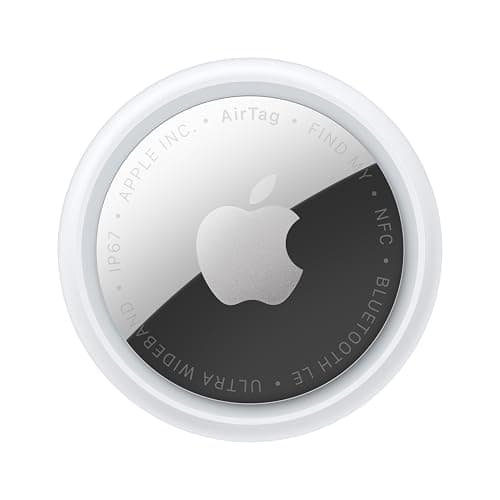
On this page the AirTag is deliberately not an animal tracker, and that is the useful part. A tag reports only when somebody carrying an iPhone walks within Bluetooth range of it, so on open pasture it tells you nothing - there is nobody out there. On the things that get taken off a farm and driven into town, it is the cheapest finder there is: a tag in the tack box, one in the trailer, one on the chainsaw case, no subscription and a coin cell once a year. Buy it for that job, not for the herd, and note that it needs an iPhone household to work at all.

The barn, the trailer and the tack - not the animalNo monthly fee

$0 + batteries

$23.00Amazon

#ad · Live prices from Amazon's product API, as of November 20, 2026. Where we have no verified live price we show none — a gap beats a number that has rotted. Plan figures are the brands' own published rates, cited in Sources below.

In detail

The picks, in full

Garmin Garmin Alpha 200i handheld
$499.99Garmin Alpha 200i handheld on Amazon

$749.9933% off

Price as of November 20, 2026. Prices move — Amazon's at checkout is the one that counts.

#ad · we may earn a commission from this link to Garmin Alpha 200i handheld

Top pickPlan required#01 · Garmin

Garmin Alpha 200i handheld

Best overall for open ground, no fee to track

The ceiling of off-grid animal tracking, and the only kind of system that genuinely does not care whether your pasture has coverage. It is a handheld radio tracker that follows up to twenty collars at once, with topographic mapping on the screen, and the tracking itself has no subscription at all - the radio link is free forever. Two honest things about using it on livestock. It is professional hunting-dog equipment, so the collars are dog collars and you are adapting them to a larger animal. And the price is professional too: the handheld alone costs more than most people expect to spend on an entire herd, and collars are sold separately.

The subscription reality

The handheld works as a GPS and as a dog tracker with no fee at all. The inReach satellite messaging is the part that needs an airtime plan, and only if you want it.

Specs, as published by Garmin

  • Handheld radio tracker for up to 20 Garmin dog collars
  • Built-in inReach satellite messaging (airtime plan optional)
  • Topographic mapping on the handheld

Good

  • Dog tracking itself needs no subscription — the radio link is free forever
  • Works with zero phone signal, which is the entire point for hunting dogs
  • inReach gives you an SOS in places with no coverage, if you want the plan

Not so good

  • Very expensive, and the collars are sold separately
  • Satellite messaging is the part that needs an airtime plan
  • Overkill for a pet dog

Skip it if

the dog is a family pet. This is professional hunting-dog equipment and priced like it.

Garmin Garmin Alpha TT 25 collar
$299.99Garmin Alpha TT 25 collar on Amazon

$349.9914% off

Price as of November 20, 2026. Prices move — Amazon's at checkout is the one that counts.

#ad · we may earn a commission from this link to Garmin Alpha TT 25 collar

No monthly fee#02 · Garmin

Garmin Alpha TT 25 collar

The collar half of the Garmin system

Useless on its own and excellent with the handheld, which is the thing to understand before you add one to a cart. This is the animal-worn half of the Alpha system: rugged, radio-linked, no subscription for tracking, and the way you add a second or third animal once you own a handheld. It is a dog device with training stimulation built in, a feature that has no place on livestock and that you simply leave alone. Budget per animal rather than per herd, because that is how the cost scales.

The subscription reality

Radio direction-finding, not cellular. No SIM, no network, no plan — which is exactly why it still works where there is no signal.

Over three years:
$0

Specs, as published by Garmin

  • Dog collar device for the Garmin Alpha system
  • Radio tracking plus training stimulation
  • No subscription for tracking

Good

  • No fee
  • Rugged
  • Adds a dog to an existing Alpha handheld

Not so good

  • Needs an Alpha handheld to do anything
  • Expensive per dog
  • Not a pet product

Skip it if

you do not already own a Garmin Alpha handheld.

eMACROS eMACROS dog GPS tracker, no subscription
$111.99eMACROS dog GPS tracker on Amazon

$139.9920% off

Price as of November 20, 2026. Prices move — Amazon's at checkout is the one that counts.

#ad · we may earn a commission from this link to eMACROS dog GPS tracker, no subscription

No monthly fee#03 · eMACROS

eMACROS dog GPS tracker, no subscription

Budget pick - radio tracking with no plan, ever

The cheapest honest route to tracking an animal where there is no cell signal. A radio link runs directly between a handheld and the collar unit - no SIM, no carrier, no account and nothing to cancel - and the manufacturer states up to three miles of range. For a stock dog, a bellwether ewe or a goat that goes through fences, that is a one-off purchase that keeps working during an outage and after a company folds. What you give up is real: there is no app and no map you can check from the house, the stated range is open-country best case that hills and brush cut hard, and you have to be out there holding the handheld for it to help at all.

The subscription reality

Radio direction-finding, not cellular. No SIM, no network, no plan — which is exactly why it still works where there is no signal.

Over three years:
$0

Specs, as published by eMACROS

  • Radio link between a handheld and the collar unit — no SIM, no cellular
  • Manufacturer states up to 3 miles of range
  • Works off-grid where there is no phone signal

Good

  • No subscription, ever, because there is no network involved
  • Works in dead zones, which is precisely where cellular pet trackers fail
  • No app, no account, no servers that can be switched off

Not so good

  • You carry a handheld — there is no phone app and no map you can check from work
  • Range is line-of-sight; hills and trees cut it hard
  • Stated 3 miles is a best case, as every radio range figure is

Skip it if

you want to check on the dog from your desk. Radio direction-finding only works when you are out there holding the handheld.

Marco Polo Marco Polo Advanced pet tracker
$329.95Marco Polo Advanced pet tracker on Amazon

Price as of November 20, 2026. Prices move — Amazon's at checkout is the one that counts.

#ad · we may earn a commission from this link to Marco Polo Advanced pet tracker

No monthly fee#04 · Marco Polo

Marco Polo Advanced pet tracker

Several animals on one handheld, no subscription

The answer to the per-animal billing problem, because there is no billing. One handheld follows several collar units over its own radio link with no SIM and no plan, and the range in open terrain is the longest claim of the no-fee systems here. On a smallholding with a few goats or sheep that is exactly the shape of the problem. It is expensive up front - that is where the subscription money went instead - the collar units are bulky, and like every radio system it only helps somebody standing in the field with the handheld, not somebody checking a phone in town.

The subscription reality

Radio direction-finding, not cellular. No SIM, no network, no plan — which is exactly why it still works where there is no signal.

Over three years:
$0

Specs, as published by Marco Polo

  • Radio direction-finding system with its own handheld locator
  • No SIM and no subscription
  • Long radio range in open country

Good

  • No fee ever, and no dependence on a company's servers staying up
  • Long range in open terrain
  • Multiple pets on one handheld

Not so good

  • Expensive up front — this is where the subscription money went instead
  • Handheld-only; no phone app
  • Bulky collar unit

Skip it if

you need the location on your phone while you are at work. Radio systems only help someone standing in the field.

Tractive Tractive Smart Dog GPS tracker
$47.40Tractive Smart Dog GPS tracker on Amazon

$79.0040% off

Price as of November 20, 2026. Prices move — Amazon's at checkout is the one that counts.

#ad · we may earn a commission from this link to Tractive Smart Dog GPS tracker

Plan required#05 · Tractive

Tractive Smart Dog GPS tracker

A live position on your phone, where there is coverage

The option that puts the animal on a map you can open from the kitchen, which no radio system here can do. A cellular module with its own SIM clips to a collar or a neck strap and reports a live position over LTE, with virtual fence alerts that tell you the moment an animal leaves a boundary you drew. It is also the best-supported pet tracking platform in the category. Two constraints decide whether it fits. It needs a mobile signal at the animal, which is the exact thing most pasture does not have. And the plan is per tracker - $252 across three years on Basic by Tractive's own published rates - so one tagged animal is affordable and forty is not.

The subscription reality

The collar is useless without a plan — the subscription pays for the SIM inside it. The cheapest honest route to three years on Basic is $252.

Published monthly:
$9 Basic (1-year), $6 Basic (2-year)
Over three years:
$252 on Basic (a 2-year term at $144 plus a 1-year at $108)

Specs, as published by Tractive

  • Clips to any collar, cellular with built-in SIM
  • Virtual fence alerts
  • Live tracking with a walk-to-it mode

Good

  • The best-supported pet GPS on the market, and the one most likely to still exist in three years
  • Genuinely live tracking, which is what you need for a dog that runs
  • Virtual fence alerts actually work

Not so good

  • Needs a plan. $252 over three years on Basic is the realistic figure, and that is before the collar
  • Charge every few days
  • The plan is per tracker, so two dogs is two plans

Skip it if

your dog never leaves a fenced garden. For that dog a $25 Bluetooth tag and a sturdy latch is the better purchase.

Tracki Tracki Pro 4G
$16.99Tracki Pro 4G on Amazon

$29.8843% off

Price as of November 20, 2026. Prices move — Amazon's at checkout is the one that counts.

#ad · we may earn a commission from this link to Tracki Pro 4G

Plan required#06 · Tracki

Tracki Pro 4G

Months per charge, for a trailer or one tagged animal

The long-battery cellular unit, and on a farm the honest best use for it is not an animal at all: it is the stock trailer, the gate, the water tank pump or the quad. Tracki states a 10,000 mAh battery at two to twelve months per charge depending on mode and network, with a magnet mount and 3M tape in the box, so it can be fitted and forgotten for a season. Strapped to a halter it will report a large animal's position too, where there is signal. The plan is the product: $9.95 a month on a long-term plan is $358.20 across thirty-six months, and reporting stops the day it lapses.

The subscription reality

Tracki has no pricing page: the only rate the company publishes is the line "Monthly fee options starting at $9.95 for long-term plans" in its product copy, and the faster update intervals are explicitly tied to the plan you buy. $9.95 a month is $358.20 over thirty-six months, which is a large multiple of the device price.

Published monthly:
from $9.95 on a long-term plan, per Tracki's own product page
Over three years:
$358.20 at the cheapest rate Tracki publishes

Specs, as published by Tracki

  • 4G LTE with a built-in SIM, 16 stated bands, magnet mount and 3M tape in the box
  • 10,000 mAh battery, stated at 2 to 12 months per charge depending on mode and network
  • Update interval stated as 15 seconds to 1 minute, depending on the subscription
  • "Waterproof out of the box" per Tracki, with no IP rating published

Good

  • A very large battery for a battery-powered tracker, so months between charges is plausible
  • Cheap to buy, and the lifetime warranty Tracki states covers a lost or damaged device
  • Real-time reporting once the plan is paid, which no Bluetooth tag can do

Not so good

  • The plan is the product: $9.95 a month on a long-term plan is $358.20 over three years
  • Tracki publishes that rate only in product copy — there is no pricing page on the site
  • Faster update intervals are sold as a higher tier, so precision is a paid upgrade
  • Reports stop dead the moment the plan lapses, and the device keeps none of its value

Skip it if

you want a one-off purchase. This is a subscription with a tracker attached, not the other way round.

Apple Apple AirTag (2nd generation)
$23.00Apple AirTag on Amazon

$29.0021% off

Price as of November 20, 2026. Prices move — Amazon's at checkout is the one that counts.

#ad · we may earn a commission from this link to Apple AirTag (2nd generation)

No monthly fee#07 · Apple

Apple AirTag (2nd generation)

The barn, the trailer and the tack - not the animal

On this page the AirTag is deliberately not an animal tracker, and that is the useful part. A tag reports only when somebody carrying an iPhone walks within Bluetooth range of it, so on open pasture it tells you nothing - there is nobody out there. On the things that get taken off a farm and driven into town, it is the cheapest finder there is: a tag in the tack box, one in the trailer, one on the chainsaw case, no subscription and a coin cell once a year. Buy it for that job, not for the herd, and note that it needs an iPhone household to work at all.

The subscription reality

No subscription. The only recurring cost is a CR2032 roughly once a year, which is pennies.

Over three years:
about $3 in coin cells

Specs, as published by Apple

  • User-replaceable CR2032 coin cell; Apple states it runs more than a year
  • IP67 (1 m for up to 30 minutes, IEC 60529)
  • Ultra Wideband Precision Finding, 1.5x the range of the first generation
  • Speaker 50% louder than the first generation

Good

  • No subscription, and Apple has never charged one
  • The Find My network is the largest crowd network in the world, so a lost AirTag in a populated area usually reports within minutes
  • Precision Finding walks you to it by distance and direction, not just a map pin
  • Battery is a coin cell from any supermarket, not a sealed pack

Not so good

  • iPhone only for setup and full use — there is no Android app
  • It has no GPS of its own: it reports when an Apple device walks past it, so it is a finder, not a tracker
  • No keyring hole, so you are buying a holder as well

Skip it if

you are on Android, or you need to watch something move in real time — an AirTag only knows where it was when someone last walked past it.

How we ranked these

1. Does it work where the animals actually are? Coverage beats every other specification on this page, which is why three of the top four picks are radio systems with no network dependency at all. A cellular collar that cannot report from the back forty is not a cheaper option, it is a non-functioning one.

2. What does it cost per animal across three years? Device price plus thirty-six months of plan, per tracker. On a per-animal basis the expensive radio handheld gets cheaper the more animals you add, and the cheap cellular module gets more expensive.

3. Will it survive the animal? Rubbing, water, mud, brush and other livestock. Waterproofing and a mounting method that stays put are worth more than a feature list.

4. How often does it need to come off? Any device that needs charging every few days imposes a gathering job on you. On a pet that is nothing; on range stock it can be the single biggest reason a tracker ends up in a drawer.

What about ear tag trackers?

It is the obvious form factor and the question we get asked most, so: GPS ear tags for cattle do exist as a product category, and they are sold to farms as part of a managed system, typically with per-head subscriptions quoted by a dealer rather than published on a page. That is a different market from the one this site covers, and we will not print prices or specifications we cannot verify from the manufacturer at a public price.

If you want that route, go to the manufacturers directly and ask three questions: what the per-head cost is across three years, what happens to the hardware if you stop paying, and what the coverage requirement is on your ground. Those three answers tell you more than any brochure. If the answers do not work for your operation, the shortlist above is what is left - and the no-fee radio systems in particular do not care how far your nearest cell tower is.

Virtual fencing is a separate decision

Containment and location are different products that marketing likes to blur together. A tracker tells you where an animal is. A virtual fence tries to keep it somewhere, and for dogs it does that with a GPS boundary and a warning tone - our page on GPS dog fences without a monthly fee covers how well that works and where it fails under tree cover. The cattle equivalents are farm systems with the same dealer-quoted pricing as the ear tags, and the same caveat applies: we do not price what we cannot cite. If what you need is a boundary rather than a position, buy that deliberately rather than hoping a tracker does it.

One honest expectation to set

None of these devices manage an animal for you. They shorten the search. A radio handheld turns four hours of driving fence lines into twenty minutes of walking toward a beep, and a cellular collar turns a 6am phone call from a neighbor into an alert you got at 2am. That is the whole of the value, and it is worth real money on a working operation - but a tracker has never mended a fence.
In short

Our recommendation

Top pickPlan required

Garmin Alpha 200i handheld

Best overall for open ground, no fee to track

The ceiling of off-grid animal tracking, and the only kind of system that genuinely does not care whether your pasture has coverage.

$499.99Garmin Alpha 200i handheld on Amazon

$749.9933% off

Price as of November 20, 2026. Prices move — Amazon's at checkout is the one that counts.

#ad · we may earn a commission from this link to Garmin Alpha 200i handheld

Runner-upNo monthly fee

Garmin Alpha TT 25 collar

The collar half of the Garmin system

Useless on its own and excellent with the handheld, which is the thing to understand before you add one to a cart.

$299.99Garmin Alpha TT 25 collar on Amazon

$349.9914% off

Price as of November 20, 2026. Prices move — Amazon's at checkout is the one that counts.

#ad · we may earn a commission from this link to Garmin Alpha TT 25 collar

Still deciding on the running cost rather than the device? Every tracker subscription, costed over three years.

How we picked

Researched from published specs and real plan prices

Every pick here is researched from the manufacturer's published specifications, each one cited with the date it was read, and from the brand's own published subscription rate — then costed out over thirty-six months so you can see what the device really comes to. Device prices come live from Amazon's API and expire after 48 hours, so the number you see is current. Where a figure is not published by the manufacturer, the page says the spec is unconfirmed rather than borrowing it from a competitor's review. The full method is on the methodology page.

Working out what a tracker really costs? See the three-year cost of every tracker, compared.

Questions

Frequently asked

Can you put a dog GPS tracker on a cow?
Physically, yes, and plenty of people do - the module clips to a halter or a neck strap instead of a dog collar, and the weight is irrelevant on an animal that size. The two things that decide whether it works are coverage and charging. A cellular unit needs a mobile signal at the animal to report anything, and it needs taking off to charge every few days, which means gathering the animal. If your pasture has signal and you are only tracking one or two animals you handle regularly, it is a reasonable solution. If not, a radio system is the honest answer.
Is there a livestock tracker with no monthly fee?
Yes, but it is a different technology rather than a cheaper version of the same thing. Radio direction-finding systems - the Garmin Alpha setup, Marco Polo, eMACROS - have no SIM, no carrier and no subscription, because there is no network involved at all. You pay once for the handheld and the collars and you are done. The trade is that you have to be outdoors holding the handheld within a few miles of the animal; there is no app and no map you can check from the house. Any product that sends a position to your phone from anywhere needs a cellular plan, and somebody has to pay a carrier for that.
Will an AirTag work on livestock?
On open pasture, no. An AirTag has no GPS and no network connection of its own: it reports only when a passing iPhone hears it over Bluetooth, and the reason it works so well in a town is that phones are everywhere. In a field there are no phones, so there is nothing to report. Where a tag is genuinely useful on a farm is anything that gets driven into a populated area - the stock trailer, the tack box, tool cases, the quad - and for that it is the cheapest finder available, with no subscription at all.
How many animals do I need to tag?
Fewer than people assume. Stock moves as a group, so a tracker on the animal the others follow - the lead ewe, the bellwether, the cow that finds every gap - tells you where the group is. Add devices for the exceptions rather than the rest of the herd: an animal that is sick, one that is close to calving, a bull that walks the boundary, or the individual escape artist. Two or three well-chosen devices cover most working herds, and that is also what keeps a per-tracker subscription from becoming absurd.
What is the cheapest way to track goats or sheep?
A radio system on the bellwether. Goats and sheep stay together and follow a leader, so one collar on the right animal plus a handheld covers the flock, with no plan to pay. eMACROS is the budget end of that approach and Marco Polo is the multi-animal version. The cheap cellular modules look less expensive on the shelf and are not: the plan is the cost, it is charged per device, and goats are frequently kept exactly where coverage is worst.
Do these trackers tell me if an animal is in labor or sick?
Not reliably, and we would not buy one expecting it. Some pet trackers report activity levels, which can hint that something has changed, but these are location devices adapted to livestock rather than health monitors, and the purpose-built animal health systems are the dealer-sold farm equipment described above. Treat any of these picks as a tool for finding an animal, not for diagnosing one.
What about tracking a horse?
Same technologies, slightly different practicalities, and we have a dedicated page for it: horses are usually tracked on a halter or a turnout rug, they are often kept somewhere with better access than range cattle, and the theft case for a horse involves a trailer almost by definition. Start with our horse tracker roundup, then come back here if your ground has no coverage, because that is where the radio systems earn their price.

Read next

Where the figures came from

Sources

Every specification and plan price on this page traces to one of these, read on the date shown. Device prices are live from Amazon and stamped separately.

  1. Garmin — inReach satellite communicators: "global two-way messaging" beyond cellular coverage, "weeks on a single charge", "interactive SOS messages with your GPS coordinates to the 24/7-staffed Garmin Response center", and the stated requirement "Handhelds with inReach technology: Active plan required" plus the note that some jurisdictions regulate or prohibit satellite communication devices — accessed 2026-10-20
  2. Tractive — subscription plans (Basic $9/mo 1-year, $6/mo 2-year; Premium $10/$7/$5) — accessed 2026-10-05
  3. Tracki — Tracki Pro product page: '10,000mAh Lithium-ion battery', '2 to 12 months per charge' depending on 'the mode of operation and cellular network conditions', update interval '15 Seconds - 1 Minute, depending on subscription', 'Waterproof out of the box. No need for extra accessories' (no IP rating stated), 4G bands 1/2/3/4/5/7/12/13/17/18/19/20/25/26/38/41, 'Lifetime warranty (including lost or damaged device)', and 'Monthly fee options starting at $9.95 for long-term plans' — accessed 2026-10-26
  4. Apple — AirTag product page (battery, IP67, Precision Finding) — accessed 2026-10-05
  5. Amazon Product Advertising / Creators API — live prices and product images — accessed 2026-10-05

Brands: want your product tested? For Brands.