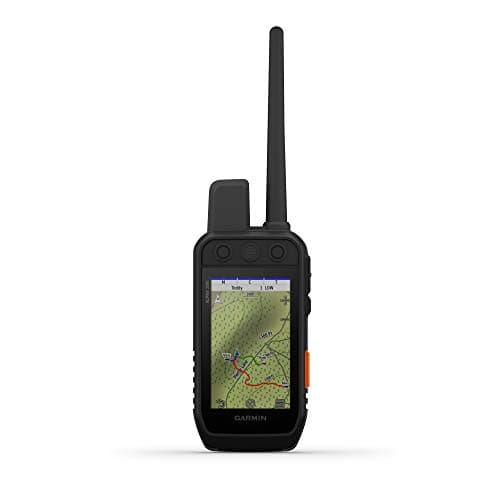
For hunting dogs the right technology is radio, not cellular, and the reference answer is the Garmin Alpha system: a handheld that tracks up to twenty collars over its own radio link, works with zero phone signal, and charges nothing per month for the tracking itself. If you would rather not buy a second screen, the Dogtra Pathfinder 2 does the same job with your phone as the display. If you want radio tracking without a four-figure outlay, the eMACROS pair is the budget entry point.
This is the one category on this site where the no-subscription answer is also the technically superior one, and the reason is simple. A cellular collar reports its position over a carrier network. Hunting happens in the places carriers do not cover — hollows, canopy, public land miles from a tower — so the collar that works beautifully in a suburb goes silent exactly where you need it. A radio system has no network to lose: the handheld talks straight to the collar, and the only thing between them is terrain.
Radio versus cellular, stated plainly
Radio direction-finding. The collar transmits, the handheld receives, and the handheld shows you bearing and distance or a position on a map. No SIM, no account, no servers, no monthly fee, and nothing that stops working if the manufacturer is bought. The limit is that it only helps somebody standing within range holding the receiver — there is no checking on the dog from the truck twenty miles away.
Cellular. Live position on your phone from anywhere with coverage, a plan every month, and silence in a dead zone. Right for a pet dog that escapes the yard in a town; wrong for a hound working country. The rural-coverage problem in full.
What the range numbers mean
Every radio range figure on this page is a line-of-sight best case. Dogtra states 9 miles; eMACROS states up to 3. Both are honest about the conditions in the sense that the industry always quotes open terrain, and both collapse in a wooded valley. Treat the quoted number as a ranking rather than a promise: a system stating 9 miles will outrun one stating 3 in the same ground, by roughly that ratio, and neither will hit its number under canopy. Why range figures are measured the way they are.
The cost that actually matters
Radio systems front-load everything. A Garmin handheld plus one collar is a serious purchase, and each additional dog is another collar. A cellular collar is cheap and then bills you forever. Over five years with two dogs, the radio system wins outright — which is the whole argument this site exists to make, and the one case where it is uncontroversial.
The short answer
Quick picks
Ranked by what each one costs to own for three years, not by sticker price. The plan column is the one most comparisons leave out.
| # | Product | Best for | Plan / 3 yr | Price |
|---|
| 01 | Garmin Alpha 200i handheldThe reference handheld: radio tracking of up to 20 Garmin collars with no fee for the tracking itself, topographic mapping, and inReach satellite SOS if you want the airtime. | Serious hunting, up to 20 dogs | Plan required Plan for satellite | $694.89·Amazon |
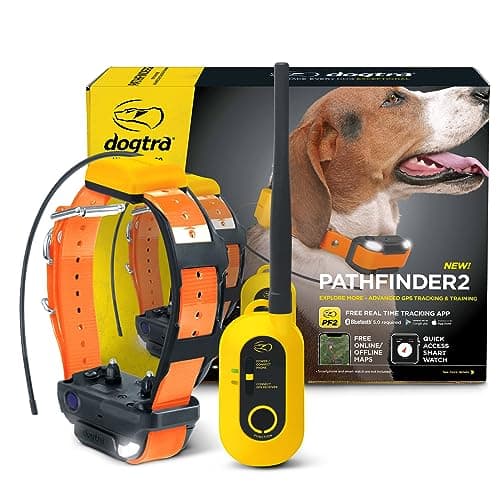
| 02 | Dogtra Pathfinder 2Garmin-class radio range — Dogtra states 9 miles — with your phone as the display instead of a second handheld to buy and charge. No subscription. | Using your phone as the screen | No monthly fee $0 | $429.99·Amazon |
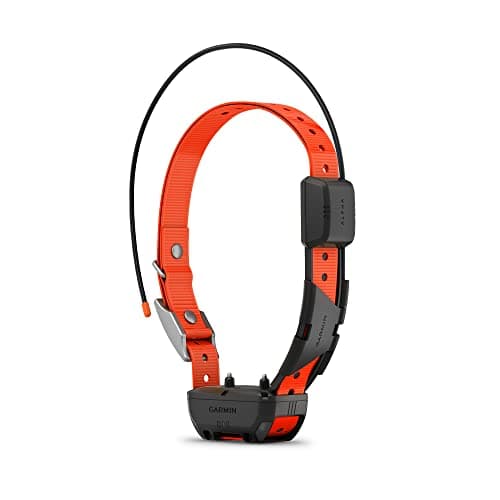
| 03 | Garmin Alpha TT 25 collarThe collar half of the Garmin system, with training stimulation built in. Useless on its own, which is the thing to understand before ordering one. | Adding a dog to an Alpha | No monthly fee $0 | $349.99·Amazon |
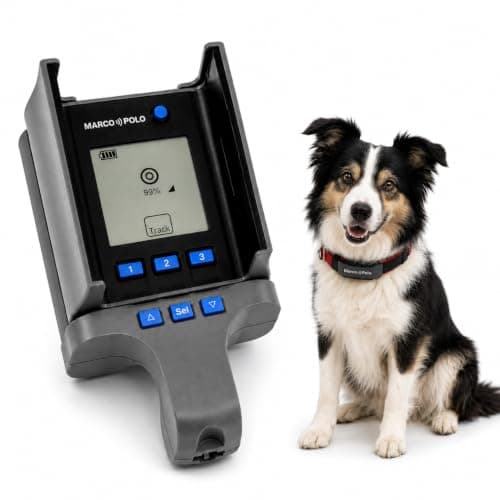
| 04 | Marco Polo Advanced pet trackerPay once, a lot, and never again. Handheld-only with no phone app, which suits somebody standing in a field and nobody at a desk. | Multiple dogs, lowest running cost | No monthly fee $0 | $329.95·Amazon |
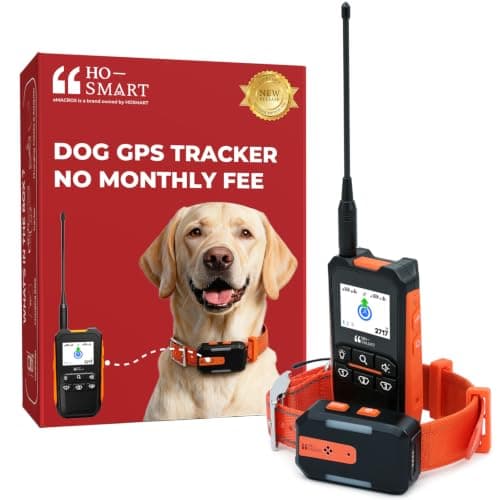
| 05 | | The cheap way into radio tracking | No monthly fee $0 | $139.99·Amazon |
#ad · Live prices from Amazon's product API, as of October 11, 2026. Where we have no verified live price we show none — a gap beats a number that has rotted. Plan figures are the brands' own published rates, cited in Sources below.
In detail
The picks, in full
Top pickPlan required#01 · Garmin
Garmin Alpha 200i handheld
Serious hunting, up to 20 dogs
The reference handheld: radio tracking of up to 20 Garmin collars with no fee for the tracking itself, topographic mapping, and inReach satellite SOS if you want the airtime.
The subscription reality
The handheld works as a GPS and as a dog tracker with no fee at all. The inReach satellite messaging is the part that needs an airtime plan, and only if you want it.
Specs, as published by Garmin
- ·Handheld radio tracker for up to 20 Garmin dog collars
- ·Built-in inReach satellite messaging (airtime plan optional)
- ·Topographic mapping on the handheld
Good
- +Dog tracking itself needs no subscription — the radio link is free forever
- +Works with zero phone signal, which is the entire point for hunting dogs
- +inReach gives you an SOS in places with no coverage, if you want the plan
Not so good
- −Very expensive, and the collars are sold separately
- −Satellite messaging is the part that needs an airtime plan
- −Overkill for a pet dog
Skip it if
the dog is a family pet. This is professional hunting-dog equipment and priced like it.
No monthly fee#02 · Dogtra
Dogtra Pathfinder 2
Using your phone as the screen
Garmin-class radio range — Dogtra states 9 miles — with your phone as the display instead of a second handheld to buy and charge. No subscription.
The subscription reality
Radio direction-finding, not cellular. No SIM, no network, no plan — which is exactly why it still works where there is no signal.
- Over three years:
- $0
Specs, as published by Dogtra
- ·Phone-based GPS dog tracking over its own radio link, with a stated 9-mile range
- ·No subscription
- ·Includes training stimulation
Good
- +Uses your phone as the screen, so no second handheld to buy
- +No subscription at all
- +9 stated miles is far beyond any cellular pet tracker's usefulness off-grid
Not so good
- −Needs a bridge unit paired to the phone
- −Stated range is open-country best case
- −Expensive
Skip it if
you want a slim pet collar — this is field equipment.
No monthly fee#03 · Garmin
Garmin Alpha TT 25 collar
Adding a dog to an Alpha
The collar half of the Garmin system, with training stimulation built in. Useless on its own, which is the thing to understand before ordering one.
The subscription reality
Radio direction-finding, not cellular. No SIM, no network, no plan — which is exactly why it still works where there is no signal.
- Over three years:
- $0
Specs, as published by Garmin
- ·Dog collar device for the Garmin Alpha system
- ·Radio tracking plus training stimulation
- ·No subscription for tracking
Good
- +No fee
- +Rugged
- +Adds a dog to an existing Alpha handheld
Not so good
- −Needs an Alpha handheld to do anything
- −Expensive per dog
- −Not a pet product
Skip it if
you do not already own a Garmin Alpha handheld.
No monthly fee#04 · Marco Polo
Marco Polo Advanced pet tracker
Multiple dogs, lowest running cost
Pay once, a lot, and never again. Handheld-only with no phone app, which suits somebody standing in a field and nobody at a desk.
The subscription reality
Radio direction-finding, not cellular. No SIM, no network, no plan — which is exactly why it still works where there is no signal.
- Over three years:
- $0
Specs, as published by Marco Polo
- ·Radio direction-finding system with its own handheld locator
- ·No SIM and no subscription
- ·Long radio range in open country
Good
- +No fee ever, and no dependence on a company's servers staying up
- +Long range in open terrain
- +Multiple pets on one handheld
Not so good
- −Expensive up front — this is where the subscription money went instead
- −Handheld-only; no phone app
- −Bulky collar unit
Skip it if
you need the location on your phone while you are at work. Radio systems only help someone standing in the field.
No monthly fee#05 · eMACROS
eMACROS dog GPS tracker, no subscription
The cheap way into radio tracking
A handheld-and-collar radio pair with a stated 3-mile range and no SIM anywhere in it. Far less capable than a Garmin, and a fraction of the price.
The subscription reality
Radio direction-finding, not cellular. No SIM, no network, no plan — which is exactly why it still works where there is no signal.
- Over three years:
- $0
Specs, as published by eMACROS
- ·Radio link between a handheld and the collar unit — no SIM, no cellular
- ·Manufacturer states up to 3 miles of range
- ·Works off-grid where there is no phone signal
Good
- +No subscription, ever, because there is no network involved
- +Works in dead zones, which is precisely where cellular pet trackers fail
- +No app, no account, no servers that can be switched off
Not so good
- −You carry a handheld — there is no phone app and no map you can check from work
- −Range is line-of-sight; hills and trees cut it hard
- −Stated 3 miles is a best case, as every radio range figure is
Skip it if
you want to check on the dog from your desk. Radio direction-finding only works when you are out there holding the handheld.
Which system, by how you hunt
More than two dogs, or dogs you run hard: the Garmin Alpha. The handheld handles up to twenty collars, the mapping is genuinely useful in unfamiliar ground, and the inReach SOS is a real safety feature if you buy the airtime. Expensive, and the collars are sold separately.
One or two dogs, and you want fewer gadgets: the Dogtra Pathfinder 2. Your phone is the screen, which removes a device to charge and a device to drop. You do carry a bridge unit paired to the phone.
Already own an Alpha handheld: the TT 25 collar. Nothing else to decide.
Several dogs and the lowest possible running cost: Marco Polo. Handheld only, no app, bulky collar, and nothing to pay ever again.
You want to try radio without the outlay: eMACROS. A fraction of the price, a fraction of the range and the ruggedness, and genuinely no subscription.
What about a cellular collar as a backup?
It is a reasonable belt-and-braces move if your ground has coverage at the edges: the radio system finds the dog in the dead zone, the cellular collar reports once it walks back into signal. You are paying two plans' worth of attention for it — the cellular collars are ranked separately, and the plan cost is per tracker, so two dogs is two subscriptions.
Training collars and tracking collars
Several of these units combine tracking with training stimulation, because that is how the hunting market buys them. If you do not want stimulation, say so when ordering — the tracking-only variants exist and cost less. If you do, treat the e-collar side as a separate skill to learn properly rather than a feature you have bought.
The one thing that fails most often
Battery discipline. A radio collar that was not charged the night before is a collar that is not tracking at mile two, and unlike a cellular tracker there is no app to warn you from the house. Charge the handheld and every collar the evening before, every time, and carry a battery bank.
How we picked
We did not lab-test these trackers
Everyone in this category claims to have tested twenty devices. We have not tested any of them, and we say so on every page. What we did instead: read each manufacturer's published specifications and cite them with the date, find the actual subscription price and cite that too, and work out what thirty-six months of ownership costs at those published figures. Device prices come live from Amazon's API and expire after 48 hours rather than going stale. Where a figure could not be sourced to the manufacturer, the page says the spec is unconfirmed rather than borrowing it from a competitor's review. The full method is on the methodology page.
Working out what a tracker really costs? See the three-year cost of every tracker, compared.
Read next
Related
The table behind every recommendation on this site: device, plan, and what thirty-six months actually comes to.
Why cellular collars fail off-grid, and what the alternatives cost.
The no-fee pet options across every technology, not just radio.
The cellular collars, for dogs that roam where there is coverage.
Why 120 m on the box has almost nothing to do with whether you find your keys.
Bluetooth tags, cellular GPS and radio direction-finding are different products, not price tiers.