A trailer breaks most of the assumptions behind car-tracker reviews. There is no OBD port. There is usually no permanent power. And unlike a car, which you see daily, a trailer can sit in a yard for six weeks — which means a tracker that needs charging every fortnight is not a tracker, it is a chore you will stop doing.
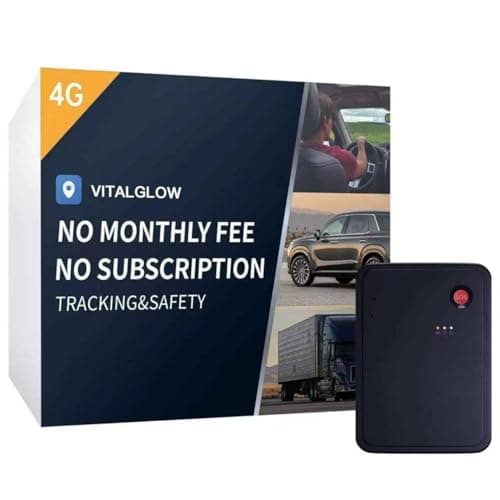
So the priorities reorder completely. Battery life becomes the headline specification rather than an afterthought. Install becomes about magnets rather than wiring. And the no-fee options become genuinely competitive, because the thing you most need to know about a trailer is simply that it moved, not a second-by-second route.
The question that decides it: where does it sit?
A trailer parked where there are people — a driveway, a yard on a road, a storage compound in a town — is a genuine Bluetooth tag case, and that surprises people. A tag in a magnetic waterproof case will tell you the trailer has left and give you positions as it passes through populated areas, for no running cost at all, forever. For a utility trailer worth a few thousand dollars that is an entirely reasonable level of protection.
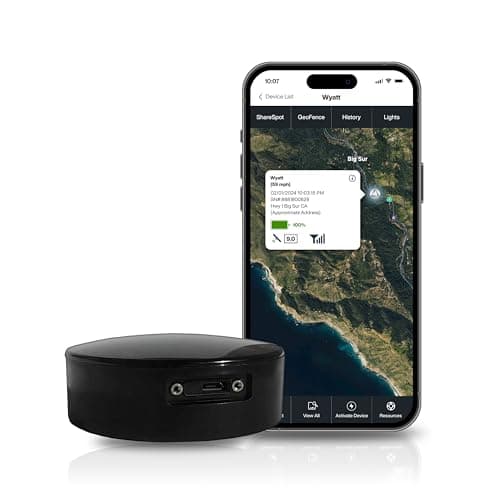
A trailer that goes to remote sites needs cellular, because there will be no phones out there to relay anything. Here you are buying battery life, and you should expect to pay for the service one way or another.
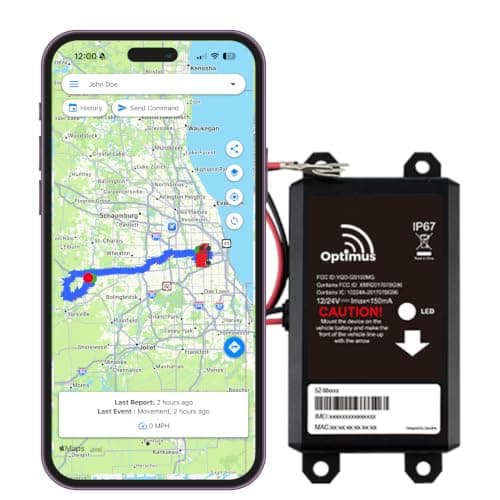
A trailer with any 12V supply — lighting power, a leisure battery, a solar panel — should be hardwired. It removes the only real weakness of trailer tracking in one move.
Battery life is the specification that matters
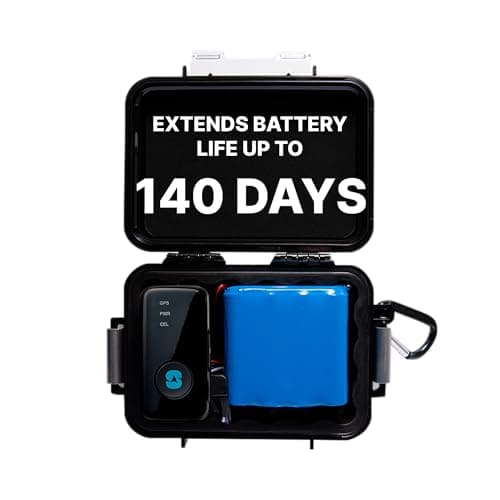
Everything else is secondary on a trailer. A manufacturer stating 140 days is stating a long reporting interval; a manufacturer stating a week is stating a short one. Neither is dishonest and the two numbers are not comparable without knowing the interval, which is why we quote them as the manufacturer states them rather than pretending they are like for like.
The practical rule: pick a battery figure at least three times longer than the gap between your visits. If you see the trailer monthly, you want a stated hundred days or more, because stated figures are best cases and cold weather roughly halves lithium performance.
If a device offers a motion-triggered mode — asleep until the trailer moves, then reporting frequently — take it. On an asset that is stationary 95% of the time, that one setting is worth more than any battery chemistry.
Mounting on a trailer, specifically
Magnets work on a trailer better than on a car, because there is more flat steel and less aluminum. The chassis rail, inside the A-frame, and the underside of a toolbox are all good places. Avoid the drawbar nose and anything a hand sweeps in two seconds.
Two trailer-specific cautions. Road spray off a trailer is far worse than off a car, so the housing rating matters — a case rated splash-resistant will fill with water in a winter. And vibration on an unladen trailer is severe; a magnet that holds fine on a car can walk off a trailer rail over a few hundred miles, so add a cable tie or a strap as a backstop.
For a tag in a magnetic case, hide it rather than mount it. Inside a sealed tool box, up inside a chassis member, or taped under a floor panel. A tag has no reporting interval to save, so concealment is all you are optimizing for.
Plant, generators and equipment
Everything above applies to a generator, a compressor, a mini excavator or a site welfare unit, with one addition: equipment theft is organized in a way trailer theft often is not, and organized thieves do sweep for trackers.
The standard answer in that world is two devices — one easy to find, one not. A visible magnetic unit satisfies a cursory sweep; a hardwired or deeply concealed unit is the one that actually recovers the machine. If the asset is worth five figures, that redundancy is cheap.
What to expect from the no-fee route, honestly
A tag on a trailer gives you, in practice: a reliable alert that the trailer is no longer where you left it, and intermittent positions while it is near people. What it does not give you is a continuous route, a position from a rural yard, or any update at all while the trailer sits in a barn.
For a lot of owners that is the right trade, and nobody in this category will tell you so, because a tag earns a fraction of what a subscription earns. Decide what you actually need to know and buy for that.