Every tracker on this page is a Bluetooth tag, and that is not a coincidence. Tags are the only category where cheap and no-fee overlap, because they have no data costs to recover and no plan to sell you. A cheap cellular tracker is cheap precisely because the plan is where the money is.
So the honest framing of this page is: here are five ways to spend under forty dollars and never spend again. What you are trading away at the bottom of this market is worth understanding before you buy.
What you give up at this price
Precision Finding. Only Apple's own AirTag does the Ultra Wideband walk-to-it arrow on iPhone, and only Samsung's SmartTag2 does it on Galaxy. Every cheap third-party tag gives you a map pin instead. Indoors that is a real difference.
Loudness. The alarm is the thing that finds objects inside a house, and cheap tags are quieter. Pebblebee states 130 dB and Chipolo states about 125 dB; budget tags do not publish a figure, which tells you roughly where they land.
Longevity of support. A tag from a brand with no history is a tag whose app may stop being updated. On a Find My device this matters less than you would think — the finding runs on Apple's network, not the maker's — but setup and renaming go through the maker's app.
A network, in one case. The Nutale pack has no crowd network at all. It is a Bluetooth leash: it finds things within direct radio range and nothing beyond. That is genuinely useful inside a house and useless in a car park, and we would rather say so than let the price imply otherwise.
The short answer
Quick picks
Ranked by what each one costs to own for three years, not by sticker price. The plan column is the one most comparisons leave out.
| # | Product | Best for | Plan / 3 yr | Price |
|---|
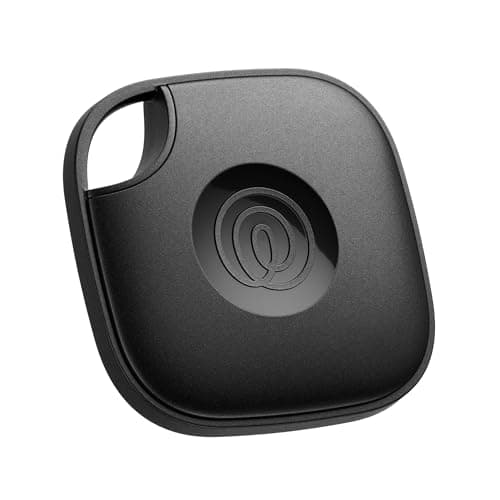
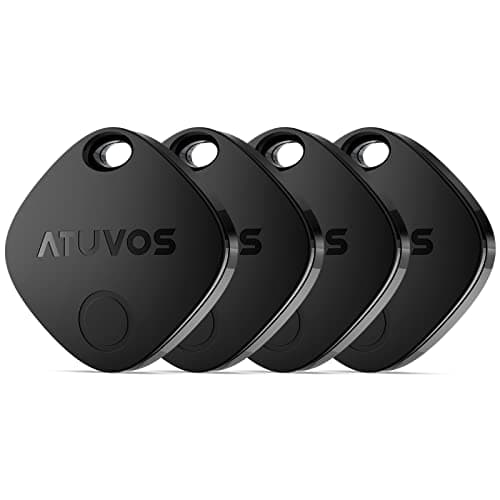
| 01 | ATUVOS tracker tags (4-pack)Four Find My tags for about the price of one AirTag. No subscription, replaceable batteries, and exactly the compromises the price implies. | Lowest cost per tag | No monthly fee $0 + batteries | $18.97·Amazon |
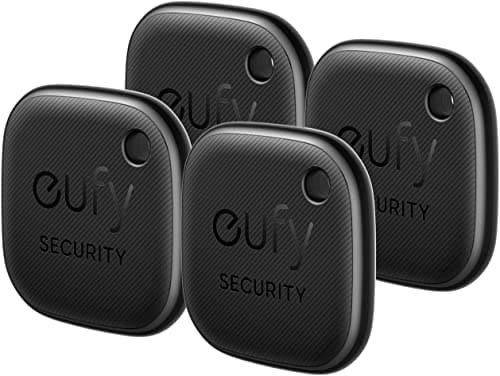
| 02 | eufy SmartTrack Link (4-pack)Anker's tags cost a fraction of an AirTag each and come from a company with a support department. No fee, replaceable cells, no Precision Finding. | Cheap multi-pack from a real brand | No monthly fee $0 + batteries | $36.99·Amazon |
| 03 | | Finding things inside one building | No monthly fee $0 + batteries | $16.99·Amazon |
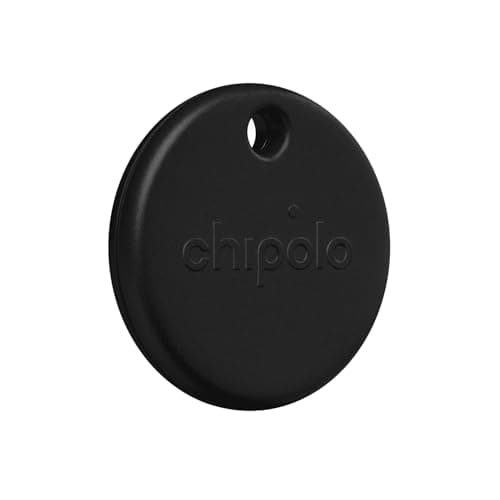
| 04 | Chipolo POPThe budget way into a tag that works on either Apple or Google's network, which is worth a few dollars if you might switch phones. | Cheapest dual-network tag | No monthly fee $0 | $24.65·Amazon |
| 05 | Tile MateThe least expensive route onto Tile's network, which is the only mainstream one that works identically on iPhone and Android from one app. | Cheapest cross-platform tag | Optional plan $0, or from $9.99/mo | $14.99·Amazon |
#ad · Live prices from Amazon's product API, as of October 8, 2026. Where we have no verified live price we show none — a gap beats a number that has rotted. Plan figures are the brands' own published rates, cited in Sources below.
In detail
The picks, in full
Top pickNo monthly fee#01 · ATUVOS
ATUVOS tracker tags (4-pack)
Lowest cost per tag
Four Find My tags for about the price of one AirTag. No subscription, replaceable batteries, and exactly the compromises the price implies.
The subscription reality
No subscription. The only recurring cost is a CR2032 roughly once a year, which is pennies.
- Over three years:
- about $3 in coin cells
Specs, as published by ATUVOS
- ·Four tags, each with a replaceable coin cell
- ·Works with Apple Find My
- ·Cases included on most listings
Good
- +The cheapest per-tag cost of anything that works on Apple's network
- +No fee
- +Replaceable batteries
Not so good
- −Find My only
- −No UWB
- −A no-name brand is a real risk on a device you want to still be supported in three years
Skip it if
the tag is guarding something expensive. For luggage and keys the price is right; for a camera bag, buy the first-party tag.
No monthly fee#02 · eufy by Anker
eufy SmartTrack Link (4-pack)
Cheap multi-pack from a real brand
Anker's tags cost a fraction of an AirTag each and come from a company with a support department. No fee, replaceable cells, no Precision Finding.
The subscription reality
No subscription. The only recurring cost is a CR2032 roughly once a year, which is pennies.
- Over three years:
- about $3 in coin cells
Specs, as published by eufy by Anker
- ·Replaceable coin cell
- ·Works with Apple Find My, plus eufy's own app
- ·Four tags per pack
Good
- +By far the cheapest route to four Find My tags
- +Replaceable battery, not sealed
- +No subscription
Not so good
- −Find My network support without Apple's UWB Precision Finding — you get a map pin, not a walk-to-it arrow
- −Build quality is what the price implies
- −eufy's own app adds little if you are on iPhone
Skip it if
you want Precision Finding. Only Apple's own AirTag does the directional walk-to-it on iPhone.
No monthly fee#03 · Nutale
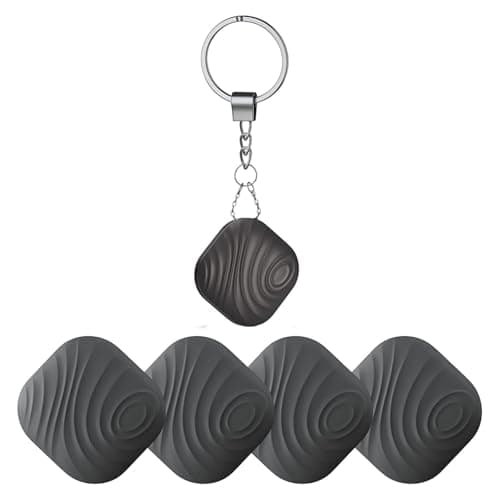
Nutale Findthing key finder (4-pack)
Finding things inside one building
The cheapest multi-pack here, and honest about its limit: there is no crowd network behind it, so out of Bluetooth range means gone.
The subscription reality
No subscription. The only recurring cost is a CR2032 roughly once a year, which is pennies.
- Over three years:
- about $3 in coin cells
Specs, as published by Nutale
- ·Four tags, replaceable batteries
- ·Two-way finding: find the tag from the phone, find the phone from the tag
- ·Nutale's own app, no crowd network
Good
- +The cheapest multi-pack here
- +Two-way ring is genuinely useful for a phone you lose indoors
- +No fee
Not so good
- −No crowd network at all, so out of Bluetooth range it is simply gone
- −Own-app only
- −Not a Find My or Find Hub device
Skip it if
the thing might leave the house. With no crowd network behind it, out of Bluetooth range means lost.
No monthly fee#04 · Chipolo
Chipolo POP
Cheapest dual-network tag
The budget way into a tag that works on either Apple or Google's network, which is worth a few dollars if you might switch phones.
The subscription reality
No subscription, now or later. The purchase price is the whole cost of ownership.
- Over three years:
- $0
Specs, as published by Chipolo
- ·Rechargeable, dual-network (Apple Find My or Google Find Hub)
- ·Loud alarm, Chipolo's stated spec
- ·Color-coded shells so tags on different items are tellable apart
Good
- +Cheaper than the LOOP while keeping dual-network support
- +No subscription
- +The colors are not a gimmick when you own five tags
Not so good
- −Still one network per tag, chosen at setup
- −Rechargeable, not coin cell
- −Smaller alarm and feature set than the LOOP
Skip it if
you want the loudest possible alarm — the LOOP is the louder of the two Chipolos.
Optional plan#05 · Life360
Tile Mate
Cheapest cross-platform tag
The least expensive route onto Tile's network, which is the only mainstream one that works identically on iPhone and Android from one app.
The subscription reality
Finding works on the free tier. Life360's paid memberships add location history, smart alerts and item reimbursement — they are optional, but they are how the brand now makes money from you.
- Published monthly:
- $9.99 (Silver), $16.99 (Gold), $24.99 (Platinum)
- Over three years:
- $0, or from $359.64 on the cheapest paid tier
Specs, as published by Life360
- ·Replaceable CR2032 coin cell
- ·Shorter stated range than Tile Pro
- ·Works on iPhone and Android
Good
- +Cheapest way onto Tile's cross-platform network
- +CR2032 is a supermarket battery
- +Built-in keyring hole
Not so good
- −Shorter range and quieter ring than the Pro
- −Same thin crowd network as every Tile
- −Paid tiers dangled constantly in the app
Skip it if
the tag is for something that leaves the house often — buy the Pro for the range.
Where cheap is the right answer
A tag guarding a suitcase, a tool case, a bike, a set of spare keys or a child's backpack does not need Precision Finding. It needs to be on a large network and to not have cost much, because you want four of them. That is exactly the case for the multi-packs at the top of this page.
A tag guarding your actual keys, which you lose in your own house twice a week, is the opposite case. There the alarm and the walk-to-it arrow are the entire value, and spending an extra twenty dollars on a first-party tag or a loud Pebblebee is money well spent.
The per-tag maths that changes the ranking
Multi-packs reorder this category completely and most comparisons ignore it. A four-pack at around twenty-two dollars is roughly five-fifty a tag. A single first-party tag is four to five times that. If you are tagging one thing, buy the good one. If you are tagging four, the multi-pack is not a compromise so much as a different purchase.
The one adjustment: buy one good tag for the item you lose most, and a multi-pack for everything else. That gets you the arrow where you need it and coverage everywhere else, for less than four good tags.
What we would not buy at this price
Anything advertised as a cheap GPS tracker with no monthly fee that is not a Bluetooth tag. At the bottom of this market those devices are usually cellular units with a trial period, an unbranded app, and servers run by a company you cannot research. The device is cheap because it is not the product.
Also: sealed-battery tags at the budget end. A tag with a battery you cannot replace has an expiry date, which turns a one-time purchase into a repeat one and quietly undoes the whole point of buying no-fee.
How we picked
We did not lab-test these trackers
Everyone in this category claims to have tested twenty devices. We have not tested any of them, and we say so on every page. What we did instead: read each manufacturer's published specifications and cite them with the date, find the actual subscription price and cite that too, and work out what thirty-six months of ownership costs at those published figures. Device prices come live from Amazon's API and expire after 48 hours rather than going stale. Where a figure could not be sourced to the manufacturer, the page says the spec is unconfirmed rather than borrowing it from a competitor's review. The full method is on the methodology page.
Working out what a tracker really costs? See the three-year cost of every tracker, compared.
Read next
Related
The table behind every recommendation on this site: device, plan, and what thirty-six months actually comes to.
The full everyday-carry roundup, with the network question settled first.
Including the cellular and radio options a tag cannot replace.
500 days, more than a year, 12 months per charge — what each claim is actually measuring.
Why a sealed battery turns a one-time purchase into a repeat one.
Four questions that eliminate most of the market before you look at a single specification.