Tracker subscriptions are not a swindle. They are the printer-and-ink model applied to hardware with a running cost, and once you can see the shape of it you can predict which products will always have a fee and which never will — without reading a single review.
The actual cost being recovered
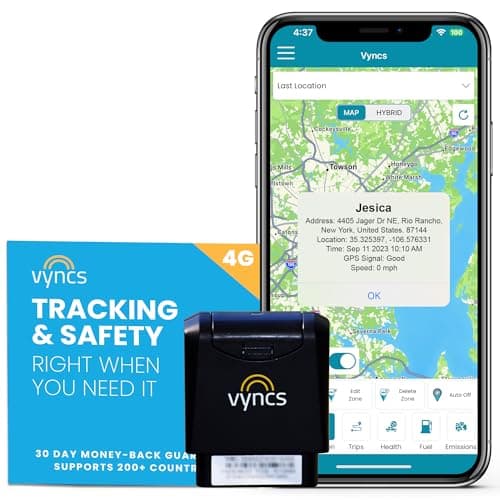
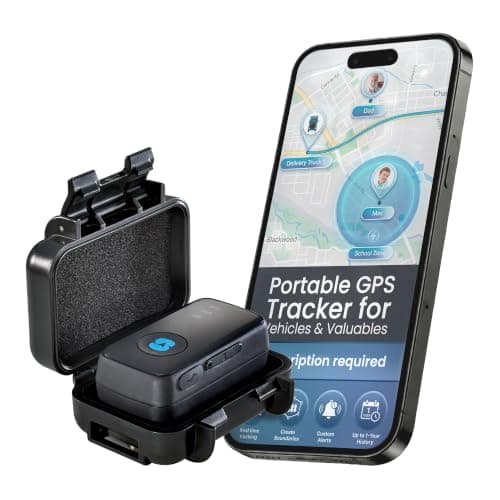
A cellular tracker contains a SIM. Every position report is a tiny amount of mobile data moving across a carrier's network, and the tracker company pays wholesale for it. Wholesale IoT data is cheap — fractions of a cent per report — but it is not free, and it recurs every month for as long as the device is in service.
That alone would justify a small fee. It does not justify $14.95 a month, and the gap between the two is the actual business.
Why the hardware is so cheap
Look at the sticker prices: $9.99, $14.95, $17.95, $23.99. Those are not the prices of a device containing a GPS receiver, a 4G modem, a battery and a waterproof housing. They are at or below manufacturing cost.
The hardware is the customer-acquisition expense. A company selling a $17.95 tracker attached to a $12.95 monthly plan collects $466 over three years, of which the device is under four percent. Discounting the device to nearly nothing to win a subscriber who is worth hundreds is straightforwardly rational.
This is why the cheapest cellular trackers are the most expensive to own, and why sorting the category by three-year cost reorders it so dramatically.
Why Bluetooth tags have no equivalent
A tag has no SIM, so there is no recurring cost for anyone to recover. The data that locates your tag is carried by the phone plan of whoever walked past it — Apple describes the relaying as efficient enough that the relaying phone's owner need not think about battery or data use.
So a tag maker has exactly one opportunity to make money: the sale. It then has to leave you alone, because there is no meter running. That structural fact, not corporate generosity, is why there has never been an AirTag subscription.
The one partial exception proves the rule. Tile had no recurring cost either, so it invented features that do recur — thirty days of stored location history, insurance-style item reimbursement, server-side smart alerts — and charged for those. That is a respectable product decision, and it tells you the fee is attached to the services rather than to the finding.
Three predictions the model lets you make
Anything with a SIM will have an ongoing cost. Billed monthly, prepaid, or bundled for a year and then billed — but it will be there. If a cellular device claims otherwise with no explanation, the cost is hidden in the purchase price, and that is usually fine as long as you know the renewal figure.
Anything without a SIM will not. Bluetooth tags and radio systems have no meter. Any fee attached to one is for a service bolted on top, and you can decline it.
The cheapest device in a cellular category is the most expensive to own. A low sticker price on a plan-based tracker is a signal about the plan, not about the hardware. Always multiply.
How to use this when you shop
Find the plan price before you look at anything else. If a brand publishes it on a page you can read without an account, that is a point in its favor — Spytec publishes $14.95 and $12.95, Tractive publishes a full tier table, LandAirSea puts $8.95 in a product title. If you cannot find it, that is a point against, and AngelSense's pricing page is the clearest example: a $59 activation fee is published and no monthly rate is.
Then multiply by thirty-six and add the device. Then — and only then — compare devices. You will find the ranking is almost nothing like the ranking by device price.
The risk the model creates for you
There is one consequence of subscription hardware worth taking seriously: the company has to survive for your device to keep working. The servers that receive its reports and the app that draws the map are the brand's, and the SIM is provisioned by the brand.
Brands in this category do go. We checked the HTTP responses while building this site: whistle.com returns a 301 redirect to tractive.com, a competitor, and tryfi.com redirects to fitracking.com. A tag on Apple's or Google's network and a radio system with no network at all are both immune to that failure, which is a real part of their value and almost never priced in.