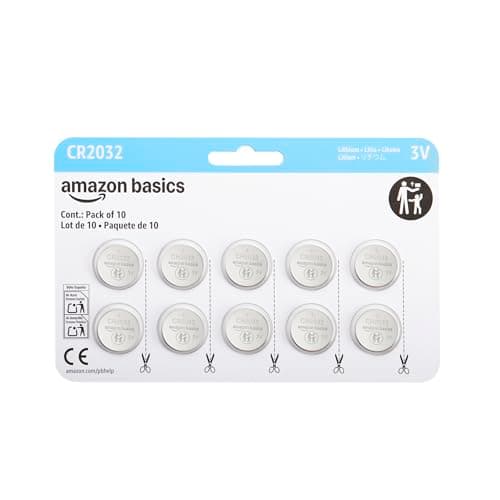
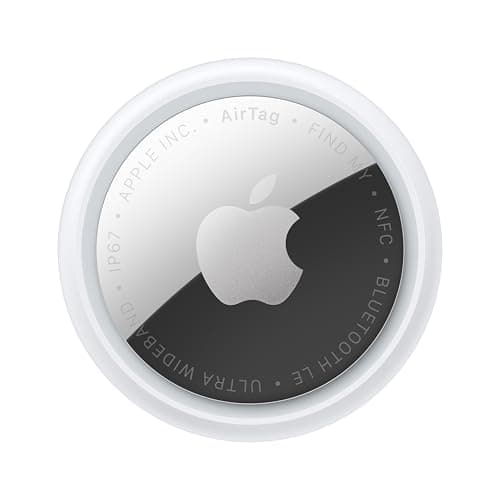
No. An AirTag has never required a subscription, there is no paid tier, and nothing about finding one is gated behind an upgrade. You buy the tag, you pair it to an iPhone, and that is the end of the transaction. The only money you will ever spend again is about a dollar a year on a CR2032 coin cell.
It is worth understanding why, because the reason is structural rather than a pricing decision Apple could reverse next year.
The mechanism, which is the answer
An AirTag contains no GPS receiver and no cellular modem. It cannot work out where it is and it has no way to send anything anywhere. What it does is broadcast a rotating, encrypted Bluetooth identifier every few seconds.
Any nearby iPhone — a stranger's, in a shop, on a bus — picks that signal up, attaches its own GPS position, encrypts the pair and submits it to Apple. You open Find My and Apple hands you the decrypted result. Apple describes the process as anonymous and encrypted, and notes it is efficient enough that there is no need to worry about the relaying phone's battery life or data usage.
So the data cost of finding your AirTag is borne, in microscopic increments, by the phone plan of whoever walked past it. There is no bill for Apple to pass on to you. That is why the subscription question has a structural answer rather than a commercial one.
Where the confusion comes from
Tile. Tile is the other name people know in this category, and Tile does sell a paid tier — now folded into Life360 memberships at a published $9.99, $16.99 and $24.99 a month. Finding a Tile is free, but smart alerts, 30-day location history and item reimbursement are not. People who have read about Tile Premium reasonably assume AirTag has an equivalent. It does not.
Cellular GPS trackers. Search for “GPS tracker” and most results are cellular devices with mandatory monthly plans at $9 to $15. Those genuinely do need subscriptions, for the reasons on this page. An AirTag sits in the same search results and is a completely different technology.
iCloud. Find My is part of iCloud, and iCloud has paid storage tiers, so the association is natural. But AirTag tracking works on a free Apple Account with no iCloud+ subscription of any kind. Nothing about locating a tag touches your storage allowance.
What an AirTag actually costs to own
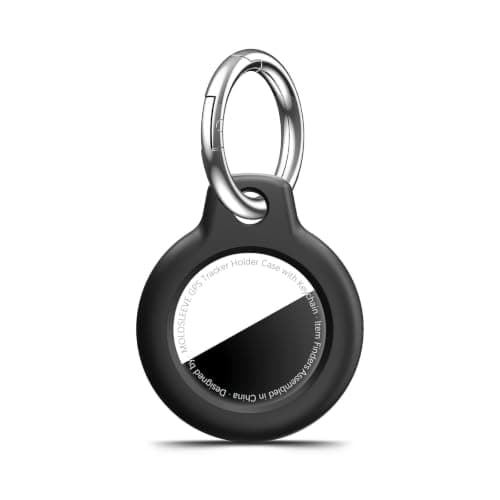
Three years, worked out: the purchase price, about three dollars of coin cells, and a three-dollar keyring shell if you are putting it on keys. Call it the price of the tag plus six dollars.
Apple states that an AirTag works for more than a year on a standard replaceable battery, based on everyday average usage of playing sound and Precision Finding — so ringing it fifteen times a day will shorten that, and leaving it alone in a suitcase will extend it. Your iPhone tells you when the battery is low.
The CR2032 is a supermarket battery and a multi-pack costs under ten dollars. One warning that has nothing to do with tracking: coin cells cause severe internal injuries if a small child swallows one. Store spares out of reach and treat a loose battery door as a thing to fix today.
The limits you are actually buying into
The no-subscription question is the wrong thing to worry about with an AirTag. These are the right things:
It needs an iPhone. Not just for setup — there is no Android app at all. An Android phone can read a found AirTag over NFC, which is the anti-stalking protection, not a feature. Android owners want a Find Hub tag instead.
It reports where it was, not where it is. No passing iPhone means no update. In a city that is constant; on a rural road at night it is nothing. That makes an AirTag a superb finder and a poor tracker, and it is the reason we do not recommend one as the primary answer for a car or a roaming dog.
It has no keyring hole. A genuine design annoyance. Apple sells a leather loop for most of the price of another AirTag; a plastic shell costs a few dollars and does the same job. Chipolo's LOOP and Samsung's SmartTag2 both have a hole built in, if that irritates you enough to change platform.