A true GPS tracker needs a subscription, and there is no way around it. A Bluetooth tag never does, and never will. Almost all of the confusion in this category comes from those two sentences being about different products that the marketing presents as the same product at different prices.
Here is the mechanism, which makes it obvious. A GPS tracker contains two radios: a satellite receiver that works out where the device is, and a cellular modem that sends that position to you. The satellite part is free — GPS is a public utility and nobody bills you for receiving it. The cellular part is a phone line. There is a SIM card in the device, a carrier is carrying its data, and somebody is paying that carrier. That somebody is you, either monthly or prepaid.
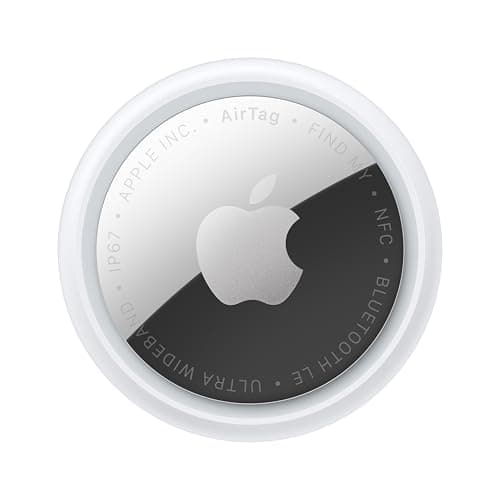
A Bluetooth tag has neither radio. It has no idea where it is. It broadcasts an identifier a few times a second, and if a stranger's phone happens to hear it, that phone reports the position to Apple or Google and they pass it to you. No data plan is involved, because the stranger's phone already had one. Which is why Apple has never charged for AirTag tracking and almost certainly never will.
So what does “no monthly fee GPS tracker” mean?
One of four things, and they are worth telling apart:
1. It is not a GPS tracker
Most products marketed this way are Bluetooth tags. Genuinely no fee, genuinely useful, and genuinely not GPS. If the listing mentions Apple Find My or Google Find Hub, this is what you are looking at.
2. The service is prepaid
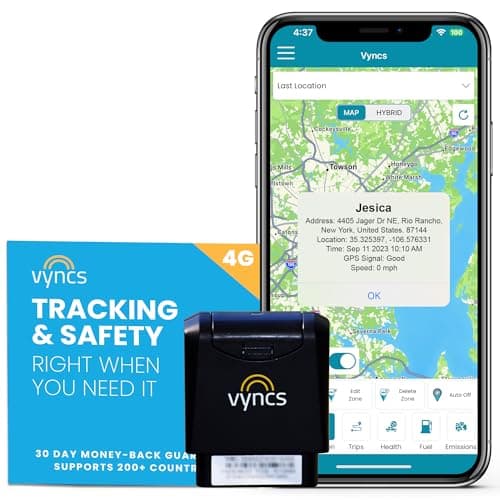
A real cellular tracker whose data cost is baked into a higher purchase price. Nothing hits your card monthly, which makes the claim true. Vyncs is the established example. Over three years this is usually the cheapest way to own a cellular tracker — but prepaid service has a term, and the renewal price is the question to ask.
3. A year of service is bundled
A free-trial device wearing a no-fee label. Twelve months are paid for and month thirteen is not. These are fine purchases if you know the renewal rate going in, and a nasty surprise if you find out when the reports stop.
4. It is a radio system
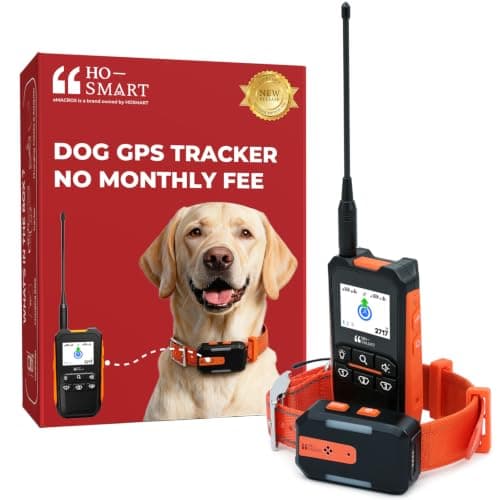
The forgotten category: a handheld unit talking directly to a collar over license-free radio, with no SIM, no network and no company in the loop. Live tracking, works with zero phone signal, free forever. Garmin's Alpha handhelds, Dogtra's Pathfinder and the eMACROS dog tracker are all this.
How much is the subscription, actually?
From the brands' own published pages: Spytec publishes $14.95 a month, or $12.95 paid annually. LandAirSea puts $8.95 a month in its Sync product title. Tractive publishes Basic at $9 a month on a one-year term and $6 on a two-year term. Several others — AngelSense, Fi, Weenect — state that a plan is required without publishing a rate at all.
Multiplied out to thirty-six months, that is $466, $322 and $252 respectively, and the device prices are under $35 in two of the three cases. The full table is here.
Which one do you actually need?
The question that decides it is not about budget, it is about physics: will the thing you are tracking be near other people's phones?
Yes. Keys, wallet, luggage, tools, a parked car, a dog that gets lost in a neighborhood, a child's backpack. Buy a Bluetooth tag. No subscription, and the job gets done. Paying $252 for a cellular plan to track a suitcase is paying for coverage you will never be in a position to use.
No, but there is cell signal. A stolen vehicle, a dog that runs into open farmland, a person at risk of wandering. You need cellular. Decide between monthly and prepaid on how long you will keep it: prepaid wins past roughly eighteen months.
No, and there is no cell signal. Hunting dogs, wilderness, genuine dead zones. Cellular trackers do not work here regardless of what you pay. This is the radio case, and the radio case is free.
The trap worth naming
The most expensive mistake in this category is buying a cheap cellular tracker for a job a tag would do. The listing says $17.95, the plan says $12.95 a month, and three years later you have spent $484 to find a suitcase that a $25 tag would have found better, because the suitcase was in an airport full of iPhones the whole time.
The second most expensive mistake is the reverse: buying a tag for a job that needs cellular. A tag on a dog that works a field will tell you nothing at the moment you actually need it, because there is nobody out there to relay the signal. If your dog genuinely roams, pay the $252 and do not feel bad about it.