Yes, for anything that gets lost in a place where people go: keys, a wallet, a backpack, a checked bag, a laptop sleeve. An AirTag costs about $24 once and roughly a dollar a year in coin cells — call it $27 across three years — and Apple has never charged a subscription for it. Almost nothing else in this category has a total cost of ownership that low. No, for a car, a dog, a child or anything that moves through empty places. Not because of price, but because a tag cannot do that job at any price.
What you are actually buying
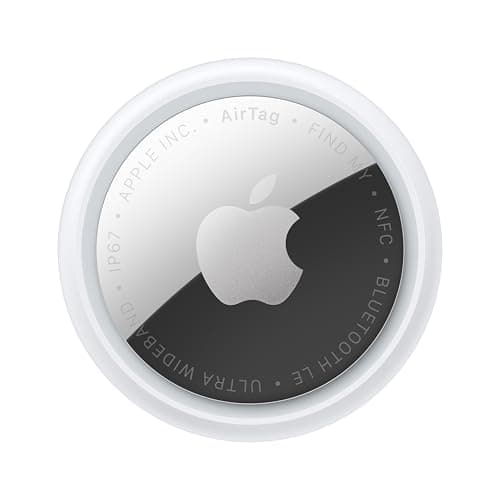
An AirTag has no GPS and no cellular radio. It shouts an encrypted identifier over Bluetooth, and any passing Apple device reports where it heard it. The value is entirely in the size of that crowd: Apple's Find My network is built from effectively every iPhone in existence, which is why a tagged bag in an airport reports within minutes and a tagged bag in a barn reports nothing. The mechanism in detail.
The four cases where it is clearly worth it
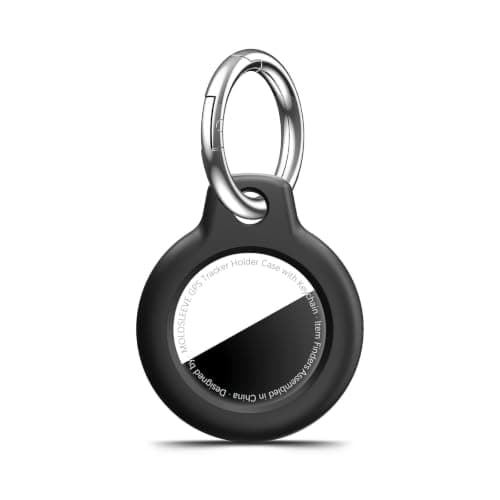
Keys. The classic case, and the one where Precision Finding earns its keep — an arrow and a distance beats hunting a sofa. Add a few dollars for a keyring shell, because the AirTag famously has no hole.
Checked luggage. The single best argument for a tag. Airports are dense with iPhones, so a bag that went to the wrong city usually says so before the airline does — which turns an argument at a counter into a fact. The luggage case specifically.
Bags, cases and gear that travel with you. Camera bags, tool cases, a laptop sleeve. Cheap insurance against leaving something in a taxi.
Anything you lose inside your own home. This is the quiet one. Most lost items are lost in the house, and a tag with a loud speaker and Precision Finding solves that completely. It is not glamorous and it is the reason most owners say it was worth it.
The three cases where it is not
A car. It will sometimes tell you the street a stolen car was last seen on, and it will not follow it. A car needs a cellular tracker, and that means a plan. Why, in full.
A dog or a cat that actually roams. Same reason: a tag reports where an animal was seen by a human with an iPhone. Perfect for a cat that hides in the neighbor's garage; useless for a dog in open country.
A person. A tag in a child's bag tells you where the bag was. It has no SOS button, no two-way voice and no live position, and it will alert the person it is with that an unknown tag is traveling with them — which is a deliberate anti-stalking feature working as designed.
The honest three-year arithmetic
An AirTag is about $24 and takes a CR2032 that Apple states lasts more than a year. A multi-pack of cells is a few dollars. So three years of ownership is roughly $27, all in, with no renewal date and nothing to cancel.
Compare that to a cellular pet tracker at $252 of plan over the same period, or a vehicle tracker whose published $8.95 a month comes to $322.20, and the AirTag stops looking like a gadget and starts looking like the cheapest thing on the shelf. Every tracker on this site, costed over thirty-six months.
Who should buy something else instead
Android users. There is no AirTag app for Android at all, so this is not a preference question. Buy a dual-network tag or a Find Hub tag. The alternatives.
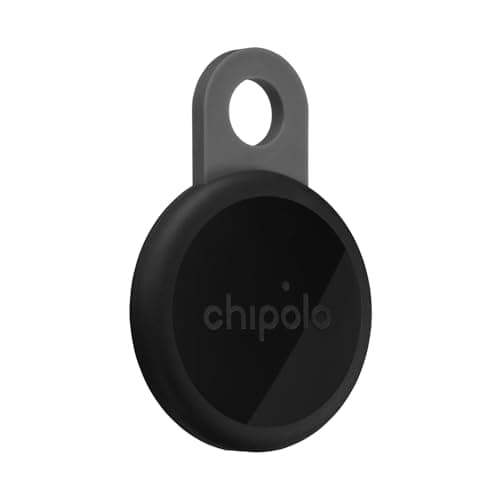
Anyone who might not stay on iPhone. A dual-network tag like the Chipolo LOOP works on Find My or Find Hub, so it survives a phone switch. It also has a loop built in and states about 125 dB, which is louder than an AirTag.
Wallets. An AirTag plus a card holder is thicker than a purpose-built card tracker and costs about the same. Buy the card instead.
The things people regret
Buying four when they needed one. Buying one for the dog. Not buying a keyring shell, and leaving the tag loose in a bag where it ends up at the bottom under everything. And expecting it to work somewhere nobody goes — which is the only genuinely disappointing outcome, and it is entirely predictable from how the thing works.
So: worth it?
For the four cases above, yes, and it is one of the few purchases in this category where the price on the shelf is the price you pay in total. For anything that moves on its own through places without people, no — and the right answer there costs a monthly fee, which is the trade-off this whole site is about. The four questions that settle it.