Skip to content
Tag & Tether

Mechanics & law · How Trackers Work

How accurate is an AirTag?

There are two answers, because there are two mechanisms. Far away, you get somebody else's phone position. Up close, you get a direction arrow.

By Mike M.Last updated


There is no single accuracy figure for an AirTag, because it reports in two completely different ways. More than a few meters away, what you are seeing is not the tag's position at all — it is the position of whichever stranger's iPhone last heard it, so the dot is as accurate as that phone was. In the last few meters, Ultra Wideband takes over and gives you a direction and a distance, which is accurate enough to find a key fob inside a sofa.

That distinction explains almost every complaint and almost every surprise people have about tag accuracy, so it is worth being precise about it.

Far away: the accuracy of somebody else's phone

An AirTag contains no GPS receiver. It broadcasts a rotating encrypted identifier over Bluetooth; any passing Apple device hears it and reports its own location to Apple's servers, encrypted so that the finder learns nothing. You then see that reported location.

Three consequences follow, and they are the whole of far-field accuracy:

  • The dot is the phone, not the tag. The passing phone could have been anywhere within Bluetooth earshot — Samsung states up to 120 m for its tag's Bluetooth range and Chipolo states up to 120 m too, which is the right scale to have in mind. So “accurate to the building” is a fair expectation and “accurate to the room” is not.
  • The dot has an age. It is where the tag was when a phone last passed, not where it is. In a busy street that is minutes ago; in a quiet garage it may be yesterday. The timestamp matters more than the coordinates.
  • Accuracy depends on crowd density, not on the tag. The same AirTag is near-live in a city center and nearly useless on a hiking trail. No tag from any brand changes this, because none of them have GPS.

Up close: Ultra Wideband, and why it feels like magic

Within range of your own phone, an AirTag can be found by Precision Finding, which uses Ultra Wideband rather than Bluetooth signal strength. UWB measures time-of-flight, so instead of “the signal is getting stronger” you get an arrow and a distance in feet. Apple states the second-generation AirTag has 1.5 times the Precision Finding range of the first.

This is where tags genuinely beat every GPS tracker on the market. A cellular tracker will tell you the keys are in your house; Precision Finding tells you they are four feet away behind the cushion.

The third mechanism: noise

Loudness is accuracy by another route, and it is the only one that works on any phone and in any pocket. Apple states the second-generation AirTag's speaker is 50% louder than the first. Chipolo states about 125 dB on the LOOP, which is a different league and is why a loud tag with no UWB can out-find a quiet tag that has it.

The short answer

Quick picks

Ranked by what each one costs to own for three years, not by sticker price. The plan column is the one most comparisons leave out.

#ProductBest forPlan / 3 yrPrice
01
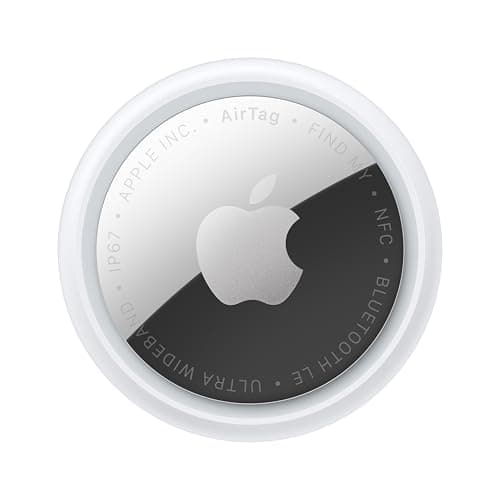
Apple Apple AirTag (2nd generation)
Apple AirTag (2nd generation)

Ultra Wideband Precision Finding walks you in by direction and distance. Apple states the 2nd generation has 1.5x the Precision Finding range of the first.

The most accurate tag up close, on iPhoneNo monthly fee

$0 + batteries

$24.00Amazon
02
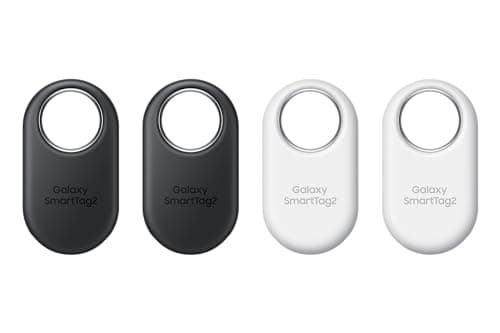
Samsung Samsung Galaxy SmartTag2
Samsung Galaxy SmartTag2

UWB plus a stated 120 m Bluetooth range, so a Galaxy phone gets the walk-to-it behavior an iPhone gets from an AirTag.

The same precision on a GalaxyNo monthly fee

$0 + batteries

$52.65Amazon
03
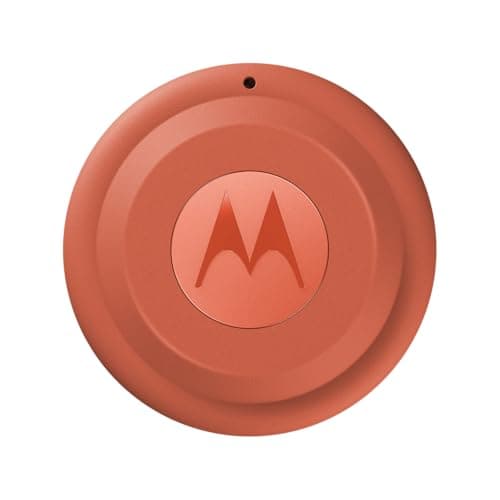
Motorola Motorola Moto Tag 2
Motorola Moto Tag 2

Built for Google Find Hub first, with UWB for close-range finding on phones that support it. The network behind it is younger and thinner.

UWB on a non-Samsung AndroidNo monthly fee

$0 + batteries

$37.99Amazon
04
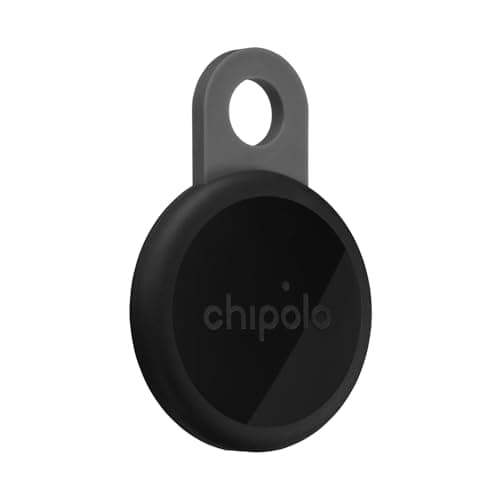
Chipolo Chipolo LOOP
Chipolo LOOP

No Ultra Wideband, so no direction arrow — but a stated 125 dB alarm, which solves the last-three-meters problem with sound instead of radio.

Accuracy without UWB, either platformNo monthly fee

$0

$39.00Amazon

#ad · Live prices from Amazon's product API, as of October 11, 2026. Where we have no verified live price we show none — a gap beats a number that has rotted. Plan figures are the brands' own published rates, cited in Sources below.

In detail

The picks, in full

Apple Apple AirTag (2nd generation)
$24.00View on Amazon

$29.0017% off

Price as of October 11, 2026. Prices move — Amazon's at checkout is the one that counts.

#ad · we may earn a commission from this link to Apple AirTag (2nd generation)

Top pickNo monthly fee#01 · Apple

Apple AirTag (2nd generation)

The most accurate tag up close, on iPhone

Ultra Wideband Precision Finding walks you in by direction and distance. Apple states the 2nd generation has 1.5x the Precision Finding range of the first.

The subscription reality

No subscription. The only recurring cost is a CR2032 roughly once a year, which is pennies.

Over three years:
about $3 in coin cells

Specs, as published by Apple

  • User-replaceable CR2032 coin cell; Apple states it runs more than a year
  • IP67 (1 m for up to 30 minutes, IEC 60529)
  • Ultra Wideband Precision Finding, 1.5x the range of the first generation
  • Speaker 50% louder than the first generation

Good

  • No subscription, and Apple has never charged one
  • The Find My network is the largest crowd network in the world, so a lost AirTag in a populated area usually reports within minutes
  • Precision Finding walks you to it by distance and direction, not just a map pin
  • Battery is a coin cell from any supermarket, not a sealed pack

Not so good

  • iPhone only for setup and full use — there is no Android app
  • It has no GPS of its own: it reports when an Apple device walks past it, so it is a finder, not a tracker
  • No keyring hole, so you are buying a holder as well

Skip it if

you are on Android, or you need to watch something move in real time — an AirTag only knows where it was when someone last walked past it.

Samsung Samsung Galaxy SmartTag2
$52.65View on Amazon

Price as of October 11, 2026. Prices move — Amazon's at checkout is the one that counts.

#ad · we may earn a commission from this link to Samsung Galaxy SmartTag2

No monthly fee#02 · Samsung

Samsung Galaxy SmartTag2

The same precision on a Galaxy

UWB plus a stated 120 m Bluetooth range, so a Galaxy phone gets the walk-to-it behavior an iPhone gets from an AirTag.

The subscription reality

No subscription. The only recurring cost is a CR2032 roughly once a year, which is pennies.

Over three years:
about $3 in coin cells

Specs, as published by Samsung

  • Replaceable CR2032; Samsung states up to 500 days
  • IP67 (1 m freshwater up to 30 minutes)
  • Bluetooth LE 5.3, up to 120 m stated range, plus UWB
  • 28.8 x 52.44 x 8.0 mm, 13.75 g

Good

  • 500 days of stated battery life is the longest claim of any mainstream tag
  • No subscription, and SmartThings Find is free
  • UWB gives Samsung phones the same walk-to-it precision iPhones get with AirTag
  • Has a built-in hole, so no holder needed

Not so good

  • Galaxy devices only — Samsung requires a Galaxy phone or tablet on Android 9 or newer
  • SmartThings Find is a smaller network than Apple's Find My
  • Physically the largest of the mainstream tags

Skip it if

your phone is not a Galaxy. A Pixel or a OnePlus will not set this up, whatever the box implies about Android.

Motorola Motorola Moto Tag 2
$37.99View on Amazon

Price as of October 11, 2026. Prices move — Amazon's at checkout is the one that counts.

#ad · we may earn a commission from this link to Motorola Moto Tag 2

No monthly fee#03 · Motorola

Motorola Moto Tag 2

UWB on a non-Samsung Android

Built for Google Find Hub first, with UWB for close-range finding on phones that support it. The network behind it is younger and thinner.

The subscription reality

No subscription. The only recurring cost is a CR2032 roughly once a year, which is pennies.

Over three years:
about $3 in coin cells

Specs, as published by Motorola

  • Works with Google Find Hub and Apple Find My
  • Replaceable coin cell
  • UWB for close-range finding on supported phones

Good

  • One of the few tags built for Google Find Hub first rather than as an afterthought
  • No subscription
  • Replaceable battery

Not so good

  • Find Hub's network is younger and thinner than Apple's
  • UWB only helps on phones that have it
  • Less widely stocked than Tile or Chipolo

Skip it if

most of the places you lose things are quiet — a thinner crowd network is the real limit on any Android tag.

Chipolo Chipolo LOOP
$39.00View on Amazon

Price as of October 11, 2026. Prices move — Amazon's at checkout is the one that counts.

#ad · we may earn a commission from this link to Chipolo LOOP

No monthly fee#04 · Chipolo

Chipolo LOOP

Accuracy without UWB, either platform

No Ultra Wideband, so no direction arrow — but a stated 125 dB alarm, which solves the last-three-meters problem with sound instead of radio.

The subscription reality

No subscription, now or later. The purchase price is the whole cost of ownership.

Over three years:
$0

Specs, as published by Chipolo

  • Rechargeable over USB-C; Chipolo states about a year per charge
  • IP67, up to 30 minutes in 1 m of water
  • About 125 dB stated alarm
  • Up to 120 m (400 ft) stated Bluetooth range

Good

  • Works with Apple Find My or Google Find Hub, so it is the one tag you can buy without knowing which phone you will own next
  • No subscription at all, and Chipolo's own app features are free
  • Loud — 125 dB stated is well above an AirTag
  • Built-in loop, so it goes straight on a keyring

Not so good

  • You pick one network at setup; switching later means a reset
  • Rechargeable means a dead tag is a tag you have to find a cable for, not swap a coin cell into
  • USB-C cable is not in the box

Skip it if

you would rather drop in a fresh coin cell than remember to charge a keyring once a year.

What a tag cannot do, at any accuracy

It cannot follow something. A tag has no GPS and no cellular radio, so it cannot report from a place no phone visits, and it cannot stream a position while something moves. That is not an accuracy limitation, it is a category limitation, and it is the single most common mismatch between what people buy and what they needed. Where it is versus where it was is the decision that comes first.

How to get the best accuracy out of a tag you own

Mount it where the signal can get out. Bluetooth is badly attenuated by metal and water. A tag inside a steel toolbox, under a car body, or in a bag against a wet coat reports far less often than one in a jacket pocket.

Keep the battery healthy. A weak coin cell reduces transmit power before it stops the tag entirely, so the first symptom of an old battery is a tag that reports less often rather than one that goes silent. Replacing it takes a minute.

Read the timestamp, always. The most common accuracy complaint is actually an age complaint: the position was perfectly accurate when it was recorded nine hours ago.

Expect less in the countryside. If the thing you want to find spends its time away from people, no tag is the right tool regardless of its specification.

Which one if accuracy is the priority

iPhone: AirTag, for Precision Finding on the largest crowd network there is.

Galaxy phone: SmartTag2, which gives you the same UWB behavior and states a 120 m Bluetooth range and up to 500 days of battery.

Any other Android: a Find Hub tag with UWB such as the Moto Tag, accepting a thinner network than Apple's.

Either platform, and you would rather hear it than follow an arrow: the Chipolo LOOP, where a stated 125 dB does the last few meters without any radio precision at all.

We are not printing a general GPS accuracy figure on this page. The usual public source for one did not resolve when we checked it, and no manufacturer publishes a figure for these devices — so the honest version of this page explains the mechanism and cites the specs that do exist.
Questions

Frequently asked

How accurate is an AirTag?
It depends which of its two mechanisms is answering. Far away, the location you see is not the tag's position but the position of whichever passing iPhone last heard it over Bluetooth — tag makers state Bluetooth ranges up to about 120 m, so expect accuracy to the building rather than to the room. Within range of your own iPhone, Ultra Wideband Precision Finding gives a direction and a distance in feet, which is accurate enough to find keys inside a sofa.
Why is my AirTag showing the wrong location?
Usually because the location is old rather than wrong. A tag reports only when an Apple device passes it, so the dot is where the tag was at that moment — in a quiet garage that could be many hours ago, and the map does not make the age obvious. Check the timestamp first. The other common cause is attenuation: a tag inside metal or pressed against something wet transmits much less far, so the phone that heard it may have been further away than usual.
How accurate is an AirTag in a car?
Less accurate than in a pocket, for a physical reason: a car body is a metal box and Bluetooth does not pass through it well, so fewer passing phones hear the tag and the ones that do are closer. You will often get the street rather than the parking space. It also still cannot follow a moving car — a tag reports where it was seen, so for a vehicle you want a cellular tracker rather than a tag.
Is an AirTag more accurate than a GPS tracker?
Up close, yes, and by a wide margin: Precision Finding walks you to within a few feet, which no GPS tracker attempts. Far away, no — and the comparison is not really about accuracy. A GPS tracker reports its own position continuously over a cellular network, so it works where no phone goes and it can follow something moving. A tag does neither. They are different categories rather than different accuracy tiers.
Does a louder tag find things better than Ultra Wideband?
Often, yes, and it is underrated. Apple states the 2nd-generation AirTag's speaker is 50% louder than the first, and Chipolo states about 125 dB on the LOOP, which is substantially louder again. Sound works on any phone, in any pocket, with no radio precision involved, and the real last-three-meters problem is usually a cushion or a coat rather than a wall. If you are choosing on findability indoors, loudness deserves as much weight as UWB.

Read next

Where the figures came from

Sources

Every specification and plan price on this page traces to one of these, read on the date shown. Device prices are live from Amazon and stamped separately.

  1. Apple — AirTag product page (battery, IP67, Precision Finding) — accessed 2026-10-05
  2. Samsung — Galaxy SmartTag2 specifications — accessed 2026-10-05
  3. Chipolo — LOOP product page (battery, IP67, 125 dB, 120 m) — accessed 2026-10-05
  4. Amazon Product Advertising / Creators API — live prices and product images — accessed 2026-10-05