Skip to content
Tag & Tether

Mechanics & law · How Trackers Work

How an AirTag actually works

It has no GPS and no SIM. Understanding what it does instead explains everything else about it — including why it is free.

By Mike M.Last updated


Almost everything people get wrong about AirTags comes from assuming there is a GPS receiver inside. There is not. Understanding what is actually in there explains the battery life, the price, the dead spots and the absence of a subscription, all at once.

What is inside

A Bluetooth Low Energy radio. A speaker. An Ultra Wideband radio. An accelerometer. A CR2032 coin cell. No GPS receiver, no cellular modem, and therefore no idea whatsoever where it is.

The mechanism, step by step

1. The tag shouts. It broadcasts a rotating, encrypted identifier every few seconds. The identifier changes so that the same tag cannot be followed by a third party across time — that rotation is the core of the privacy design.

2. A stranger's iPhone hears it. Any nearby Apple device — in a shop, on a bus, walking past your car — picks up that broadcast. Its owner is never told and never sees anything.

3. That phone reports. It attaches its own GPS position, encrypts the pair so that only you can read it, and sends it to Apple. Apple describes this as anonymous and encrypted, and efficient enough that the relaying phone's owner need not worry about battery life or data usage.

4. You open Find My. Apple hands you the encrypted report, your device decrypts it, and you see a pin and a timestamp.

That is the whole system. The tag is a beacon; the network is other people's phones.

Why this makes it free

There is no recurring cost for Apple to recover. The data that locates your AirTag was carried by somebody else's phone plan in increments too small to matter.

That is why there has never been an AirTag subscription, and why a subscription would be charging for something that costs Apple almost nothing — on a product whose purpose is making iPhones stickier.

Why it goes silent in a field

Same mechanism, inverted. No passing Apple device means no report. The tag is working perfectly and has nothing to tell you, for as long as nobody walks past.

This is not a limitation better hardware fixes. It is the design.

The short answer

Quick picks

Ranked by what each one costs to own for three years, not by sticker price. The plan column is the one most comparisons leave out.

#ProductBest forPlan / 3 yrPrice
01
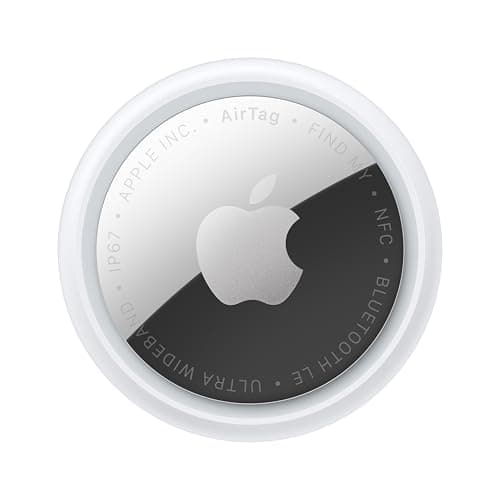
Apple Apple AirTag (2nd generation)
Apple AirTag (2nd generation)

A Bluetooth beacon with a speaker and a UWB radio, and no idea where it is. More than a year per CR2032 per Apple, IP67, no subscription.

The device in questionNo monthly fee

$0 + batteries

$24.00Amazon
02
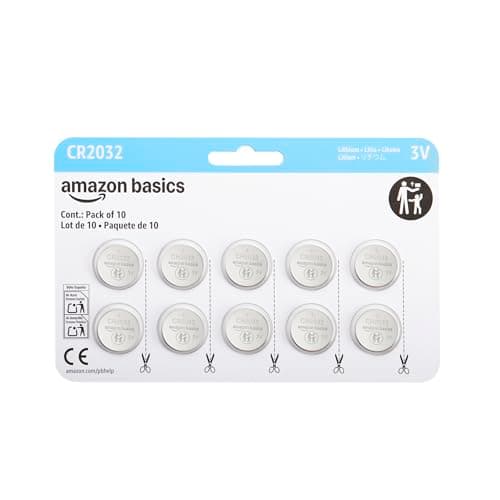
Amazon Basics CR2032 coin cells (multi-pack)
CR2032 coin cells (multi-pack)

About a dollar a year. A multi-pack covers several tags for years, which is the whole ongoing expense of owning them.

Its entire running costNo monthly fee

$0

$9.99Amazon
03
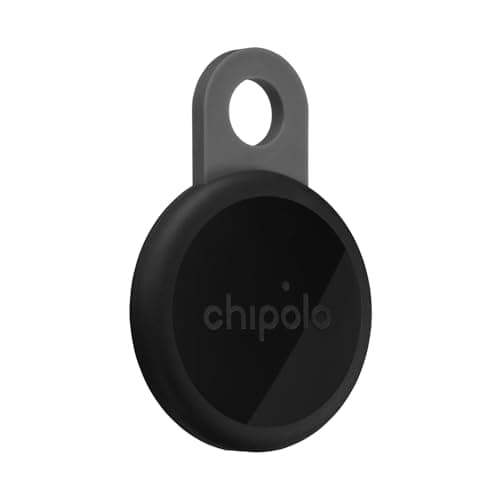
Chipolo Chipolo LOOP
Chipolo LOOP

Rides the identical Apple network in Find My mode, or Google's in Find Hub mode. Louder, with a loop, and no platform lock.

The same mechanism, dual-networkNo monthly fee

$0

$33.15Amazon

#ad · Live prices from Amazon's product API, as of October 8, 2026. Where we have no verified live price we show none — a gap beats a number that has rotted. Plan figures are the brands' own published rates, cited in Sources below.

In detail

The picks, in full

Apple Apple AirTag (2nd generation)
$24.00View on Amazon

$29.0017% off

Price as of October 8, 2026. Prices move — Amazon's at checkout is the one that counts.

#ad · we may earn a commission from this link to Apple AirTag (2nd generation)

Top pickNo monthly fee#01 · Apple

Apple AirTag (2nd generation)

The device in question

A Bluetooth beacon with a speaker and a UWB radio, and no idea where it is. More than a year per CR2032 per Apple, IP67, no subscription.

The subscription reality

No subscription. The only recurring cost is a CR2032 roughly once a year, which is pennies.

Over three years:
about $3 in coin cells

Specs, as published by Apple

  • User-replaceable CR2032 coin cell; Apple states it runs more than a year
  • IP67 (1 m for up to 30 minutes, IEC 60529)
  • Ultra Wideband Precision Finding, 1.5x the range of the first generation
  • Speaker 50% louder than the first generation

Good

  • No subscription, and Apple has never charged one
  • The Find My network is the largest crowd network in the world, so a lost AirTag in a populated area usually reports within minutes
  • Precision Finding walks you to it by distance and direction, not just a map pin
  • Battery is a coin cell from any supermarket, not a sealed pack

Not so good

  • iPhone only for setup and full use — there is no Android app
  • It has no GPS of its own: it reports when an Apple device walks past it, so it is a finder, not a tracker
  • No keyring hole, so you are buying a holder as well

Skip it if

you are on Android, or you need to watch something move in real time — an AirTag only knows where it was when someone last walked past it.

Amazon Basics CR2032 coin cells (multi-pack)
$9.99View on Amazon

Price as of October 8, 2026. Prices move — Amazon's at checkout is the one that counts.

#ad · we may earn a commission from this link to CR2032 coin cells (multi-pack)

No monthly fee#02 · Amazon Basics

CR2032 coin cells (multi-pack)

Its entire running cost

About a dollar a year. A multi-pack covers several tags for years, which is the whole ongoing expense of owning them.

The subscription reality

No subscription, now or later. The purchase price is the whole cost of ownership.

Over three years:
$0

Specs, as published by Amazon Basics

  • CR2032 3V lithium
  • Multi-pack
  • The battery used by AirTag and SmartTag2

Good

  • A year of AirTag ownership costs about a dollar in batteries
  • Multi-pack covers several tags for years
  • Universally available

Not so good

  • Some bitter-coated cells do not seat properly in an AirTag — a known, widely reported fit issue
  • Coin cells are a serious swallowing hazard around small children
  • Shelf life is finite

Skip it if

there are toddlers in the house and you will not store these locked away. Coin cells cause severe internal injuries if swallowed.

Chipolo Chipolo LOOP
$33.15View on Amazon

$39.0015% off

Price as of October 8, 2026. Prices move — Amazon's at checkout is the one that counts.

#ad · we may earn a commission from this link to Chipolo LOOP

No monthly fee#03 · Chipolo

Chipolo LOOP

The same mechanism, dual-network

Rides the identical Apple network in Find My mode, or Google's in Find Hub mode. Louder, with a loop, and no platform lock.

The subscription reality

No subscription, now or later. The purchase price is the whole cost of ownership.

Over three years:
$0

Specs, as published by Chipolo

  • Rechargeable over USB-C; Chipolo states about a year per charge
  • IP67, up to 30 minutes in 1 m of water
  • About 125 dB stated alarm
  • Up to 120 m (400 ft) stated Bluetooth range

Good

  • Works with Apple Find My or Google Find Hub, so it is the one tag you can buy without knowing which phone you will own next
  • No subscription at all, and Chipolo's own app features are free
  • Loud — 125 dB stated is well above an AirTag
  • Built-in loop, so it goes straight on a keyring

Not so good

  • You pick one network at setup; switching later means a reset
  • Rechargeable means a dead tag is a tag you have to find a cable for, not swap a coin cell into
  • USB-C cable is not in the box

Skip it if

you would rather drop in a fresh coin cell than remember to charge a keyring once a year.

Precision Finding: the second radio

The Ultra Wideband radio does something different and much more local. When you are within roughly the same room, a UWB-capable iPhone can measure distance and direction to the tag precisely, and the Find My app turns that into an arrow and a distance that walks you to it.

Apple states the second-generation AirTag has 1.5 times the Precision Finding range of the original, plus a speaker 50% louder.

Two things follow. UWB only helps at close range — it is not how a lost AirTag across town is found. And it is first-party only: third-party Find My tags ride the same network but do not get the arrow.

The accelerometer, and what it is really for

The motion sensor exists mostly for safety rather than convenience. It is how the tag knows it is being carried while separated from its owner — which is what triggers the unwanted-tracking sound and the alerts on nearby phones.

It is also why a tag sitting still in a drawer behaves differently from one traveling in a stranger's bag.

The privacy design, which is better than people assume

Three properties worth knowing:

Rotating identifiers. The broadcast changes regularly, so a third party cannot follow a particular tag over time by listening.

End-to-end encryption. The relaying phone cannot read the report it submits, and Apple cannot read your tag's location either — only your own devices hold the key.

No data for the relayer. The stranger whose phone reported your tag learns nothing, and is not notified.

The flip side is the unwanted-tracking problem, which Apple addresses separately with alerts and sounds. Those protections are here.

The battery, and what Apple's figure means

Apple states that an AirTag works for more than a year on a standard replaceable battery, and that the figure is based on everyday average usage of playing sound and Precision Finding — with the footnote that battery life varies with usage, environmental conditions and replacement battery manufacturer.

Practically: ring it fifteen times a day and you will not get a year. Leave it in a suitcase and you will get more. Your iPhone tells you when it is low.

The physical specifications

Apple states the AirTag is rated IP67 — splash, water and dust resistant, tested under controlled laboratory conditions to a maximum depth of 1 meter for up to 30 minutes under IEC standard 60529 — and notes that resistance is not a permanent condition and may decrease with normal wear.

The battery is a user-replaceable CR2032 coin cell, which is the entire reason an AirTag has a running cost of about a dollar a year.

What all this means when you buy one

A clear-eyed summary: you are buying a beacon that borrows positions from strangers' phones. That is excellent where there are strangers and useless where there are not, it costs nothing to run because the data was never yours to pay for, and it tells you where something was rather than where it is.

For keys, bags and tools, that is the right product. For a vehicle or a roaming animal, it is the wrong category. That comparison is here.
Questions

Frequently asked

Does an AirTag have GPS?
No. An AirTag contains a Bluetooth radio, a speaker, an Ultra Wideband radio, an accelerometer and a coin cell — no GPS receiver and no cellular modem, so it has no idea where it is. Its position exists only because a passing Apple device heard its Bluetooth broadcast, attached its own GPS position, encrypted the pair and reported it. That is why it costs nothing to run.
How does an AirTag find things without a subscription?
The data that locates it is carried by strangers' existing phone plans, in increments Apple describes as efficient enough that the relaying phone's owner need not worry about battery or data usage. Since there is no recurring cost for Apple to recover, there is nothing to charge for — which is a structural reason there has never been an AirTag subscription rather than a pricing decision Apple might reverse.
Is AirTag tracking private?
The design is better than people assume. The tag broadcasts a rotating identifier so a third party cannot follow it over time by listening; the report is end-to-end encrypted so neither the relaying phone nor Apple can read your tag's location; and the stranger whose phone reported it learns nothing and is not notified. The separate problem — someone using a tag to follow a person — is addressed by the unwanted-tracking alerts.
What is Precision Finding and when does it help?
The Ultra Wideband radio lets a compatible iPhone measure distance and direction to the tag precisely when you are within roughly the same room, turning that into an arrow that walks you to it. Apple states the second-generation AirTag has 1.5 times the Precision Finding range of the original. It only helps at close range — it is not how a tag across town is found — and it is first-party only.
Why does my AirTag not update sometimes?
Because no participating Apple device has passed it. The tag has no way to report on its own, so if it is in a field, a shipping container, a rural barn or an underground garage with no footfall, there is nothing to relay its signal and the last known position simply ages. That is the mechanism rather than a fault, and better hardware does not change it.
How long does an AirTag battery last?
Apple states more than a year on a standard replaceable CR2032, based on everyday average usage of playing sound and Precision Finding, with the caveat that battery life varies with usage, environmental conditions and the replacement battery's manufacturer. Ring it fifteen times a day and you will get less; leave it in a suitcase and you will get more. Your iPhone warns you when it is low.

Read next

Where the figures came from

Sources

Every specification and plan price on this page traces to one of these, read on the date shown. Device prices are live from Amazon and stamped separately.

  1. Apple — AirTag product page (battery, IP67, Precision Finding) — accessed 2026-10-05
  2. Apple Support — if you get an alert that an AirTag or Find My network accessory is with you — accessed 2026-10-05
  3. Amazon Product Advertising / Creators API — live prices and product images — accessed 2026-10-05