Yes for some jobs and no for the one you are probably asking about. An AirTag in a car is genuinely useful and genuinely not a vehicle tracker, and the difference is worth five minutes before you rely on it.
What an AirTag actually does in a car
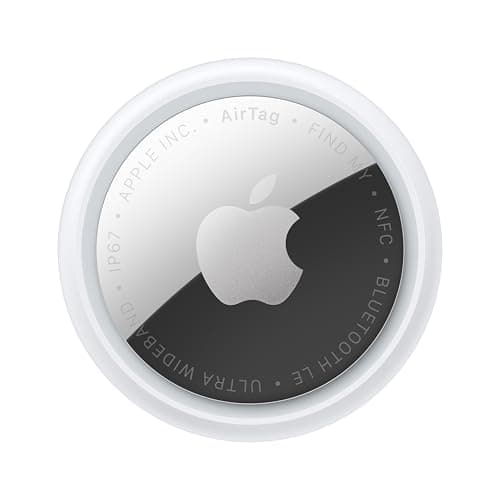
An AirTag has no GPS receiver and no cellular radio. It broadcasts an encrypted Bluetooth identifier, and any passing iPhone relays what it heard to Apple, who pass the position to you. So the question “can it track my car” reduces to a much more concrete one: are there iPhones where your car is?
In a city car park, a residential street, a shopping center, a commuter route: constantly. You will get positions every few minutes and it will feel like real tracking. On a rural highway at 2am, in a shipping container, in a rural barn, in an underground garage with no foot traffic: nothing at all, for hours or days.
A thief driving your car out of a city overnight therefore produces a trail of dots that stops at the edge of the populated area and resumes if they stop somewhere with people. That is not useless — it has recovered cars — but it is not a feed you can follow.
The three jobs it does well
Remembering where you parked. The most mundane use and the most common. Airport long-stay, a multi-story, an unfamiliar city. Works perfectly, costs nothing.
Tracing a stolen car through populated areas. As a cheap second layer alongside a real tracker, or as a last resort if you have nothing else, this genuinely works in cities. Report the positions to the police rather than going yourself.
Knowing a vehicle has moved. If the car is normally on your drive, the moment the tag's last-seen location changes you know something happened. For a second car or a classic that sits, that alert alone is worth the twenty-five dollars.
The two jobs it cannot do
Live pursuit. There is no continuous position and no guarantee of an update in the next hour. If you need to know where the vehicle is right now, you need cellular.
Anything rural. No iPhones, no reports. This is not a limitation that better mounting or a newer tag fixes; it is the mechanism.
Where to put it, and the mistake everyone makes
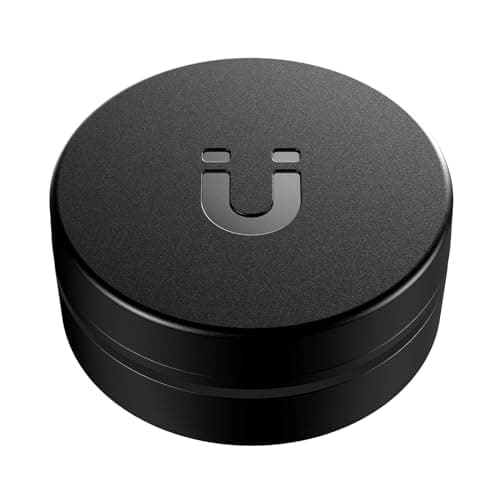
The instinct is to magnetically mount the tag under the car, and it is usually the wrong choice. A tag under a steel floorpan is a Bluetooth transmitter inside a metal box: the signal is badly attenuated, and passing iPhones hear it far less reliably than they would from inside the cabin.
Better places, in rough order: inside the cabin under a seat, in the boot side trim, inside a door card, in the glovebox under the manual. All of those are concealed from a casual look and have a clear path to the outside world through glass.
If you do mount externally, use a proper waterproof magnetic case and accept the signal penalty. A tag in a plastic bumper void reports better than one on a steel chassis rail, because plastic is transparent to Bluetooth and steel is not.
The anti-stalking feature that will find your tag
This is the complication nobody mentions, and it is important if you are putting a tag in a car somebody else drives.
Both platforms now detect a tracker that is not yours moving with you over time. On iPhone, Apple alerts the person when an AirTag separated from its owner has been traveling with them, and the alert includes instructions to disable it. On Android, the same protection lives under Settings, Safety & emergency, Unknown tracker alerts, covering Apple AirTags explicitly, with a manual scan that takes about ten seconds.
The practical consequence: an AirTag in a car driven regularly by anyone other than you will be announced to them, usually within a day. That is the system working as designed — it exists precisely to stop covert tracking of people — and it means a tag is not a covert device in any vehicle with a second driver.
It also means a thief who drives your car and carries an iPhone will be told there is a tag aboard. In practice many ignore the notification, which is why tags still recover cars, but you should not plan on it.
If you need the real thing instead
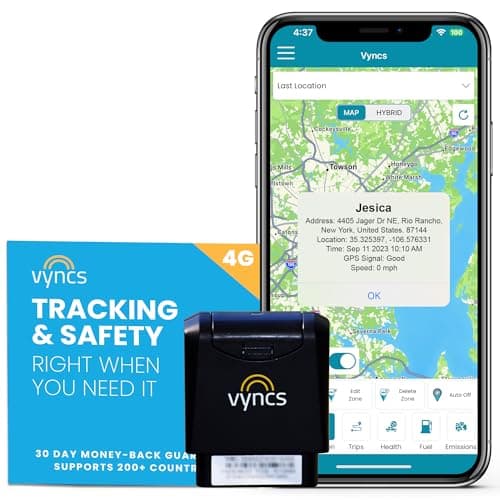
The honest upgrade path, in order of cost over three years. A prepaid-service OBD or hardwired tracker gives you live position with nothing billed monthly, which for a vehicle you are keeping is the cheapest real answer. A plan-based tracker is cheaper up front and $322 to $466 across three years. A Bluetooth tag is free forever and cannot do the job.
The best setup, if a vehicle genuinely matters to you, is both: a hardwired cellular unit for live tracking and recovery, and a cheap tag hidden somewhere else entirely as a backup for the case where the first one is found and removed. Our anti-theft page goes into that properly.
A note on legality
Putting a tag in your own car is straightforward. Putting one in somebody else's is frequently not — California Penal Code § 637.7 makes it a misdemeanour to use an electronic tracking device to determine the location or movement of a person, with exceptions where the registered owner, lessor or lessee consents and for lawful law-enforcement use. The fact that the device is a $25 tag rather than a $200 tracker makes no difference at all to that. We cover the statutes here. Not legal advice.