The short answer
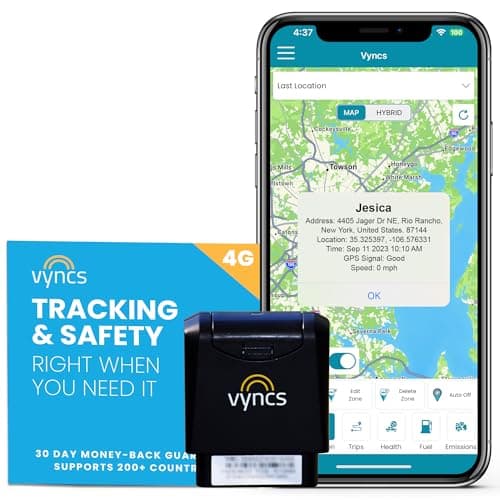
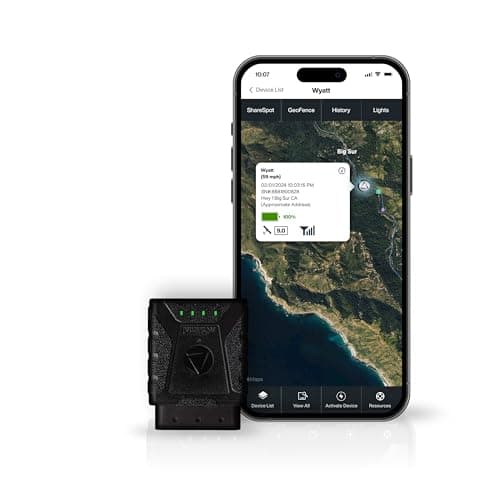
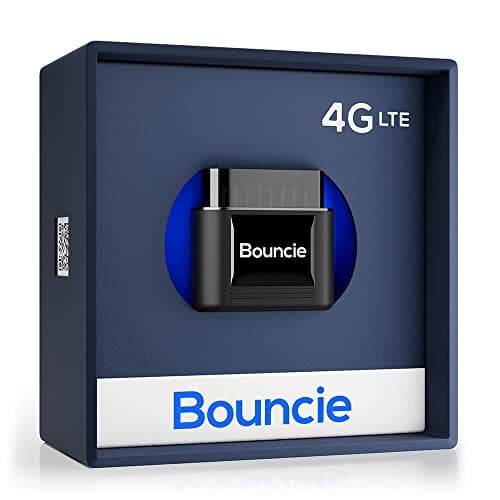
Buy Bouncie if you want the best app and trip reporting in this class and you are comfortable with a bill that never stops. Buy Vyncs if the whole point is that nothing is charged to your card every month. Both plug into the OBD-II port, both are powered by the car so there is nothing to charge, and both report location, trips and engine diagnostics. The difference that matters is how they are funded.
How each one is funded
Bouncie is a subscription. Its own pricing page states a monthly subscription is required per device and advertises no contracts, no hidden fees and no activation fees. The page renders its figures in script rather than in the HTML, so we are not printing a number we cannot cite — check it at checkout. Structurally: cheap hardware, recurring revenue.
Vyncs prepays the service into the purchase price. It is marketed as “no monthly fee”, and in the sense most people mean that is true: nothing is billed to your card each month. It is not the same as free. The service term is baked in and will eventually need renewing, so the question to ask before buying is what renewal costs — and the honest version of this page is that the answer determines whether Vyncs is cheaper than Bouncie at all.
What each one actually does
Bouncie leans into the data: trip logs, speed, hard-braking and acceleration events, engine codes, and the best app of the OBD dongles. If you want to understand how a car is being driven — a teen driver, a company vehicle, a vehicle you share — that is what you are paying for.
Vyncs reports every 60 seconds, which is quick for this class, and gives trip replay and diagnostics. It is less polished and does the job. For a dot on a map and a trip history, the gap between them is smaller than the price difference suggests.
The break-even, and why it is the only real question
A subscription device is cheaper in year one and more expensive in year four. A prepaid device is the reverse. So the arithmetic depends on a fact about you rather than about the hardware: how long you will own this car. If the answer is “two years, then I am trading it”, the monthly model probably wins and you can cancel. If the answer is “this is the truck, I am keeping it”, prepaid wins and keeps winning.
For a yardstick, LandAirSea publishes $8.95 a month on its OBD unit, which is $322.20 across thirty-six months. That is the scale of money a monthly plan represents on a device that costs a fraction of it. The three-year cost table puts every vehicle tracker on the same basis.
The short answer
Quick picks
Ranked by what each one costs to own for three years, not by sticker price. The plan column is the one most comparisons leave out.
| # | Product | Best for | Plan / 3 yr | Price |
|---|
| 01 | Bouncie OBD-II trackerThe nicest OBD tracker to live with: trips, speed, diagnostics and a month-to-month plan with no contract per Bouncie's own pricing page. The bill never stops. | The best app, billed monthly | Plan required Plan required | $89.99·Amazon |
| 02 | VyncsPro 4GService prepaid into the purchase, 60-second reporting and full trip history. Nothing hits your card each month, and renewal is a real future cost to ask about. | Nothing billed monthly | Bundled, then paid Service prepaid | $99.99·Amazon |
| 03 | LandAirSea Sync (OBD-II)LandAirSea prints $8.95 a month in the product title itself, which is $322 across three years. Rare honesty, and a useful yardstick for both of the above. | The published-price alternative | Plan required +$322 / 3 yr | $24.95·Amazon |
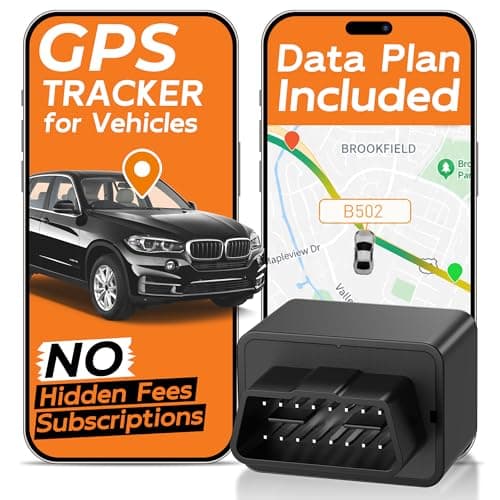
| 04 | TuTrackAI OBD trackerThe same no-monthly-fee model as Vyncs at a lower entry price, from a much newer brand running the servers your tracker depends on. | Cheapest prepaid entry | Bundled, then paid Service prepaid | $109.99·Amazon |
#ad · Live prices from Amazon's product API, as of October 11, 2026. Where we have no verified live price we show none — a gap beats a number that has rotted. Plan figures are the brands' own published rates, cited in Sources below.
In detail
The picks, in full
Top pickPlan required#01 · Bouncie
Bouncie OBD-II tracker
The best app, billed monthly
The nicest OBD tracker to live with: trips, speed, diagnostics and a month-to-month plan with no contract per Bouncie's own pricing page. The bill never stops.
The subscription reality
Bouncie's own pricing page states a monthly subscription is required per device and advertises no contracts, no hidden fees and no activation fees, but the page renders its figures in script rather than in the page, so we are not printing a number we cannot cite. Check it at checkout.
Specs, as published by Bouncie
- ·OBD-II port, vehicle-powered
- ·Reports trips, speed and diagnostics as well as location
- ·4G LTE
Good
- +The best app and trip reporting of the OBD dongles
- +No charging
- +Month-to-month with no contract per Bouncie's own pricing page
Not so good
- −Subscription required per device
- −OBD dongle, so visible
- −Diagnostics are the selling point; if you only want location it is more than you need
Skip it if
you only want a dot on a map. You are paying for trip analytics and engine codes you may never open.
Bundled, then paid#02 · Vyncs
VyncsPro 4G
Nothing billed monthly
Service prepaid into the purchase, 60-second reporting and full trip history. Nothing hits your card each month, and renewal is a real future cost to ask about.
The subscription reality
Marketed as "no monthly fee", and that is true in the sense that no card gets charged every month: the service is prepaid into the purchase. Renewal is still a real future cost — ask what it is before you buy.
Specs, as published by Vyncs
- ·OBD-II port, vehicle-powered
- ·Marketed as no monthly fee, with service prepaid into the purchase
- ·60-second reporting interval, trip replay, diagnostics
Good
- +The genuine no-monthly-fee answer in cellular car tracking: nothing is charged to your card each month
- +60-second updates, which is fast for this class
- +Full trip history and engine diagnostics
Not so good
- −No monthly fee is not no cost — the service term is baked into the price and will need renewing
- −OBD dongle, so visible
- −Costs several times a plan-based dongle up front
Skip it if
you will not still own the car in two years. The prepaid model only pays off if you keep it.
Plan required#03 · LandAirSea
LandAirSea Sync (OBD-II)
The published-price alternative
LandAirSea prints $8.95 a month in the product title itself, which is $322 across three years. Rare honesty, and a useful yardstick for both of the above.
The subscription reality
LandAirSea puts the $8.95/month figure in the product's own title, which is more honest than most of this category manages.
- Published monthly:
- $8.95
- Over three years:
- $322.20
Specs, as published by LandAirSea
- ·Plugs into the OBD-II port, so it is powered by the vehicle
- ·4G LTE
- ·LandAirSea states $8.95 per month in the product title itself
Good
- +No charging, ever — the car powers it
- +Two-minute install with no tools
- +LandAirSea publishes the monthly price on the listing, which is rarer than it should be
Not so good
- −$8.95 a month is $322 over three years, which dwarfs the device price
- −An OBD dongle is the first place anyone looks
- −Occupies the diagnostic port a mechanic needs
Skip it if
you are tracking a vehicle covertly. An OBD dongle is visible from the driver's seat.
Bundled, then paid#04 · TuTrackAI
TuTrackAI OBD tracker
Cheapest prepaid entry
The same no-monthly-fee model as Vyncs at a lower entry price, from a much newer brand running the servers your tracker depends on.
The subscription reality
Marketed as "no monthly fee", and that is true in the sense that no card gets charged every month: the service is prepaid into the purchase. Renewal is still a real future cost — ask what it is before you buy.
Specs, as published by TuTrackAI
- ·OBD-II port, vehicle-powered
- ·Advertised as no subscription and no monthly fees
- ·Real-time reporting
Good
- +No recurring bill
- +Plug-in install
- +Cheaper up front than Vyncs
Not so good
- −Newer brand with a shorter track record than Vyncs or Bouncie
- −Prepaid service still has a horizon — ask what happens at the end of it
- −OBD dongle, visible
Skip it if
long-term platform support matters to you. A young brand running the servers your tracker depends on is a real risk.
What both of them share, and why it might rule both out
An OBD dongle plugs into the diagnostic port under the dash, which is visible from the driver's seat and takes a second to unplug. That makes both of these excellent for fleet, family and teen-driver use, where nobody is hiding anything, and poor for theft recovery, where the first thing an experienced thief does is pull the dongle.
If recovery is the goal, the shape you want is hardwired and hidden rather than plugged in. The install comparison covers all three shapes, and the anti-theft picks are a different list for that reason.
The questions to ask before buying either
Bouncie: what is the monthly rate today, and is it per device? Its pricing page says a subscription is required per device, so a second car is a second bill.
Vyncs: how long is the prepaid term, and what does renewal cost when it ends? “No monthly fee” with an unstated renewal is a deferred bill, and the whole value of the model rests on that number being reasonable.
Both: does the car actually have an accessible OBD-II port? Nearly all post-1996 passenger cars in the US do; many commercial, powersports and older vehicles do not. Machines without a port need a different device entirely.
Our recommendation
Teen driver, company car, anything where the data is the point: Bouncie. The app and the trip reporting are the product, the dongle being visible is fine, and you can stop paying when the kid moves out.
A vehicle you are keeping, and an allergy to recurring bills: Vyncs, with the renewal cost confirmed first.
You want the cheapest route to no monthly bill: the TuTrackAI unit undercuts Vyncs, from a newer brand. That is a genuine platform-longevity risk on a device whose servers are the product, and it is the trade you are making. What one-time-payment tracking really means.
How we picked
We did not lab-test these trackers
Everyone in this category claims to have tested twenty devices. We have not tested any of them, and we say so on every page. What we did instead: read each manufacturer's published specifications and cite them with the date, find the actual subscription price and cite that too, and work out what thirty-six months of ownership costs at those published figures. Device prices come live from Amazon's API and expire after 48 hours rather than going stale. Where a figure could not be sourced to the manufacturer, the page says the spec is unconfirmed rather than borrowing it from a competitor's review. The full method is on the methodology page.
Working out what a tracker really costs? See the three-year cost of every tracker, compared.
Read next
Related
The table behind every recommendation on this site: device, plan, and what thirty-six months actually comes to.
The install-shape decision that sits above this brand comparison.
Where an OBD dongle being visible is a feature rather than a flaw.
The prepaid and no-fee options across the whole category.
What prepaid service is, and the renewal question it hides.
Bluetooth tags, cellular GPS and radio direction-finding are different products, not price tiers.