Skip to content
Tag & Tether

Vehicles · Car, Trailer & Vehicle Trackers

OBD2 vs hardwired vs battery car trackers

The install shape decides more than the brand does. Six axes, worked through, and a clear recommendation for each use case.

By Mike M.Last updated

#ad — we earn a commission if you buy through the links on this page, at no cost to you. It never changes what we recommend, and the structural reason it cannot is that we recommend the no-subscription devices, which pay the least. Full disclosure.


Almost every car-tracker comparison online pits brands against each other, which is the second decision rather than the first. The decision that eliminates most of the market is the physical shape of the thing, because each shape wins and loses on different axes and none is better overall.

Here are the three, and the six axes that separate them.

Power: who keeps it alive

OBD: the vehicle, through the diagnostic port. Never needs charging.

Hardwired: the vehicle, through a spliced 12V feed. Never needs charging.

Battery: you, on a schedule you will forget. This is the single biggest practical difference between the three, and it is the reason we rank battery units last for anything with power available. A flat tracker is worse than no tracker, because you believe you are covered.

Concealment: who can find it

OBD: anybody, instantly. It is in the footwell. For a declared arrangement — a teenager's car, a family vehicle — that is a feature. For anti-theft it is disqualifying.

Hardwired: only someone specifically searching, and only after removing trim. This is the anti-theft shape.

Battery: depends entirely on where you stick it. Under a bumper, found in seconds by a hand sweep. Inside a sealed tool box or up a chassis member, much harder.

Install effort

OBD: ninety seconds, no tools, reversible. Hardwired: an hour with a multimeter and some trim clips, or an installer's fee. Battery: ten seconds.

Battery drain on the vehicle

OBD and hardwired both draw a small continuous current, typically tens of milliamps. Irrelevant on a daily driver; a real risk on a vehicle that sits for weeks, and a serious one on a motorcycle with an eight-amp-hour battery. A battery-powered unit draws nothing from the vehicle at all, which is its one unanswerable advantage on stored assets.

Portability

Battery wins outright — it moves between a car, a trailer and a generator in seconds. OBD moves between cars in seconds but needs an OBD port at the far end, which rules out trailers and motorcycles. Hardwired does not move.

Cost over three years

The shape barely affects this; the plan does. All three shapes are available with monthly plans, prepaid service, or — in the battery case only — as a no-fee Bluetooth tag. The plan arithmetic is here and it dominates every other cost on this page.

The short answer

Quick picks

Ranked by what each one costs to own for three years, not by sticker price. The plan column is the one most comparisons leave out.

#ProductBest forPlan / 3 yrPrice
01
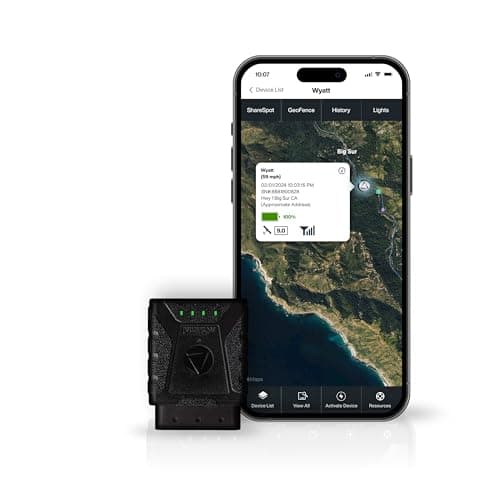
LandAirSea LandAirSea Sync (OBD-II)
LandAirSea Sync (OBD-II)

Ninety-second install, vehicle-powered, never needs charging. Visible from the driver's seat, which makes it right for a declared arrangement and wrong for anti-theft.

The OBD casePlan required

+$322 / 3 yr

$24.95Amazon
02
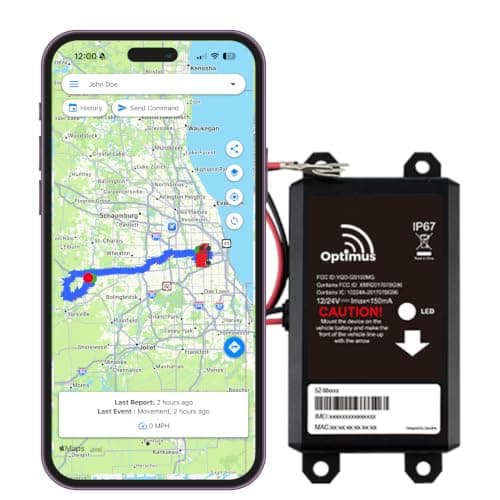
Optimus Tracker Optimus wired vehicle tracker
Optimus wired vehicle tracker

Concealed behind trim, never needs charging, cannot be unplugged in two seconds. An hour with a multimeter is the price of all three advantages.

The hardwired casePlan required

Plan required

$19.95Amazon
03
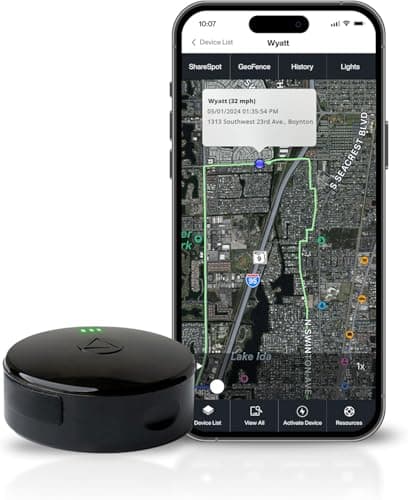
LandAirSea LandAirSea 54 (Premium Edition)
LandAirSea 54 (Premium Edition)

No install at all and moves between vehicles freely, which makes it the only sensible choice for a trailer. You now own something that needs charging.

The battery casePlan required

Plan required

$29.95Amazon
04
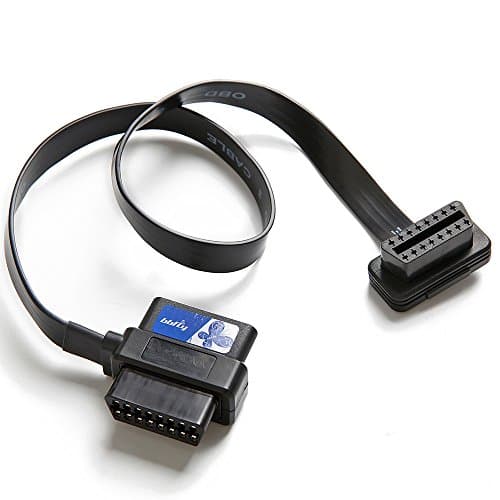
bbfly OBD-II splitter extension cable
OBD-II splitter extension cable

Ten dollars that moves an OBD dongle up behind the dash and leaves the diagnostic port free. Does not make it invisible, but removes it from plain sight.

Fixing the OBD shape's main flawNo monthly fee

$0

$9.90Amazon

#ad · Live prices from Amazon's product API, as of October 8, 2026. Where we have no verified live price we show none — a gap beats a number that has rotted. Plan figures are the brands' own published rates, cited in Sources below.

In detail

The picks, in full

LandAirSea LandAirSea Sync (OBD-II)
$24.95View on Amazon

Price as of October 8, 2026. Prices move — Amazon's at checkout is the one that counts.

#ad · we may earn a commission from this link to LandAirSea Sync (OBD-II)

Top pickPlan required#01 · LandAirSea

LandAirSea Sync (OBD-II)

The OBD case

Ninety-second install, vehicle-powered, never needs charging. Visible from the driver's seat, which makes it right for a declared arrangement and wrong for anti-theft.

The subscription reality

LandAirSea puts the $8.95/month figure in the product's own title, which is more honest than most of this category manages.

Published monthly:
$8.95
Over three years:
$322.20

Specs, as published by LandAirSea

  • Plugs into the OBD-II port, so it is powered by the vehicle
  • 4G LTE
  • LandAirSea states $8.95 per month in the product title itself

Good

  • No charging, ever — the car powers it
  • Two-minute install with no tools
  • LandAirSea publishes the monthly price on the listing, which is rarer than it should be

Not so good

  • $8.95 a month is $322 over three years, which dwarfs the device price
  • An OBD dongle is the first place anyone looks
  • Occupies the diagnostic port a mechanic needs

Skip it if

you are tracking a vehicle covertly. An OBD dongle is visible from the driver's seat.

Optimus Tracker Optimus wired vehicle tracker
$19.95View on Amazon

Price as of October 8, 2026. Prices move — Amazon's at checkout is the one that counts.

#ad · we may earn a commission from this link to Optimus wired vehicle tracker

Plan required#02 · Optimus Tracker

Optimus wired vehicle tracker

The hardwired case

Concealed behind trim, never needs charging, cannot be unplugged in two seconds. An hour with a multimeter is the price of all three advantages.

The subscription reality

A cellular tracker needs a data plan to report its position. This brand does not publish a plan rate we can cite, so treat the device price as a deposit rather than the cost.

Specs, as published by Optimus Tracker

  • Hardwires to the vehicle's 12V supply
  • Cellular, real-time
  • No battery to charge

Good

  • Never needs charging
  • Can be hidden properly, unlike an OBD dongle
  • Cheapest hardwired option here

Not so good

  • Install needed
  • Plan required
  • Wiring into a leased vehicle is a bad idea

Skip it if

you are not comfortable finding a switched 12V feed, or paying someone who is.

LandAirSea LandAirSea 54 (Premium Edition)
$29.95View on Amazon

Price as of October 8, 2026. Prices move — Amazon's at checkout is the one that counts.

#ad · we may earn a commission from this link to LandAirSea 54 (Premium Edition)

Plan required#03 · LandAirSea

LandAirSea 54 (Premium Edition)

The battery case

No install at all and moves between vehicles freely, which makes it the only sensible choice for a trailer. You now own something that needs charging.

The subscription reality

The 54 is a cellular tracker, so it needs a LandAirSea service plan to report anything. LandAirSea does not publish plan rates on a static page; check the current rate before you buy, because it is the larger half of the cost.

Specs, as published by LandAirSea

  • Longer-life battery than the standard 54
  • Magnetic, waterproof
  • 4G cellular with built-in SIM

Good

  • Longer between charges, which is the standard 54's main weakness
  • Same mounting and app
  • Real-time reporting

Not so good

  • Still plan-dependent
  • Costs more up front
  • Still needs charging eventually

Skip it if

you can hardwire instead — a wired tracker never needs charging at all.

bbfly OBD-II splitter extension cable
$9.90View on Amazon

Price as of October 8, 2026. Prices move — Amazon's at checkout is the one that counts.

#ad · we may earn a commission from this link to OBD-II splitter extension cable

No monthly fee#04 · bbfly

OBD-II splitter extension cable

Fixing the OBD shape's main flaw

Ten dollars that moves an OBD dongle up behind the dash and leaves the diagnostic port free. Does not make it invisible, but removes it from plain sight.

The subscription reality

No subscription, now or later. The purchase price is the whole cost of ownership.

Over three years:
$0

Specs, as published by bbfly

  • 16-pin OBD-II Y-splitter
  • Lets a dongle move out of sight
  • Keeps the port usable

Good

  • Moves an OBD tracker up behind the dash so it is not the first thing seen
  • Leaves the diagnostic port free for a mechanic
  • Cheap

Not so good

  • Does not make the tracker invisible, just less obvious
  • Loose routing can rattle
  • Some vehicles have no room behind the port

Skip it if

you want a genuinely hidden install — hardwire instead.

The recommendation, by case

A daily driver you want trip data on

OBD. Ninety seconds, no charging, good app data, and visibility does not matter because nobody is hiding anything. Add a ten-dollar splitter if you would rather it were not in the footwell and would like the diagnostic port left free.

A vehicle you are worried about losing

Hardwired. Concealment is the whole point and it is the only shape that provides it. If you also want a remote starter disable, hardwired is the only shape that offers it.

A trailer, boat, generator or plant

Battery, unless there is a 12V supply — and check, because many trailers and most RVs have one. Where there is power, hardwire; where there is not, buy the longest stated battery life you can and prefer a motion-triggered mode.

A motorcycle

Hardwired, with the sleep-current question asked first, because a bike battery is a fraction of a car's. OBD is not an option — there is no port. Battery units work but charging a unit buried in a fairing is a job you will do twice.

A teenager's car

OBD, deliberately. Visible, declared, removable at an agreed milestone. Hardwiring a tracker into a teenager's car is the wrong signal and the wrong commitment. More on that here.

Two things worth knowing about the OBD port

First, a dongle occupies the port a mechanic needs. A splitter extension cable fixes that and moves the device out of sight at the same time, which makes it the cheapest worthwhile accessory in this category.

Second, the OBD port is itself a theft vector. On several commonly stolen models, thieves program a new key through it in under a minute. A keyed OBD lock blocks that and incidentally stops anyone unplugging your tracker — worth considering independently of what shape you choose.

When “neither” is the answer

If what you actually want to know is which level of the car park you left the car on, none of these three shapes is the right purchase. A Bluetooth tag in the glovebox does that for twenty-five dollars and no running cost, and every cellular tracker on this page is overkill for it. What a tag can and cannot do in a car.
How we picked

We did not lab-test these trackers

Everyone in this category claims to have tested twenty devices. We have not tested any of them, and we say so on every page. What we did instead: read each manufacturer's published specifications and cite them with the date, find the actual subscription price and cite that too, and work out what thirty-six months of ownership costs at those published figures. Device prices come live from Amazon's API and expire after 48 hours rather than going stale. Where a figure could not be sourced to the manufacturer, the page says the spec is unconfirmed rather than borrowing it from a competitor's review. The full method is on the methodology page.

Working out what a tracker really costs? See the three-year cost of every tracker, compared.

Questions

Frequently asked

Is an OBD or hardwired GPS tracker better?
They answer different questions. OBD is better when the arrangement is declared and you want it fitted in ninety seconds with no charging — a daily driver, a teenager's car, trip reporting. Hardwired is better when concealment is the point, because an OBD dongle is in plain view in the footwell and unplugs in two seconds, while a hardwired unit behind trim survives a search. Hardwired is also the only shape that supports a remote starter disable.
Do OBD trackers drain the car battery?
They draw a small continuous current, typically tens of milliamps, which is irrelevant on a car you drive regularly and a real risk on one that sits for weeks. Better units sleep after a period without motion. If the vehicle is stored, either choose a unit with a documented low sleep draw, fit a battery tender, or use a battery-powered tracker that takes nothing from the vehicle at all.
Can I use an OBD tracker on a trailer or motorcycle?
No — neither has an OBD-II port. A trailer needs either a long-life battery unit or a hardwired install if it has any 12V supply, which many do. A motorcycle needs a hardwired install, with the sleep-current question asked carefully first, because a bike battery is a fraction of a car's and a tracker that flattens it over three weeks is a common and avoidable failure.
How do I hide an OBD tracker?
You largely cannot, and a ten-dollar OBD-II splitter extension cable is the best available fix: it moves the dongle up behind the dash trim and leaves the diagnostic port free for a mechanic. It removes the device from plain sight rather than making it invisible. If genuine concealment matters, the honest answer is to hardwire instead.
Which install shape is cheapest?
The shape barely affects the cost, because the plan dominates it. All three are available with monthly plans, with prepaid service, or — in the battery case only — as a no-fee Bluetooth tag. A $12.95 monthly plan is $466 over three years regardless of whether the device plugs into the OBD port, hides behind the dash or sticks underneath. Choose the shape for the job and the payment model for the budget.

Read next

Where the figures came from

Sources

Every specification and plan price on this page traces to one of these, read on the date shown. Device prices are live from Amazon and stamped separately.

  1. LandAirSea — service plans — accessed 2026-10-05
  2. Spytec GPS — plan pricing ($14.95/mo monthly, $12.95/mo paid annually) — accessed 2026-10-05
  3. Amazon Product Advertising / Creators API — live prices and product images — accessed 2026-10-05