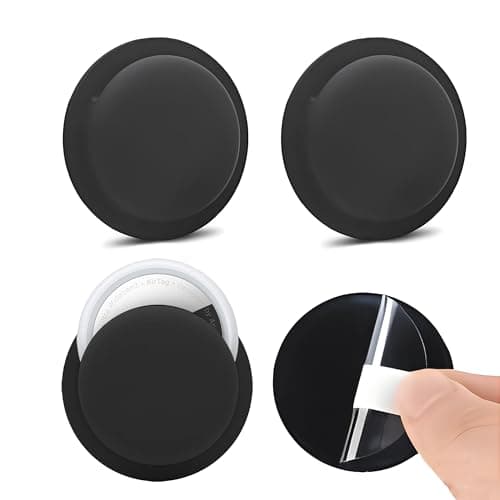
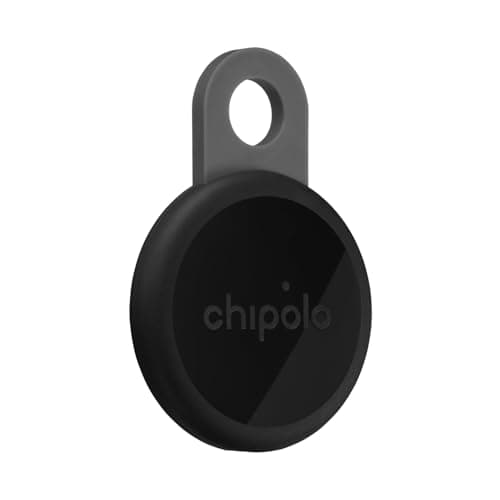
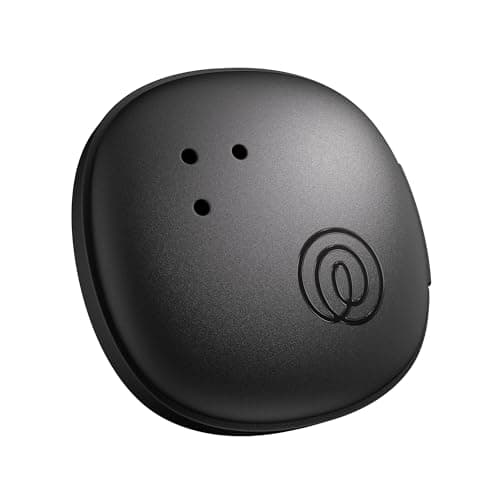
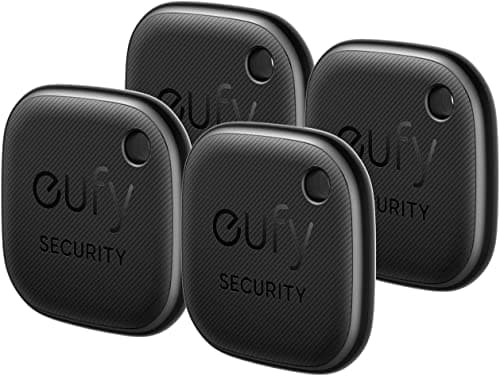
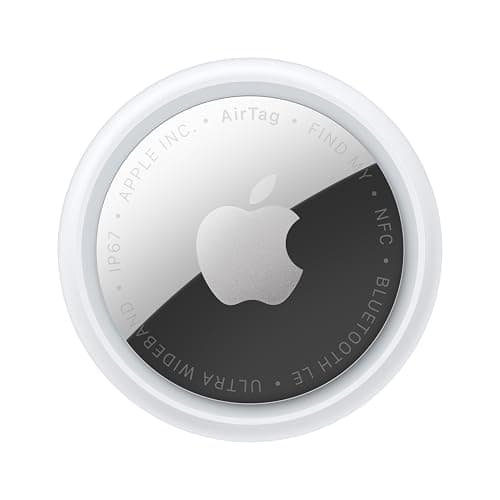
For almost everybody the right buy is a no-fee Bluetooth tag with an adhesive mount — an AirTag if the household runs iPhones, a Chipolo LOOP if it runs Android — because ski gear goes missing in the one place a crowd-network tag works best: a resort full of phones. Do not buy a cellular GPS tracker for skis. There is nothing to wire it to, it needs charging, and the thing it is better at — reporting from an empty place — is not where your skis go.
This page is about the gear, not the skier. If what worries you is a child or a teenager getting separated on a mountain, that is a different purchase with a different answer, and it lives on our trackers for kids page. If you ski out of bounds or tour beyond lift-served terrain, no tag or tracker is the relevant device at all — that is satellite-messenger territory, plus the avalanche equipment that no consumer tracker substitutes for.
Four questions that decide this, in order
1. How does ski gear actually go missing? Three ways, and all three favor a tag. It is taken from a rack outside a lodge during lunch, by somebody who walks off with it on foot through a crowd. It is swapped by accident, which happens more than theft does — identical rental skis, somebody else's identical board, the wrong pair back on the rack. Or it is lost in transit, by an airline or a shuttle, where the bag and the gear separate from you and you want to know whether it made the plane. A Bluetooth tag covers all three, because in all three the gear ends up near people. A cellular tracker is only better in the fourth case — stolen into a van and driven somewhere empty — and that is the rarest of the four.
2. Where on the gear can you physically mount it? The question that decides which product you buy. Skis and boards are a waxed, curved, cold composite surface with no attachment point, and you cannot drill a topsheet without ruining it. What works, in order: inside the binding assembly where there is usually a cavity or a flat inner face; a thin adhesive mount on a surface that does not flex; the boot bag or ski bag, which is where most of the value is anyway; and a tag zip-tied inside a pole strap or basket for a crude but reversible fix. What never works is anything that sits proud on the topsheet, catches a boot, or interferes with a binding release. Your binding is safety equipment. Nothing goes near its moving parts.
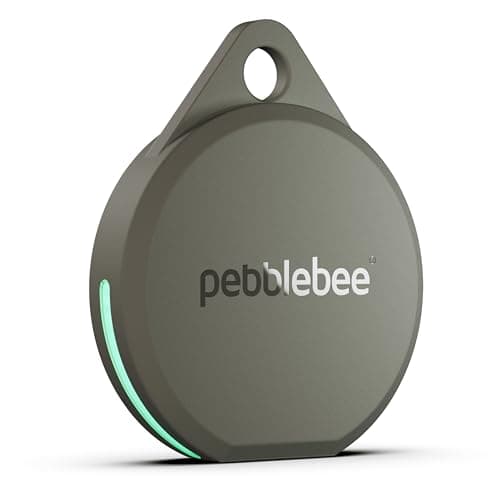
3. How loud is it? Underrated, and the specification we would weight most heavily for this use. The find that matters usually happens inside a building — a boot room, a rental shop, a lost-property cupboard, a shuttle bus luggage bay — with hard floors and a lot of ambient noise. Chipolo states 125 dB for the LOOP and Pebblebee states 130 dB for the Clip 5. An AirTag is quieter than both, which matters less than it sounds because Precision Finding gives you a direction instead. Why the range number on the box is almost irrelevant indoors.
4. What does it cost to keep? Nothing, if you buy any tag on this page. That is the point of them: no SIM, no carrier, no plan. Your recurring cost is a CR2032 roughly once a year for the coin-cell tags, or a USB-C charge every several months for the rechargeables. Anything that asks you for a monthly fee to find a pair of skis is sold to the wrong buyer. What the subscription options actually cost over three years, for comparison.
Why cellular GPS is the wrong answer for skis
It is worth spelling out, because the search results for this will try to sell you one. A cellular tracker is a good product in the wrong place here, for four reasons that all apply at once.
It needs charging, and you will forget. A tracker with a four-month battery on gear used fifteen days a season is a tracker that is flat when you need it. A coin-cell tag lasts a year and tells you in the app when it is low.
It needs a plan. Thirty-six months of service on a pair of skis is comfortably more than the skis are worth to a thief, and several times the price of a tag.
It is the size of a deck of cards. That is what a 4G radio and a usable battery take up. There is nowhere on a ski to put it where it will not foul something.
Its advantage does not apply. Cellular wins where there are no other phones. A resort, an airport, a shuttle and a rental shop are all the opposite of that. The whole trade-off between the two technologies, in one page.
Mounting, specifically
Skis. The best spot is inside the binding — most alpine bindings have a void under the heel piece or an inner face on the toe housing that will take a thin adhesive mount. Second best is the ski bag, because a stolen pair is usually stolen out of one. Clean the surface with isopropyl alcohol, press the mount on at room temperature, and leave it overnight before the gear goes out in the cold; adhesive applied at minus five never really bonds.
Snowboards. Less space, and the obvious cavity is under the binding disc, where you should not add thickness. Use the smallest adhesive tracker you can live with, on the inside wall of a highback or inside the board bag, and accept that a board is the harder of the two to tag discreetly.
Boots and boot bags. The highest-value tag on the whole list and the one people skip. Custom-fitted boots are the single most expensive and least replaceable thing in a ski household, and a boot bag is set down and walked away from constantly. A tag in the lid pocket costs nothing to add and covers an airline losing the bag as well.
Helmets and poles. Worth a tag only if you are buying a multi-pack anyway. A helmet has an interior liner cavity that takes a thin tag well; poles are cheap enough that we would not bother.
Flying with skis, and with the tag inside
Ski bags are checked, oversized and handled separately from the rest of the baggage stream, which is exactly why a tag earns its place: you find out the bag did not make the connection before the airline's own system tells you. The coin cells these tags use are the small lithium-metal batteries that FAA guidance permits in both carry-on and checked baggage, and the devices themselves are low-power transmitters rather than prohibited items. The rules, and the practical placement for checked baggage covers this in full, and applies to a ski bag exactly as it does to a suitcase.
One practical point for a ski trip specifically: put a tag in the ski bag and keep one in the boot bag you carry on. If the two are separated at a transfer, you want to know which one went missing before you spend an hour at the wrong counter.
What a tag will not do
It will not stop anybody taking your skis off a rack, and it will not recover them from somebody who finds the tag and removes it. The cheapest effective measure is still the oldest: split your pair across two racks so neither ski is useful alone, or use a ski lock through both. A tag turns “my skis are gone” into “my skis are in that building”, which is a real improvement and not a security system.
It also will not help if nobody around it has a phone on the right network. In a resort that is a non-issue. In a remote cat-skiing operation, a backcountry hut or a parking lot at 6am, it is — and a tag will give you the last place it was seen, which is usually still the most useful fact available. And one last thing worth knowing if you are tagging gear that other people handle: both Apple and Google ship unwanted-tracking alerts, so a tag in a rental you return will eventually announce itself to whoever has it. How those alerts work, on both platforms.