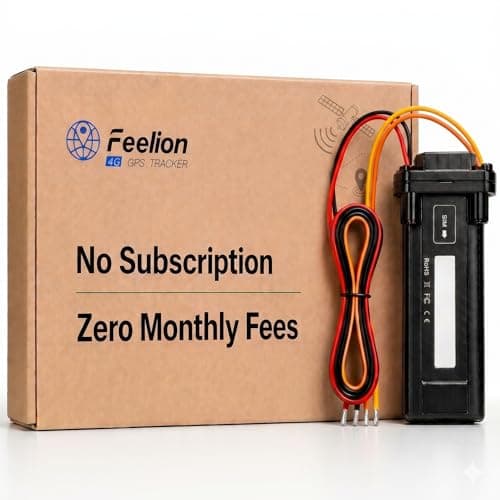
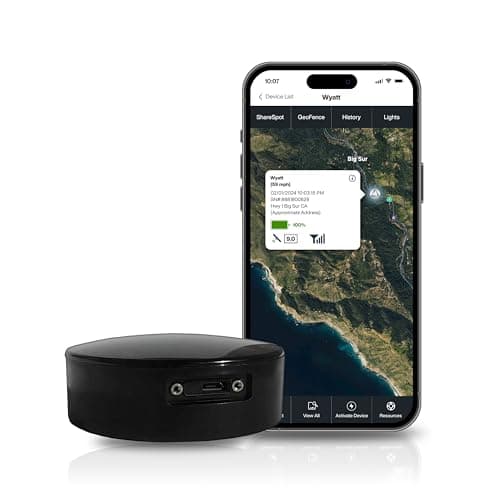
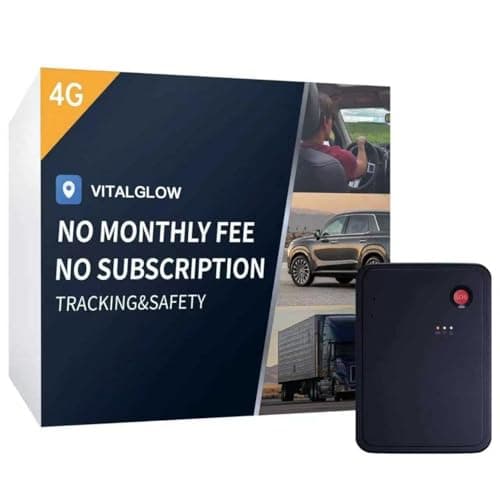
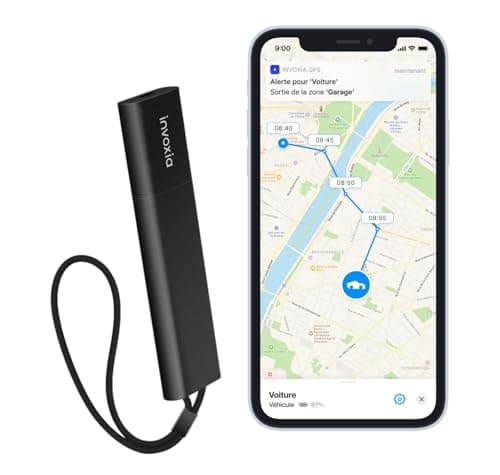
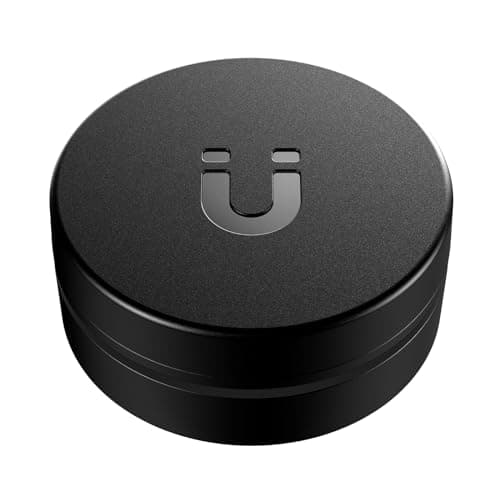
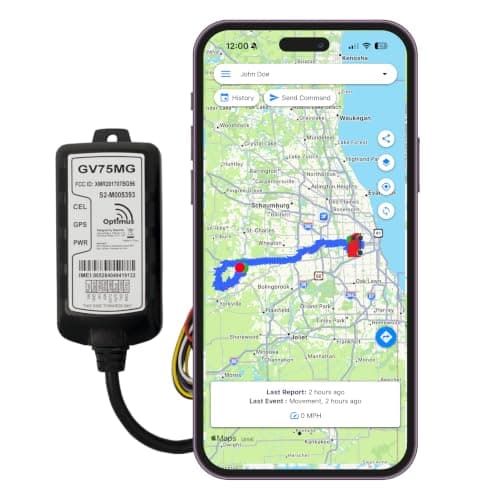
For most riders the answer is a hardwired cellular tracker hidden under the hood — the Optimus GV75MG if you accept a plan, the FEELION unit if you want the service prepaid instead of billed monthly — because the loss you are protecting against happens in a parking lot, a trailer or a shed, not on the trail. If you will not wire anything, a long-battery magnetic unit is the fallback, and the magnet is the part to test first. If what you want is to be told the machine moved rather than to watch it, the Invoxia PRO's motion alert is the mechanism.
Two facts about a snowmobile rewrite the shopping list, and almost nothing marketed for sleds acknowledges either.
A sled is largely not steel. Tunnels, bulkheads and much of the chassis are aluminum, and the hood and side panels are plastic. Every magnetic tracker case on the market was designed for the steel underside of a car. Aluminum is not magnetic and plastic obviously is not, so a mount that clamps instantly to a truck frame can have nothing to grip on a sled. This is testable in ten seconds with a refrigerator magnet, and it is the single check that saves the most wasted money on this page.
You ride where there is no signal. A cellular tracker needs a tower; a Bluetooth tag needs a stranger's phone. Trail systems in the Upper Peninsula, the Adirondacks, northern Maine and most of the mountain West offer neither for long stretches. A tracker is therefore not a find-my-sled-in-the-backcountry device, and any page that implies otherwise is selling you something. Beyond coverage, the device that works is a satellite communicator — a different product, bought for the rider rather than the machine.
The five questions that decide this, in order
1. What are you actually protecting against? Be specific, because the answers diverge completely. Theft from a staging lot, a motel parking area, a dealership service yard or an unlocked shed is the common loss, and it is a recovery problem: you want a hidden device that reports a location to you and to a police department. A sled breaking down twenty miles up a trail is a rescue problem, and no tracker on this page solves it. Being separated from a riding group is a communication problem, which is a radio or a satellite messenger. Buy for the first one; do not pretend a tracker covers the other two.
2. Will you wire it in? This is the fork that decides the product. A sled has a 12V system and a battery on most electric-start machines, so a hardwired tracker can draw power, live permanently out of sight, and never need charging — and a thief who finds a tracker usually finds it because it was stuck on with a magnet. The cost is an afternoon and a fuse tap, or a shop's labor rate. If you will not do that, accept a battery unit and accept the charging routine that comes with it.
3. How cold does it get, and where will the device sit? Lithium cells lose usable capacity as temperature drops, which is ordinary battery chemistry rather than a defect, and the manufacturer day-counts on these products are not measured at minus twenty. Treat a stated 120 or 140 days as a warm-weather ceiling and plan on meaningfully less through a northern winter. The practical consequence: mount a battery unit where it is insulated from the airstream if you can, and do not let the first cold snap be the test of whether you remembered to charge it. What each brand's battery claim is actually measuring.
4. Will it survive snow, slush and road salt? A sled is washed by the environment constantly, and a trailered sled spends hours in brine spray behind a truck. Look for a stated IP rating rather than the word “waterproof” in a bullet. The Optimus GV75MG is sold specifically with a waterproof housing for exterior mounting, and the FEELION listing states IP67. A magnetic case rated for a car underbody is a reasonable bet; a tracker in a plastic bag taped under a seat is not.
5. What does thirty-six months cost? The question this whole site exists for, and it is sharper on a seasonal machine than anywhere else. A plan that bills twelve months a year on a sled you ride four is paying for eight months of nothing — and most providers will not let you pause without losing the rate. Spytec publishes $14.95 a month, or $12.95 paid annually, which is $466.20 across three years. LandAirSea prints $8.95 a month in its Sync product title, which is $322.20. Against a device under a hundred dollars, the plan is the purchase. Every rate we can cite, multiplied out to thirty-six months.
Where a snowmobile actually goes missing
The loss pattern should drive the purchase, and it is not the one riders picture. Sleds are taken from places where they are briefly unattended and briefly anonymous: a trailhead lot full of identical machines, a motel parking area on a trip, a driveway the night before a ride, a storage unit or an open-sided shed at the end of the season. Two features matter in every one of those scenarios and neither is tracking accuracy.
The first is concealment. A tracker found in the first thirty seconds is a tracker that gets thrown in a ditch, and a tracker stuck to the outside of a tunnel with a magnet is found in the first thirty seconds. Hardwiring wins here not because the signal is better but because the device is somewhere that requires tools and daylight to reach.
The second is a movement alert. Nobody opens a tracking app at 3am on spec. What recovers a machine is a push notification that says it moved while you were asleep, and that is a geofence or a motion alert rather than a map. Set the geofence around the storage location the day you install the tracker, not after something happens.
A tracker is also only half of a theft response. Photograph the sled and write down the vehicle identification number before the season starts, because a police report and an insurance claim both ask for it, and “a black Ski-Doo” is not a description that recovers anything. Keep that note in the same place as the tracker login.
Mounting a tracker on a sled, honestly
There is no good universal mount for a snowmobile, so here is the order we would try, best to worst.
Hardwired, behind the hood or under a side panel. The best answer. Power is permanent, the device is invisible, and the engine bay is the warmest part of the machine in winter, which helps every electronic in it. Use a fused tap rather than splicing a live-at-rest circuit, and route the antenna away from metal where you can.
Strapped or zip-tied into an enclosed space. Under the seat, inside a tunnel bag, in the glovebox of a touring sled. Cheap, reversible and entirely adequate for a battery unit. Use something that will not vibrate loose over a season of moguls, and wrap the device so it cannot rattle against aluminum.
Adhesive, on a clean interior surface. Works, and it is a one-shot decision: 3M tape at minus twenty is not the same material it was in a warm garage, so press it on indoors and let it cure before the machine goes out.
Magnetic — only after the fridge-magnet test. Some brackets, some engine cradle hardware and some older chassis parts are steel and will hold. Most of the obvious flat surfaces will not. If the magnet does grip, remember the second problem: a magnet holding on a machine that lands hard is not the same as a magnet on a car on a highway. Add a strap.
The honest limits of a no-fee tag on a snowmobile
We recommend no-subscription Bluetooth tags constantly on this site, and we are not going to overstate them here. An AirTag or a Chipolo in a magnetic case on a sled does exactly one useful thing: it tells you where the machine was the last time any phone on that network passed within range of it. In a trailhead lot, a dealership, a campground or a motel parking area that is genuinely useful and it costs nothing forever. On a trail at dusk, in a locked storage unit, or in the back of a van driving north at 2am, it reports nothing, because there is nobody there to report it.
That is not a flaw in the tag, it is what the technology is. The difference between where it is and where it was is the decision that comes before every other one on this page. If the sled is worth more than a few thousand dollars, buy the cellular tracker and put a no-fee tag somewhere else on the rig as a second, free layer — in the trailer, in the tool bag, in a helmet.
What we would do with three different budgets
Under fifty dollars, total, forever. A no-fee tag in a waterproof magnetic shell, hidden inside the tunnel bag rather than stuck to the outside of anything. Accept that it covers the lot and not the trail. Add a decent lock to the trailer, which does more for the same money than any electronics.
Around a hundred dollars with no recurring bill. The hardwired FEELION unit, installed under the hood, with the service prepaid rather than billed. The brand-longevity risk is real and we would still take it over paying a monthly fee on a machine that is parked two-thirds of the year.
Whatever it costs, on a machine worth protecting. The Optimus GV75MG, hardwired and hidden, with a geofence set around the storage location and a plan you have priced to thirty-six months with your eyes open. On a new mountain sled the device plus three years of service is a rounding error against the machine, and it is the only configuration here that actually reports from a vehicle in motion, on a schedule, without a battery to remember.
Trailered sleds are a different problem than ridden ones
Most snowmobile theft happens while the machine is on a trailer, which means the trailer is part of the purchase. Two devices beat one here, and they do different jobs: a tracker on the sled survives the trailer being abandoned, and a tracker on the trailer survives the sled being sold. If you are buying twice anyway, buy one cellular unit for the machine and put a no-fee tag in the trailer tongue box — total extra cost of the second layer is one tag and one coin cell a year. Trackers built for a trailer's particular problem — no power, no OBD port and weeks unattended — covers that side.
What a tracker will not do
It will not stop a theft. A determined thief with a truck and two ramps does not care what is wired to the machine, and the recovery rate on a stolen sled depends far more on how fast the police get a plate and a direction than on how precise your coordinates are. The cheap measures still matter most: a hitch lock, a wheel chock lock, a ski lock, lighting, and not leaving the sled on an open trailer in a motel lot overnight when the motel has a back parking area.
It also will not survive being removed. Every battery unit on this page comes off in seconds once found, which is the whole argument for hardwiring one in. A device with a starter-disable relay goes a step further — the TrackmateGPS Mini PRO II supports one — but that is an installer job on a sled and disabling a machine that may be moving is a liability you need to understand before you buy the capability.
One legal note worth reading before you fit anything
Tracking a machine you own is straightforward. Tracking a machine somebody else owns — a club sled, a rental, a friend's machine you lent out, a vehicle in a shared household where the title is in one name — is not, and the rules vary by state. What the statutes actually say, with the jurisdiction named. If the sled is not yours alone, get agreement in writing before you fit a tracker, not after.