Skip to content
Tag & Tether

Pets · Dog & Cat Trackers

How do dog GPS trackers work?

Two radios, not one. The collar works out where it is, then has to get that answer to your phone — and how it does that is the whole purchase.

By Mike M.Last updated

#ad — we earn a commission if you buy through the links on this page, at no cost to you. It never changes what we recommend, and the structural reason it cannot is that we recommend the no-subscription devices, which pay the least. Full disclosure.


A dog GPS collar does two separate jobs with two separate radios. First it works out where it is, usually by listening to GPS satellites. Then it has to get that answer to you, which it does over a cellular network, over its own radio link to a handheld you carry, or by borrowing a stranger's phone. Everything that matters about buying one — the monthly fee, the dead zones, the battery life, the range — comes from that second radio, not the first.

Step one: the collar finds itself

GPS is receive-only. The collar listens for timing signals from satellites and calculates its own position from the differences between them. It costs nothing, needs no account, and works anywhere with a reasonably clear view of the sky. It also tells nobody: at the end of this step the collar knows where the dog is and you do not.

This is why GPS needs a clear sky and struggles under heavy canopy or in a steel-framed building — and it is why “GPS does not work indoors” is true of the position-fixing half while being irrelevant to the Bluetooth tags, which never do this step at all.

Step two: the collar tells you — three ways

Cellular. There is a SIM in the collar and it uploads the position over a carrier network, exactly like a phone. You get a live map from anywhere in the country. You also get a monthly bill, because somebody has to pay the carrier for that data — the fee is not a software charge, it is airtime. Why the fee exists, in detail.

Its own radio link. The collar transmits on a licensed or unlicensed band straight to a handheld you are holding. No carrier, no account, no fee, and it works in a hollow with no bars. The catch is that it only works while you are within range, out there, holding the receiver.

Somebody else's phone. A Bluetooth tag skips the GPS step entirely. It shouts a short encrypted identifier; any passing phone on the right network hears it and reports the phone's own location to the cloud. That is why a tag is free forever and why it tells you where the dog was rather than where it is. The crowd-network mechanism, step by step.

What each one is actually good at

Cellular is the only one that answers “where is my dog right now” from your desk, and the only one that fails completely in a dead zone. Radio is the only one that works where there is no coverage, and the only one that requires you to be in the field. A tag is the only one that costs nothing and the only one that depends on strangers walking past your dog.

The short answer

Quick picks

Ranked by what each one costs to own for three years, not by sticker price. The plan column is the one most comparisons leave out.

#ProductBest forPlan / 3 yrPrice
01
Tractive Tractive Smart Dog GPS tracker
Tractive Smart Dog GPS tracker

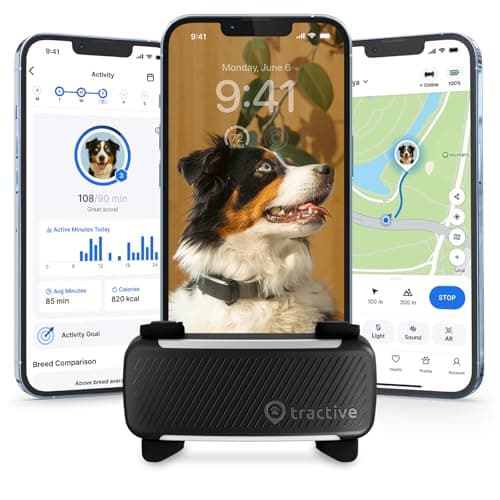
GPS to work out where the dog is, a SIM to send it to you. That second radio is the reason there is a $252 three-year plan attached.

The cellular version of the mechanismPlan required

+$252 / 3 yr

$47.40Amazon
02
eMACROS eMACROS dog GPS tracker, no subscription
eMACROS dog GPS tracker, no subscription

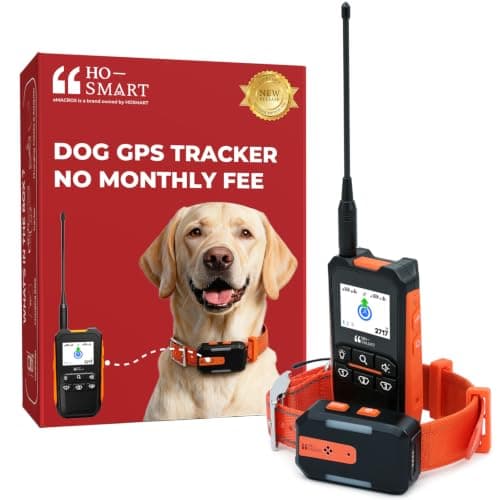
No SIM anywhere in it: the collar talks straight to a handheld you carry. Nothing to subscribe to, and nothing to lose signal on.

The radio versionNo monthly fee

$0

$139.99Amazon
03
Garmin Garmin Alpha TT 25 collar
Garmin Alpha TT 25 collar

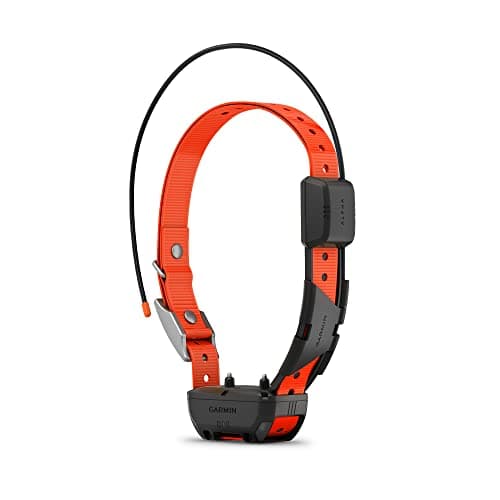
The collar half of the Garmin Alpha system. Radio tracking plus training, no subscription, and no use at all without its handheld.

Radio done properlyNo monthly fee

$0

$349.99Amazon
04
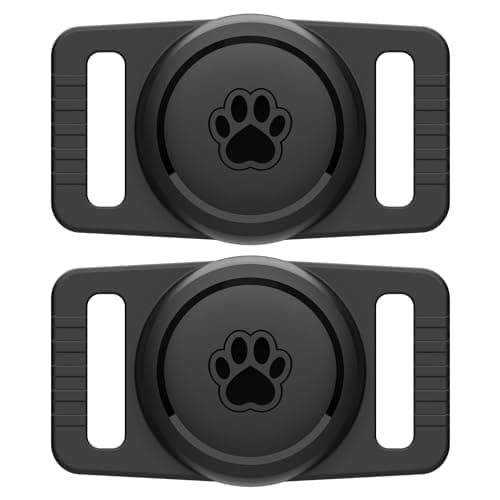
GOCII Waterproof AirTag dog collar holder (2-pack)
Waterproof AirTag dog collar holder (2-pack)

A holder for a Bluetooth tag, which has no GPS at all and borrows a passing stranger's phone to report. Cheapest, and the most limited.

The crowd-network versionNo monthly fee

$0

$6.98Amazon

#ad · Live prices from Amazon's product API, as of October 11, 2026. Where we have no verified live price we show none — a gap beats a number that has rotted. Plan figures are the brands' own published rates, cited in Sources below.

In detail

The picks, in full

Tractive Tractive Smart Dog GPS tracker
$47.40View on Amazon

$79.0040% off

Price as of October 11, 2026. Prices move — Amazon's at checkout is the one that counts.

#ad · we may earn a commission from this link to Tractive Smart Dog GPS tracker

Top pickPlan required#01 · Tractive

Tractive Smart Dog GPS tracker

The cellular version of the mechanism

GPS to work out where the dog is, a SIM to send it to you. That second radio is the reason there is a $252 three-year plan attached.

The subscription reality

The collar is useless without a plan — the subscription pays for the SIM inside it. The cheapest honest route to three years on Basic is $252.

Published monthly:
$9 Basic (1-year), $6 Basic (2-year)
Over three years:
$252 on Basic (a 2-year term at $144 plus a 1-year at $108)

Specs, as published by Tractive

  • Clips to any collar, cellular with built-in SIM
  • Virtual fence alerts
  • Live tracking with a walk-to-it mode

Good

  • The best-supported pet GPS on the market, and the one most likely to still exist in three years
  • Genuinely live tracking, which is what you need for a dog that runs
  • Virtual fence alerts actually work

Not so good

  • Needs a plan. $252 over three years on Basic is the realistic figure, and that is before the collar
  • Charge every few days
  • The plan is per tracker, so two dogs is two plans

Skip it if

your dog never leaves a fenced garden. For that dog a $25 Bluetooth tag and a sturdy latch is the better purchase.

eMACROS eMACROS dog GPS tracker, no subscription
$139.99View on Amazon

Price as of October 11, 2026. Prices move — Amazon's at checkout is the one that counts.

#ad · we may earn a commission from this link to eMACROS dog GPS tracker, no subscription

No monthly fee#02 · eMACROS

eMACROS dog GPS tracker, no subscription

The radio version

No SIM anywhere in it: the collar talks straight to a handheld you carry. Nothing to subscribe to, and nothing to lose signal on.

The subscription reality

Radio direction-finding, not cellular. No SIM, no network, no plan — which is exactly why it still works where there is no signal.

Over three years:
$0

Specs, as published by eMACROS

  • Radio link between a handheld and the collar unit — no SIM, no cellular
  • Manufacturer states up to 3 miles of range
  • Works off-grid where there is no phone signal

Good

  • No subscription, ever, because there is no network involved
  • Works in dead zones, which is precisely where cellular pet trackers fail
  • No app, no account, no servers that can be switched off

Not so good

  • You carry a handheld — there is no phone app and no map you can check from work
  • Range is line-of-sight; hills and trees cut it hard
  • Stated 3 miles is a best case, as every radio range figure is

Skip it if

you want to check on the dog from your desk. Radio direction-finding only works when you are out there holding the handheld.

Garmin Garmin Alpha TT 25 collar
$349.99View on Amazon

Price as of October 11, 2026. Prices move — Amazon's at checkout is the one that counts.

#ad · we may earn a commission from this link to Garmin Alpha TT 25 collar

No monthly fee#03 · Garmin

Garmin Alpha TT 25 collar

Radio done properly

The collar half of the Garmin Alpha system. Radio tracking plus training, no subscription, and no use at all without its handheld.

The subscription reality

Radio direction-finding, not cellular. No SIM, no network, no plan — which is exactly why it still works where there is no signal.

Over three years:
$0

Specs, as published by Garmin

  • Dog collar device for the Garmin Alpha system
  • Radio tracking plus training stimulation
  • No subscription for tracking

Good

  • No fee
  • Rugged
  • Adds a dog to an existing Alpha handheld

Not so good

  • Needs an Alpha handheld to do anything
  • Expensive per dog
  • Not a pet product

Skip it if

you do not already own a Garmin Alpha handheld.

GOCII Waterproof AirTag dog collar holder (2-pack)
$6.98View on Amazon

Price as of October 11, 2026. Prices move — Amazon's at checkout is the one that counts.

#ad · we may earn a commission from this link to Waterproof AirTag dog collar holder (2-pack)

No monthly fee#04 · GOCII

Waterproof AirTag dog collar holder (2-pack)

The crowd-network version

A holder for a Bluetooth tag, which has no GPS at all and borrows a passing stranger's phone to report. Cheapest, and the most limited.

The subscription reality

No subscription, now or later. The purchase price is the whole cost of ownership.

Over three years:
$0

Specs, as published by GOCII

  • Waterproof silicone case
  • Threads onto a collar strap
  • Two per pack

Good

  • Cheap
  • Survives a wet dog
  • Keeps the tag flat against the collar

Not so good

  • An AirTag on a collar is still only a finder, not a tracker
  • Can be chewed off
  • Adds a little weight

Skip it if

your dog roams out of sight. No holder turns a Bluetooth tag into a GPS collar — you need cellular or radio for that.

The features that follow from the mechanism

Virtual fences and escape alerts. Only possible on a collar that knows its own position and can report continuously, which means cellular. A tag cannot do this because it does not know where it is; a radio collar cannot because nothing is watching when you are not.

Battery life. Transmitting is what drains a collar, not listening to satellites. A cellular collar reporting every few minutes lasts days; one reporting every few hours lasts weeks. When a brand quotes battery life, the number it is really quoting is a reporting interval — ask which.

Range. A cellular collar has no range limit and a coverage limit. A radio collar has a hard range limit and no coverage limit. A tag has a Bluetooth range of a hundred meters or so to the nearest phone, and then no limit at all — which is why a tag works brilliantly in a city and poorly in a field.

What happens if the company folds. A cellular collar stops, because the servers were the product. A radio collar keeps working, because there was never a company in the loop. A tag on Apple's or Google's network keeps working, because the network is not the tag maker's. This is not hypothetical in pet tracking: whistle.com now redirects to tractive.com, a competitor, and we checked that response ourselves.

How to choose, in one paragraph

If the dog leaves your sight and keeps going, you need cellular and the plan is the price of entry. If the dog works country with no signal, you need radio and there is no fee. If the dog is lost in the house or the dog park, a tag is enough and costs almost nothing. Most owners know which of those three sentences describes their dog, and the technology follows from it rather than from a feature list. The four questions that eliminate most of the market.
How we picked

We did not lab-test these trackers

Everyone in this category claims to have tested twenty devices. We have not tested any of them, and we say so on every page. What we did instead: read each manufacturer's published specifications and cite them with the date, find the actual subscription price and cite that too, and work out what thirty-six months of ownership costs at those published figures. Device prices come live from Amazon's API and expire after 48 hours rather than going stale. Where a figure could not be sourced to the manufacturer, the page says the spec is unconfirmed rather than borrowing it from a competitor's review. The full method is on the methodology page.

Working out what a tracker really costs? See the three-year cost of every tracker, compared.

Questions

Frequently asked

How do dog GPS trackers work?
In two steps with two radios. The collar first works out where it is by listening to GPS satellites, which is free and tells nobody. Then it has to deliver that position to you, which it does in one of three ways: over a cellular network using a SIM in the collar, over its own radio link to a handheld you carry, or — on a Bluetooth tag, which skips GPS entirely — by being overheard by a passing stranger's phone. The second step is what decides the monthly fee, the dead zones and the range.
Why do dog GPS collars need a monthly subscription?
Because the collar contains a SIM and uploads its position over a carrier network, exactly like a phone does. The fee is airtime being resold to you, not a software charge, which is why no cellular pet tracker is free and why the plan usually costs several times the collar over three years. The collars with no fee are the ones with no carrier involved: radio systems that talk to a handheld, and Bluetooth tags that borrow other people's phones.
Do dog GPS trackers work without cell service?
Cellular ones do not. The collar can still work out where it is from the satellites, but it has no way to tell you, so the app shows the last position it managed to send. This is the single biggest disappointment in pet tracking, and it bites hardest in exactly the rural places dogs roam. Radio direction-finding collars do work with no cell service at all, because the handheld you carry is the receiver and there is no network in the chain.
Does a dog GPS tracker work indoors?
Partly. Satellite reception is poor indoors, so a cellular collar's position gets vague inside a building even though the cellular link still works. In practice that is rarely the problem you are solving — a dog indoors is a dog you can find by walking around. A Bluetooth tag is actually better indoors, because it never needed satellites and Precision Finding or a loud ring walks you to it in a room.
How accurate is a dog GPS collar?
Consumer GPS is generally good to a handful of meters outdoors with a clear sky, which is enough to tell you which field or which street the dog is in. Accuracy degrades under heavy canopy, between buildings and anywhere the sky is blocked, and the position you see in the app is also as old as the last report — a collar reporting every two minutes can be two minutes of running out of date. Treat it as a reliable neighborhood answer rather than a pinpoint.

Read next

Where the figures came from

Sources

Every specification and plan price on this page traces to one of these, read on the date shown. Device prices are live from Amazon and stamped separately.

  1. Tractive — subscription plans (Basic $9/mo 1-year, $6/mo 2-year; Premium $10/$7/$5) — accessed 2026-10-05
  2. whistle.com — returns HTTP 301 to tractive.com (checked directly) — accessed 2026-10-05
  3. Apple — AirTag product page (battery, IP67, Precision Finding) — accessed 2026-10-05
  4. Amazon Product Advertising / Creators API — live prices and product images — accessed 2026-10-05