Buy an AirTag for the thing you lose inside your own house, and eufy SmartTrack tags for everything else. The reason is one feature: the AirTag has Ultra Wideband Precision Finding, which gives you a direction arrow and a distance for the last ten yards, and the eufy tags do not — they give you a map pin and a beep. Both run on Apple's Find My network, both have replaceable or rechargeable batteries, and neither charges a subscription, so there is no ongoing cost argument between them at all.
That makes this a rare comparison where the cheap option is genuinely the right answer much of the time. A four-pack of eufy tags typically costs less than one AirTag, and for luggage, a bike, a suitcase and a tool bag the map pin is all you ever use — you are finding out which city your bag is in, not which cushion it is under.
What Precision Finding actually gets you
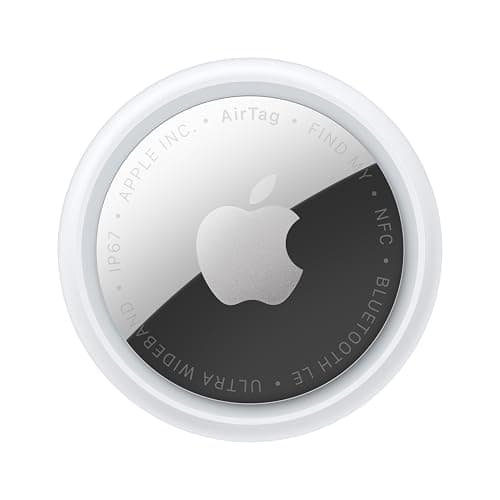
Ultra Wideband is a short-range radio that measures distance and direction precisely. On an iPhone with an AirTag, that turns the last part of a search into an arrow with a number of feet attached, and it is the difference between knowing your keys are in this room and knowing they are three feet to your left under a coat. Only Apple's own tag does this on iPhone — every third-party Find My tag, eufy included, stops at the map pin and the alarm.
So the question is item-by-item: for the thing you hunt for indoors twice a week, the arrow is worth the money. For the thing you need to locate on a different continent, it is worth nothing at all.
Where eufy is the better buy
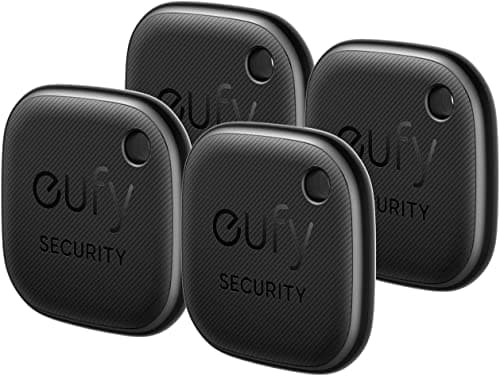
Volume. Four tags in a pack, replaceable coin cells, Find My network support. Suitcases, carry-ons, camera bags, a bike, the kids' backpacks — things where you want coverage rather than precision.
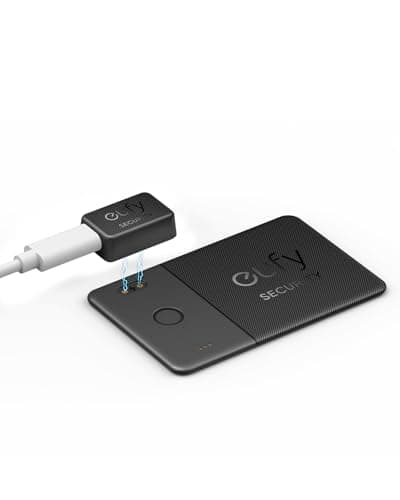
Wallets. An AirTag is a thick disc and a wallet is a slot. The eufy card is rechargeable, thin and has no fee, which makes it the right shape where the AirTag is simply the wrong one. The wallet options in full.
Replaceable batteries. The eufy Link tags take a coin cell, which means a dead tag is a two-minute fix with a battery from a supermarket rather than a hunt for a charging cable. Worth noting that eufy's own card is rechargeable instead.
Where the AirTag is worth the premium
Keys. Remotes. The bag you put down somewhere in the house. Anything whose loss happens inside four walls, where a map pin tells you what you already know — that it is here somewhere — and the arrow is the thing that ends the search. Apple's own build quality and the certainty of long-term support are secondary but real.
Two things that are identical
The network. Both are found by the same Apple Find My network of passing iPhones, so coverage and reporting speed are the same. A eufy tag is not slower to report than an AirTag; it is only less precise at arm's length.
The cost of ownership. Neither charges a fee, now or ever. The only running cost on either is a coin cell or a charge. Everything in this category that charges a monthly fee is a cellular tracker, which is a different product. The no-subscription landscape.
The sensible setup for most people
One AirTag on the keys, in a keyring case. A four-pack of eufy tags across the suitcase, the backpack, the camera bag and the car. A thin card in the wallet. Total cost is less than two AirTags and it covers everything you actually lose.
If you are on Android, this comparison does not apply
Both the AirTag and eufy's SmartTrack range are Apple Find My devices, and neither is usable in any meaningful way from an Android phone. The Android answer is a Google Find Hub tag or a dual-network Chipolo. The Android alternatives, ranked.
The brand-longevity question, honestly
Apple will support the Find My network for the foreseeable future, and eufy is a brand of Anker, which is a large and established company — so this is not a no-name-marketplace risk. What you are relying on in both cases is Apple's network rather than either manufacturer's servers, which is the main reason tags are a safer long-term purchase than cellular trackers tied to a single company's platform.
When neither is enough
If the thing you are protecting moves and matters — a car, a trailer, a dog that roams — no Find My tag covers it, because they only report when someone else's iPhone passes by. At that point you are in the cellular category and paying for it monthly, and the honest thing is to know that before you buy four tags and expect one of them to behave like a GPS tracker. The three technologies compared.