A car is the one thing on this site where we do not recommend starting with a Bluetooth tag. A tag tells you where your car was when another phone last passed it, which is genuinely useful for a parking garage and nearly worthless for a vehicle driven out of a city overnight. For a vehicle you want real-time, real-time means cellular, and cellular means somebody is paying a carrier.
The good news is that this is also the category with the most genuine no-monthly-fee options, because several manufacturers now sell the cellular service prepaid into the purchase price instead of billing monthly. Over thirty-six months that is cheaper by a wide margin, which is why the most expensive device on this page is ranked first and the cheapest is ranked last.
The decision that comes before brand
Pick the install shape first; it narrows the field faster than any specification.
OBD-II dongle. Plugs into the diagnostic port under the dash, which supplies permanent power. Ninety-second install, no tools, never needs charging. Visible from the driver's seat, so not covert, and it occupies the port a mechanic needs — a ten-dollar splitter solves both halves.
Hardwired. Spliced into 12V and tucked behind trim. The right answer for anti-theft, because it cannot be found by looking or unplugged in two seconds, and it never needs charging. Costs an hour with a multimeter or an installer's fee, and is a poor idea in a leased vehicle.
Magnetic battery pack. Stick it under the car and you are done. Moves between vehicles freely, which makes it the only sensible choice for a trailer. The cost is that you now own something that needs recharging, and a flat tracker is worse than no tracker because you believe you are covered.
Every plan figure below is the brand's own published rate, cited at the foot of the page, multiplied by thirty-six months. The full cost table is here.
The short answer
Quick picks
Ranked by what each one costs to own for three years, not by sticker price. The plan column is the one most comparisons leave out.
| # | Product | Best for | Plan / 3 yr | Price |
|---|
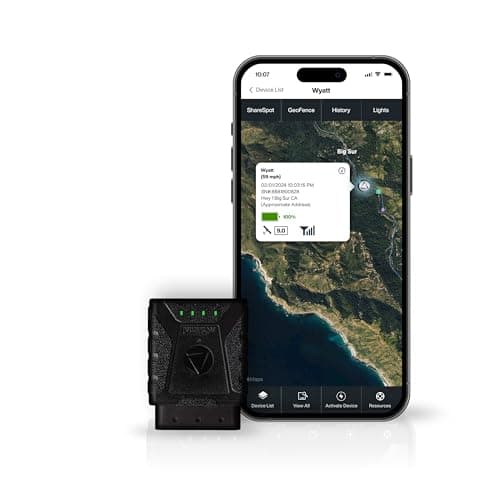
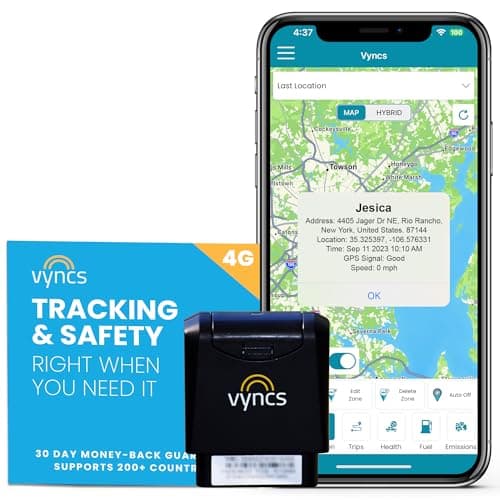
| 01 | VyncsPro 4GThe best-value car tracker over three years, and it is not close. Service is prepaid into the purchase, reporting is a fast sixty seconds, and nothing recurs on your card. | Best overall: no monthly bill | Bundled, then paid Service prepaid | $99.99·Amazon |
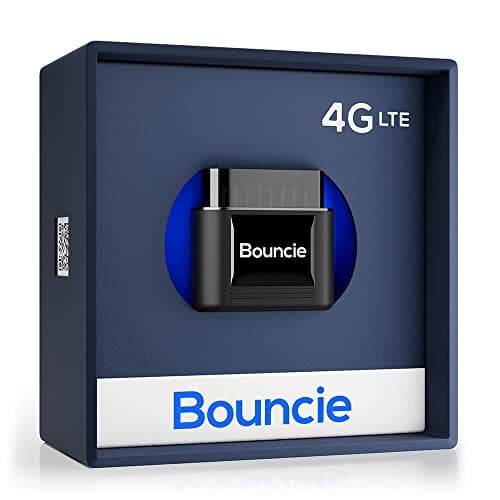
| 02 | Bouncie OBD-II trackerThe nicest OBD tracker to actually live with — trips, speed, engine codes, a clean app. It is a subscription, Bouncie says so, and for a teen driver it earns it. | Best app and trip reporting | Plan required Plan required | $89.99·Amazon |
| 03 | LandAirSea Sync (OBD-II)Plug it in and forget it. LandAirSea puts $8.95 a month in the product title, which is $322 over three years — the lowest published plan rate here and the most honest listing. | Cheapest plan, and published | Plan required +$322 / 3 yr | $24.95·Amazon |
| 04 | | Theft recovery, hidden install | Plan required Plan required | $64.95·Amazon |
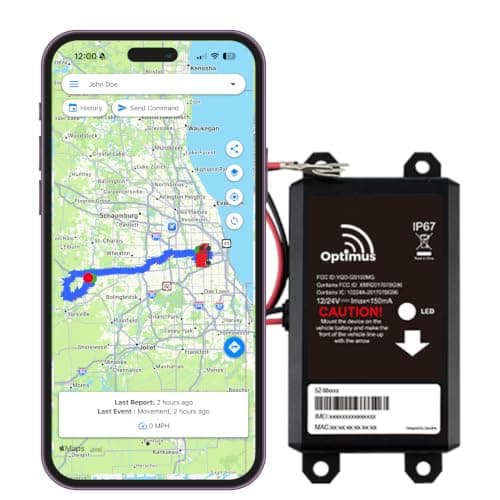
| 05 | Optimus wired vehicle trackerHardwired and genuinely concealable for the price of a battery unit. Never needs charging. The install is the cost, in time or in an installer's fee. | Cheapest hardwired unit | Plan required Plan required | $19.95·Amazon |
| 06 | LandAirSea 54The classic magnetic tracker: stick it on, no wiring, no OBD port. Price the plan before the device, and set a reminder to charge it. | No install, moves between vehicles | Plan required Plan required | $14.95·Amazon |
| 07 | Spytec GPS tracker (GL300 series)A well-supported platform that publishes its plan prices, which we rate. It is also a sub-$20 device with $466 of plan across three years, which is the arithmetic this whole site exists to show. | Clearest example of the trap | Plan required +$466 / 3 yr | $16.95·Amazon |
#ad · Live prices from Amazon's product API, as of October 8, 2026. Where we have no verified live price we show none — a gap beats a number that has rotted. Plan figures are the brands' own published rates, cited in Sources below.
In detail
The picks, in full
Top pickBundled, then paid#01 · Vyncs
VyncsPro 4G
Best overall: no monthly bill
The best-value car tracker over three years, and it is not close. Service is prepaid into the purchase, reporting is a fast sixty seconds, and nothing recurs on your card.
The subscription reality
Marketed as "no monthly fee", and that is true in the sense that no card gets charged every month: the service is prepaid into the purchase. Renewal is still a real future cost — ask what it is before you buy.
Specs, as published by Vyncs
- ·OBD-II port, vehicle-powered
- ·Marketed as no monthly fee, with service prepaid into the purchase
- ·60-second reporting interval, trip replay, diagnostics
Good
- +The genuine no-monthly-fee answer in cellular car tracking: nothing is charged to your card each month
- +60-second updates, which is fast for this class
- +Full trip history and engine diagnostics
Not so good
- −No monthly fee is not no cost — the service term is baked into the price and will need renewing
- −OBD dongle, so visible
- −Costs several times a plan-based dongle up front
Skip it if
you will not still own the car in two years. The prepaid model only pays off if you keep it.
Plan required#02 · Bouncie
Bouncie OBD-II tracker
Best app and trip reporting
The nicest OBD tracker to actually live with — trips, speed, engine codes, a clean app. It is a subscription, Bouncie says so, and for a teen driver it earns it.
The subscription reality
Bouncie's own pricing page states a monthly subscription is required per device and advertises no contracts, no hidden fees and no activation fees, but the page renders its figures in script rather than in the page, so we are not printing a number we cannot cite. Check it at checkout.
Specs, as published by Bouncie
- ·OBD-II port, vehicle-powered
- ·Reports trips, speed and diagnostics as well as location
- ·4G LTE
Good
- +The best app and trip reporting of the OBD dongles
- +No charging
- +Month-to-month with no contract per Bouncie's own pricing page
Not so good
- −Subscription required per device
- −OBD dongle, so visible
- −Diagnostics are the selling point; if you only want location it is more than you need
Skip it if
you only want a dot on a map. You are paying for trip analytics and engine codes you may never open.
Plan required#03 · LandAirSea
LandAirSea Sync (OBD-II)
Cheapest plan, and published
Plug it in and forget it. LandAirSea puts $8.95 a month in the product title, which is $322 over three years — the lowest published plan rate here and the most honest listing.
The subscription reality
LandAirSea puts the $8.95/month figure in the product's own title, which is more honest than most of this category manages.
- Published monthly:
- $8.95
- Over three years:
- $322.20
Specs, as published by LandAirSea
- ·Plugs into the OBD-II port, so it is powered by the vehicle
- ·4G LTE
- ·LandAirSea states $8.95 per month in the product title itself
Good
- +No charging, ever — the car powers it
- +Two-minute install with no tools
- +LandAirSea publishes the monthly price on the listing, which is rarer than it should be
Not so good
- −$8.95 a month is $322 over three years, which dwarfs the device price
- −An OBD dongle is the first place anyone looks
- −Occupies the diagnostic port a mechanic needs
Skip it if
you are tracking a vehicle covertly. An OBD dongle is visible from the driver's seat.
Plan required#04 · TrackmateGPS
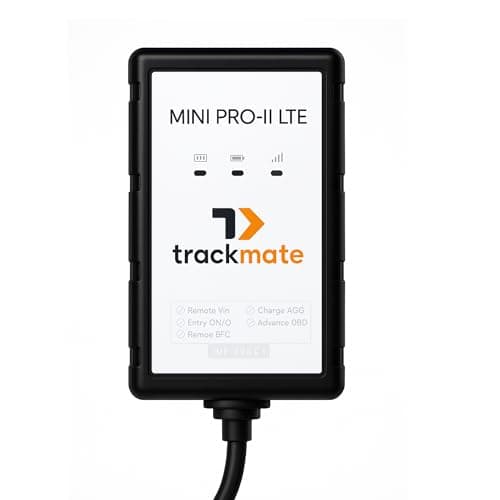
TrackmateGPS Mini PRO II with kill switch
Theft recovery, hidden install
The only pick here that crosses from tracking into recovery, via a remote starter-disable relay. Hardwired and hidden, which an OBD dongle never is.
The subscription reality
A cellular tracker needs a data plan to report its position. This brand does not publish a plan rate we can cite, so treat the device price as a deposit rather than the cost.
Specs, as published by TrackmateGPS
- ·4G, hardwired
- ·Supports a remote starter-disable relay
- ·Small enough to hide behind trim
Good
- +The kill switch is the one feature that turns tracking into recovery
- +Hidden install
- +No charging
Not so good
- −Plan required
- −Kill-switch wiring is a job for an installer
- −Disabling a moving vehicle is a liability you need to understand
Skip it if
you are not going to read up on when a starter disable is legal and safe to use. It is not a panic button.
Plan required#05 · Optimus Tracker
Optimus wired vehicle tracker
Cheapest hardwired unit
Hardwired and genuinely concealable for the price of a battery unit. Never needs charging. The install is the cost, in time or in an installer's fee.
The subscription reality
A cellular tracker needs a data plan to report its position. This brand does not publish a plan rate we can cite, so treat the device price as a deposit rather than the cost.
Specs, as published by Optimus Tracker
- ·Hardwires to the vehicle's 12V supply
- ·Cellular, real-time
- ·No battery to charge
Good
- +Never needs charging
- +Can be hidden properly, unlike an OBD dongle
- +Cheapest hardwired option here
Not so good
- −Install needed
- −Plan required
- −Wiring into a leased vehicle is a bad idea
Skip it if
you are not comfortable finding a switched 12V feed, or paying someone who is.
Plan required#06 · LandAirSea
LandAirSea 54
No install, moves between vehicles
The classic magnetic tracker: stick it on, no wiring, no OBD port. Price the plan before the device, and set a reminder to charge it.
The subscription reality
The 54 is a cellular tracker, so it needs a LandAirSea service plan to report anything. LandAirSea does not publish plan rates on a static page; check the current rate before you buy, because it is the larger half of the cost.
Specs, as published by LandAirSea
- ·Magnetic waterproof case for under-vehicle mounting
- ·Built-in SIM, 4G cellular reporting
- ·Made in the USA per the manufacturer's listing
Good
- +Genuinely real-time: it reports where the vehicle is now, not where someone last walked past it
- +The magnet mount means no wiring and no OBD port
- +Long-established device with a large owner base
Not so good
- −Needs a service plan, and the plan is the larger half of the cost
- −Battery-powered means recharging it on a schedule
- −Cheap sticker price is misleading until you price the plan
Skip it if
nobody will remember to charge it. A dead battery-powered tracker is worse than no tracker, because you think you are covered.
Plan required#07 · Spytec
Spytec GPS tracker (GL300 series)
Clearest example of the trap
A well-supported platform that publishes its plan prices, which we rate. It is also a sub-$20 device with $466 of plan across three years, which is the arithmetic this whole site exists to show.
The subscription reality
This is the clearest example on the site of why sticker price is meaningless: a sub-$20 device whose three-year cost is over $480.
- Published monthly:
- $14.95 month-to-month, $12.95 paid annually
- Over three years:
- $466.20 at the annual rate
Specs, as published by Spytec
- ·Magnetic waterproof case
- ·Cellular, built-in SIM
- ·Spytec publishes plans at $14.95 a month, or $12.95 a month paid annually
Good
- +Well-supported platform with a long track record
- +Spytec does publish its plan prices, which many rivals do not
- +No install
Not so good
- −$12.95 a month is $466 across three years against a sub-$20 device
- −Battery-powered, so charging is on you
- −Nothing works without the plan
Skip it if
the budget is the device budget. The device is 4% of what this costs to own for three years.
What a tracker does and does not do about theft
A tracker is a recovery tool, not a prevention tool. It tells you and the police where the vehicle went. It does not stop the vehicle being taken.
For modern keyless cars the cheapest meaningful prevention has nothing to do with tracking at all: a signal-blocking pouch for the key fob defeats the relay attack used in most keyless thefts and costs less than a tank of fuel. If your car is keyless and you buy one thing after reading this page, buy that.
The one tracking feature that genuinely crosses into recovery is a remote starter disable, available on hardwired units like the TrackmateGPS Mini PRO II. It is worth understanding properly: the feature is designed to prevent a restart after the vehicle is next switched off, not to stop a moving car. Disabling a vehicle in motion is not something you do.
The OBD port is itself an attack surface. On several commonly stolen models thieves program a new key through it in under a minute, and a keyed OBD lock blocks that while also stopping someone unplugging your tracker.
Battery drain, sleep modes and stored vehicles
A hardwired or OBD tracker draws a small continuous current — typically tens of milliamps. On a daily driver that is irrelevant. On a car that sits for three weeks it can flatten an older battery, which is why better units sleep after a period of no motion and stop reporting until they move again.
Ask about sleep behavior before you wire anything into a vehicle you store, and be aware of the trade-off it creates: a sleeping tracker is also a tracker that does not report for the first few minutes of a theft. Most units wake on motion within seconds, but “most units” is doing some work in that sentence.
How to hide an OBD tracker properly
The dongle itself is the problem — it sits in plain view in the driver's footwell. An OBD-II splitter extension cable costs about ten dollars, moves the device up behind the dash trim, and leaves the diagnostic port free for a mechanic. It does not make the tracker invisible to someone searching, but it removes it from the category of things you notice by accident, which is most of the value.
If genuine concealment matters, hardwire. A hardwired unit behind a kick panel is not found by anyone who is not specifically looking, and it never needs charging either.
One legal note
On a vehicle you own or lease this is all straightforward. On someone else's vehicle it frequently is not — California Penal Code § 637.7, for instance, makes it a misdemeanour to use an electronic tracking device to determine the location or movement of a person, with exceptions where the registered owner, lessor or lessee consents and for lawful law-enforcement use. Other states differ. This is not legal advice; we go through the statutes here.
How we picked
We did not lab-test these trackers
Everyone in this category claims to have tested twenty devices. We have not tested any of them, and we say so on every page. What we did instead: read each manufacturer's published specifications and cite them with the date, find the actual subscription price and cite that too, and work out what thirty-six months of ownership costs at those published figures. Device prices come live from Amazon's API and expire after 48 hours rather than going stale. Where a figure could not be sourced to the manufacturer, the page says the spec is unconfirmed rather than borrowing it from a competitor's review. The full method is on the methodology page.
Working out what a tracker really costs? See the three-year cost of every tracker, compared.
Read next
Related
The table behind every recommendation on this site: device, plan, and what thirty-six months actually comes to.
Just the prepaid-service and tag options, with the renewal question on each.
The install decision in detail, including battery drain and sleep modes.
The sleep-current question to ask before wiring anything into a vehicle that sits.
Concealed installs, starter disable, and the keyless-relay fix that is not a tracker.
What a tag will and will not do in a vehicle, honestly.
The classic magnetic tracker in detail, and the plan question to settle first.
A sub-$20 device with $466 of plan across three years — the clearest example on the site.
What the statutes actually say, with the jurisdiction named. Not legal advice.