On a car you drive regularly, no. A vehicle-powered tracker — OBD or hardwired — typically draws tens of milliamps, and the alternator replaces that within minutes of starting. You will never notice it.
On a vehicle that sits, yes, and the arithmetic is worth doing.
The numbers
Take a tracker drawing a steady 30 mA. That is 0.03 A, so across 24 hours it consumes about 0.72 amp-hours a day.
A healthy car battery holds roughly 50 to 70 amp-hours, and a lead-acid battery should not be discharged much below half. So the usable budget is perhaps 25 to 35 amp-hours, which at 0.72 Ah a day is about a month — before you count the vehicle's own standing draw from alarms, keyless receivers and body modules, which on a modern car is often larger than the tracker.
A motorcycle is where this bites hardest. A bike battery holds roughly eight to twelve amp-hours, so the same tracker eats the usable budget in well under two weeks. This is the single most common way a motorcycle tracker install goes wrong, and it is entirely avoidable.
The specification to ask about
Not the headline draw — the sleep-mode draw and the time to sleep.
A well-designed tracker drops to single-digit milliamps after a period without motion and wakes on movement. That turns a month of margin into many months. A manufacturer who will not state its sleep draw is one to be wary of.
The trade-off worth understanding: a sleeping tracker is also one that does not report for the first moments of a theft. Most wake on motion within seconds, and “most” is doing some work in that sentence.
The short answer
Quick picks
Ranked by what each one costs to own for three years, not by sticker price. The plan column is the one most comparisons leave out.
| # | Product | Best for | Plan / 3 yr | Price |
|---|
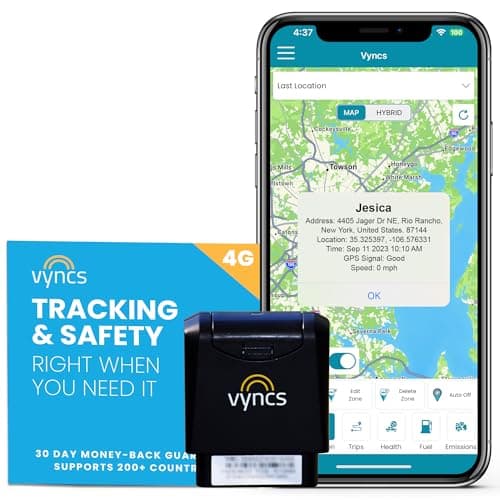
| 01 | VyncsPro 4GVehicle-powered so there is nothing to charge, with the service prepaid rather than billed. Ask about sleep behavior if the car is stored. | OBD, nothing to charge | Bundled, then paid Service prepaid | $99.99·Amazon |
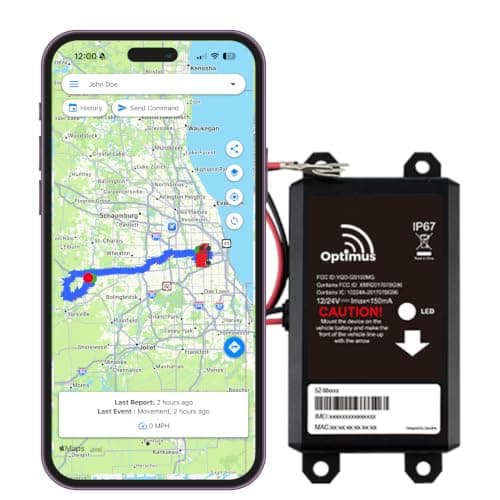
| 02 | Optimus wired vehicle trackerHardwired units are the ones to ask the sleep-current question about, because they are the ones you cannot simply unplug before winter. | Hardwired, and concealable | Plan required Plan required | $19.95·Amazon |
| 03 | | Zero draw on a stored vehicle | No monthly fee $0 | $11.99·Amazon |
| 04 | | Making an OBD unit easy to unplug | No monthly fee $0 | $9.90·Amazon |
#ad · Live prices from Amazon's product API, as of October 8, 2026. Where we have no verified live price we show none — a gap beats a number that has rotted. Plan figures are the brands' own published rates, cited in Sources below.
In detail
The picks, in full
Top pickBundled, then paid#01 · Vyncs
VyncsPro 4G
OBD, nothing to charge
Vehicle-powered so there is nothing to charge, with the service prepaid rather than billed. Ask about sleep behavior if the car is stored.
The subscription reality
Marketed as "no monthly fee", and that is true in the sense that no card gets charged every month: the service is prepaid into the purchase. Renewal is still a real future cost — ask what it is before you buy.
Specs, as published by Vyncs
- ·OBD-II port, vehicle-powered
- ·Marketed as no monthly fee, with service prepaid into the purchase
- ·60-second reporting interval, trip replay, diagnostics
Good
- +The genuine no-monthly-fee answer in cellular car tracking: nothing is charged to your card each month
- +60-second updates, which is fast for this class
- +Full trip history and engine diagnostics
Not so good
- −No monthly fee is not no cost — the service term is baked into the price and will need renewing
- −OBD dongle, so visible
- −Costs several times a plan-based dongle up front
Skip it if
you will not still own the car in two years. The prepaid model only pays off if you keep it.
Plan required#02 · Optimus Tracker
Optimus wired vehicle tracker
Hardwired, and concealable
Hardwired units are the ones to ask the sleep-current question about, because they are the ones you cannot simply unplug before winter.
The subscription reality
A cellular tracker needs a data plan to report its position. This brand does not publish a plan rate we can cite, so treat the device price as a deposit rather than the cost.
Specs, as published by Optimus Tracker
- ·Hardwires to the vehicle's 12V supply
- ·Cellular, real-time
- ·No battery to charge
Good
- +Never needs charging
- +Can be hidden properly, unlike an OBD dongle
- +Cheapest hardwired option here
Not so good
- −Install needed
- −Plan required
- −Wiring into a leased vehicle is a bad idea
Skip it if
you are not comfortable finding a switched 12V feed, or paying someone who is.
No monthly fee#03 · Generic
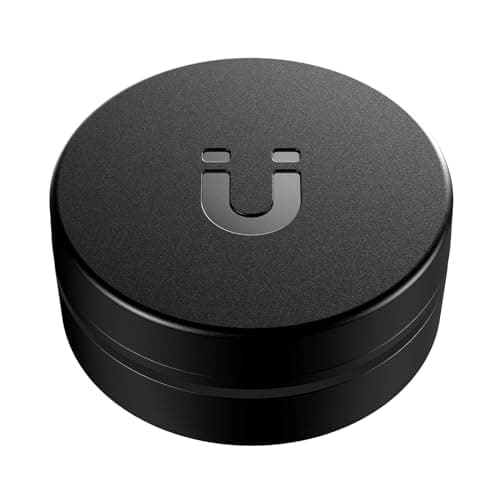
Ultra magnetic waterproof AirTag holder
Zero draw on a stored vehicle
A Bluetooth tag takes nothing at all from the vehicle, which on a car in storage is a genuine advantage over any cellular tracker.
The subscription reality
No subscription, now or later. The purchase price is the whole cost of ownership.
- Over three years:
- $0
Specs, as published by Generic
- ·Strong magnet plus waterproof shell
- ·Sticks under a vehicle or to plant
- ·Shatterproof
Good
- +Lets a no-fee tag ride under a car or on a trailer
- +Waterproof
- +Reusable, unlike adhesive
Not so good
- −A tag under a steel car body has its Bluetooth badly attenuated
- −Magnets shed on rough roads
- −Still only a Bluetooth finder
Skip it if
you expect this to track a stolen car. It will not; buy a cellular tracker for that job.
No monthly fee#04 · bbfly
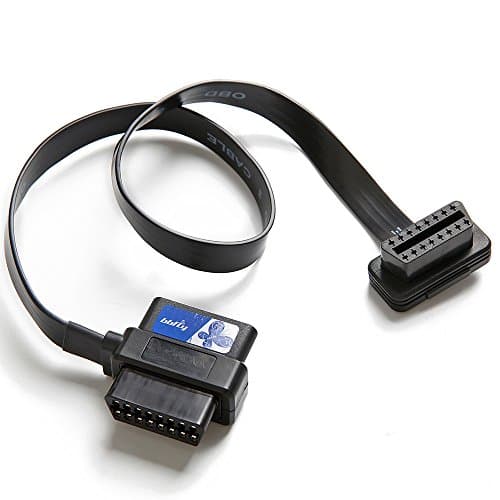
OBD-II splitter extension cable
Making an OBD unit easy to unplug
Moves the dongle behind the trim and keeps the port usable, which also makes it trivial to disconnect before a long layup.
The subscription reality
No subscription, now or later. The purchase price is the whole cost of ownership.
- Over three years:
- $0
Specs, as published by bbfly
- ·16-pin OBD-II Y-splitter
- ·Lets a dongle move out of sight
- ·Keeps the port usable
Good
- +Moves an OBD tracker up behind the dash so it is not the first thing seen
- +Leaves the diagnostic port free for a mechanic
- +Cheap
Not so good
- −Does not make the tracker invisible, just less obvious
- −Loose routing can rattle
- −Some vehicles have no room behind the port
Skip it if
you want a genuinely hidden install — hardwire instead.
The fixes, in order of how well they work
A battery tender. If the vehicle is stored somewhere with power this solves the problem completely, and it costs less than a replacement battery. For a classic or a seasonal bike it is the right purchase whether or not you fit a tracker.
Choose a device with a documented sleep mode. Ask before buying; the figure should be single-digit milliamps.
Use an OBD unit you can unplug. An underrated advantage of the visible install: before a long layup you simply pull it out. A splitter cable makes that easier and keeps the diagnostic port free.
Use a battery-powered tracker instead. A magnetic unit takes nothing from the vehicle. You have moved the charging problem to yourself rather than solved it, but on a stored asset that is often the better trade.
Or use a Bluetooth tag. Zero draw, zero running cost, and on a car stored where people pass it will tell you if the vehicle moves. It will not follow it anywhere quiet.
Signs a tracker is draining your battery
Slow cranking after a few days standing where it used to start instantly. A battery needing a jump after a fortnight. A charge warning on a vehicle whose alternator is fine.
To confirm rather than guess: with the vehicle locked and settled for at least an hour, measure the current on the negative battery lead with a clamp meter, then measure again with the tracker disconnected. A difference of tens of milliamps is your answer. If the total standing draw is well above 50 mA, something other than the tracker is also awake and worth investigating.
What this means for which tracker to buy
Daily driver: ignore this page. OBD or hardwired, whichever suits your concealment needs, and never think about it again.
Second car or seasonal vehicle: hardwired or OBD with a documented sleep mode, plus a battery tender if there is power where it sits.
Motorcycle: ask for the sleep draw explicitly, fit a tender for winter, and accept that a bike stored for months may need the tracker disconnected.
Trailer, boat or plant with no 12V: battery-powered or a tag. There is no vehicle battery to drain.
The full install-shape comparison is here.
How we picked
We did not lab-test these trackers
Everyone in this category claims to have tested twenty devices. We have not tested any of them, and we say so on every page. What we did instead: read each manufacturer's published specifications and cite them with the date, find the actual subscription price and cite that too, and work out what thirty-six months of ownership costs at those published figures. Device prices come live from Amazon's API and expire after 48 hours rather than going stale. Where a figure could not be sourced to the manufacturer, the page says the spec is unconfirmed rather than borrowing it from a competitor's review. The full method is on the methodology page.
Working out what a tracker really costs? See the three-year cost of every tracker, compared.
Read next
Related
The table behind every recommendation on this site: device, plan, and what thirty-six months actually comes to.
The install decision, where battery draw is one of six axes.
The devices themselves, sorted by three-year cost.
Where battery drain is the binding constraint.
Leisure batteries, isolation switches and solar trickle feeds.
Bluetooth tags, cellular GPS and radio direction-finding are different products, not price tiers.