Yes, you can, and the rules permit it: a CR2032 coin cell installed in a device is well inside the lithium limits for air freight, and no carrier prohibits a customer tracking their own shipment. The real question is not whether you may but whether it will tell you anything — and that depends entirely on whether your parcel spends its journey near people with iPhones or sealed inside a trailer.
What the rules say
The regulated object is the battery, not the tracker. The FAA's PackSafe guidance sets the limit for lithium metal batteries at 2 grams of lithium content and requires spare batteries to travel in the cabin rather than the hold — a coin cell installed in a device does not engage either restriction in any meaningful way. Carriers have their own dangerous goods policies for shipping loose batteries, so if you are sending spare cells, that is the thing to check rather than the tag.
Tracking your own property is not the sensitive case. Putting a tracker in something that belongs to somebody else is, and both iPhone and Android will warn a person that an unknown tracker is traveling with them — which is where this stops being a shipping question.
Why it often goes quiet
A tag has no GPS and no cellular radio. It reports when an Apple device passes within Bluetooth range, and freight is specifically designed to keep parcels away from people:
- Inside a trailer or a container, there is nobody to hear it and a lot of metal in the way. Expect silence for the line-haul leg.
- In a sort facility, you will often get a hit, because staff carry phones. This is where most useful reports come from.
- On a delivery van, the driver's own phone may report it, which is why the last mile is usually the clearest part of the trace.
- In a plane's hold, nothing, until it lands and gets unloaded.
So the trace you get is not a track. It is a series of sightings at the moments your parcel was near somebody, with long gaps between them, and reading the timestamps is the whole skill. What the dot actually represents.
When it is genuinely worth doing
Something valuable you are shipping yourself. Camera gear, a laptop, tools going to a job. The tag costs a fraction of the contents and gives you a second opinion on the carrier's own tracking.
A shipment you expect to go wrong. A route that has failed before, a cross-border move, a bag shipped ahead of a trip.
A parcel going to a building rather than a person. Offices, apartment lobbies and mailrooms are where deliveries disappear, and those are dense with phones — which is exactly the condition a tag needs.
Proving a delivery claim. A sighting at a timestamp is a different kind of evidence from a carrier's scan event, and sometimes a more useful one.
The short answer
Quick picks
Ranked by what each one costs to own for three years, not by sticker price. The plan column is the one most comparisons leave out.
| # | Product | Best for | Plan / 3 yr | Price |
|---|
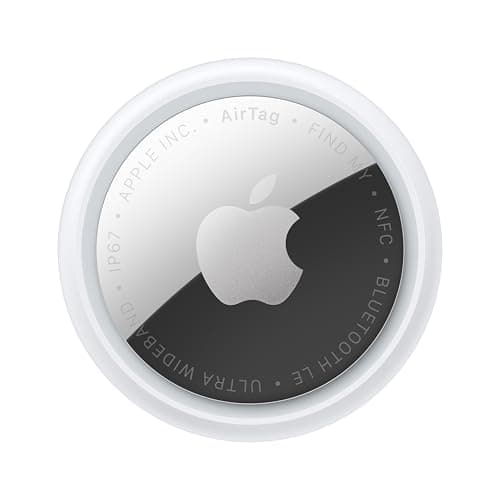
| 01 | Apple AirTag (2nd generation)The largest crowd network there is, so a parcel sitting in a depot with staff carrying iPhones usually reports. It will go quiet inside a trailer. | A parcel you care about | No monthly fee $0 + batteries | $24.00·Amazon |
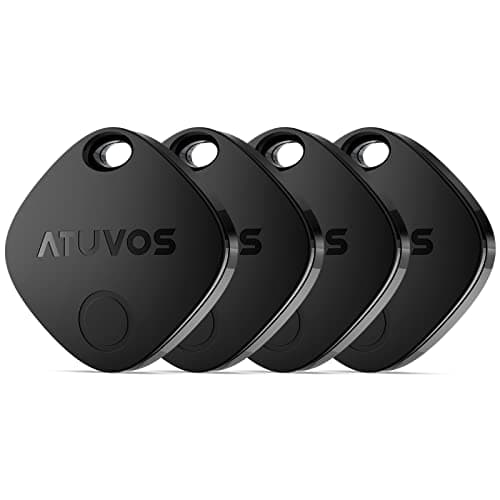
| 02 | ATUVOS tracker tags (4-pack)Four Find My tags for the price of one AirTag, with replaceable cells. The right call when the tag may not come back. | Shipping several, cheaply | No monthly fee $0 + batteries | $21.99·Amazon |
| 03 | AirTag adhesive mountSticks the tag flat to the inside of the carton so it does not rattle loose or end up in a void that gets opened first. | Fixing a tag inside a box | No monthly fee $0 | $9.99·Amazon |
| 04 | | A tag that hides in a lining | No monthly fee $0 + batteries | $19.99·Amazon |
#ad · Live prices from Amazon's product API, as of October 11, 2026. Where we have no verified live price we show none — a gap beats a number that has rotted. Plan figures are the brands' own published rates, cited in Sources below.
In detail
The picks, in full
Top pickNo monthly fee#01 · Apple
Apple AirTag (2nd generation)
A parcel you care about
The largest crowd network there is, so a parcel sitting in a depot with staff carrying iPhones usually reports. It will go quiet inside a trailer.
The subscription reality
No subscription. The only recurring cost is a CR2032 roughly once a year, which is pennies.
- Over three years:
- about $3 in coin cells
Specs, as published by Apple
- ·User-replaceable CR2032 coin cell; Apple states it runs more than a year
- ·IP67 (1 m for up to 30 minutes, IEC 60529)
- ·Ultra Wideband Precision Finding, 1.5x the range of the first generation
- ·Speaker 50% louder than the first generation
Good
- +No subscription, and Apple has never charged one
- +The Find My network is the largest crowd network in the world, so a lost AirTag in a populated area usually reports within minutes
- +Precision Finding walks you to it by distance and direction, not just a map pin
- +Battery is a coin cell from any supermarket, not a sealed pack
Not so good
- −iPhone only for setup and full use — there is no Android app
- −It has no GPS of its own: it reports when an Apple device walks past it, so it is a finder, not a tracker
- −No keyring hole, so you are buying a holder as well
Skip it if
you are on Android, or you need to watch something move in real time — an AirTag only knows where it was when someone last walked past it.
No monthly fee#02 · ATUVOS
ATUVOS tracker tags (4-pack)
Shipping several, cheaply
Four Find My tags for the price of one AirTag, with replaceable cells. The right call when the tag may not come back.
The subscription reality
No subscription. The only recurring cost is a CR2032 roughly once a year, which is pennies.
- Over three years:
- about $3 in coin cells
Specs, as published by ATUVOS
- ·Four tags, each with a replaceable coin cell
- ·Works with Apple Find My
- ·Cases included on most listings
Good
- +The cheapest per-tag cost of anything that works on Apple's network
- +No fee
- +Replaceable batteries
Not so good
- −Find My only
- −No UWB
- −A no-name brand is a real risk on a device you want to still be supported in three years
Skip it if
the tag is guarding something expensive. For luggage and keys the price is right; for a camera bag, buy the first-party tag.
No monthly fee#03 · Generic
AirTag adhesive mount
Fixing a tag inside a box
Sticks the tag flat to the inside of the carton so it does not rattle loose or end up in a void that gets opened first.
The subscription reality
No subscription, now or later. The purchase price is the whole cost of ownership.
- Over three years:
- $0
Specs, as published by Generic
- ·Adhesive pad that holds an AirTag flat
- ·Sticks to plastic and metal
- ·Low profile
Good
- +Mounts a tag where there is no keyring
- +Low profile enough to hide
- +Cheap
Not so good
- −Adhesive is a permanent choice
- −Can be prised off
- −Does not seal against water
Skip it if
the surface gets wet or hot — adhesive and engine bays do not mix.
No monthly fee#04 · Travel Depot
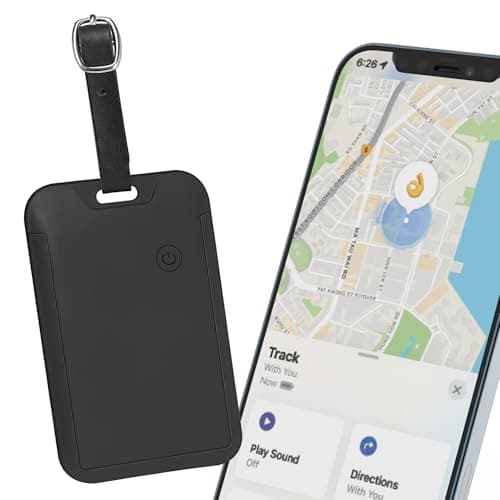
Hidden luggage tracker for Find My
A tag that hides in a lining
Designed to disappear inside soft goods rather than hang off them, which is useful in a shipped bag or a padded case.
The subscription reality
No subscription. The only recurring cost is a CR2032 roughly once a year, which is pennies.
- Over three years:
- about $3 in coin cells
Specs, as published by Travel Depot
- ·Works with Apple Find My
- ·Designed to hide inside a suitcase lining rather than hang off the handle
- ·Replaceable battery
Good
- +Hidden rather than dangling, which is the point for a checked bag
- +No subscription
- +Cheap enough to put in every bag
Not so good
- −Find My only
- −No UWB
- −Generic brand
Skip it if
you are on Android — use a Chipolo or Moto Tag in Find Hub mode instead.
How to do it properly
Fix it, do not drop it in. A tag loose in packing material migrates, and if the box is opened the tag is the odd item somebody sets aside. An adhesive mount against the inside wall of the carton keeps it where you put it.
Use a cheap tag if it may not come back. A four-pack of Find My tags costs about what one AirTag does. For an outbound parcel you are not expecting to receive, that is the sensible economics — though a no-name brand is a real risk if you want the tag to still be supported in three years.
Fresh battery, every time. Transmit power falls before the cell dies, so an old battery means fewer sightings rather than none, which is the worst kind of failure to diagnose.
Set Lost Mode details before it ships. If the parcel is opened by somebody trying to do the right thing, a contact number shown on the tag is how they reach you.
Tell the recipient. Partly manners, partly practical: an unexpected tracker in a delivered box will trigger an unknown-tracker alert on their phone and a reasonable amount of alarm. How that alert works.
What to use instead for real freight visibility
If you need to know where a shipment is at all times rather than where it was last seen, that is a cellular tracker with a data plan and a battery sized for weeks — a different product and a real monthly cost. For a single valuable parcel that is rarely worth it; for repeated high-value freight it is the only thing that works. The equipment-tracking options cover that end of the market, and the three-year cost table prices the plans.
The honest summary
A tag in a package is a cheap, legal, occasionally very useful second source of truth. It is not a tracker and it will go dark for long stretches of any journey involving a trailer or an aircraft. Buy it expecting sightings rather than a line on a map, and it will not disappoint you.
How we picked
We did not lab-test these trackers
Everyone in this category claims to have tested twenty devices. We have not tested any of them, and we say so on every page. What we did instead: read each manufacturer's published specifications and cite them with the date, find the actual subscription price and cite that too, and work out what thirty-six months of ownership costs at those published figures. Device prices come live from Amazon's API and expire after 48 hours rather than going stale. Where a figure could not be sourced to the manufacturer, the page says the spec is unconfirmed rather than borrowing it from a competitor's review. The full method is on the methodology page.
Working out what a tracker really costs? See the three-year cost of every tracker, compared.
Read next
Related
The table behind every recommendation on this site: device, plan, and what thirty-six months actually comes to.
The battery and airline rules, with the regulations named.
Why there is no roaming charge, and what changes when you cross a border.
Cellular options for when sightings are not enough.
The free scan built into your phone, step by step, on both platforms.
The decision that comes before every other one: do you need where it is, or where it was?