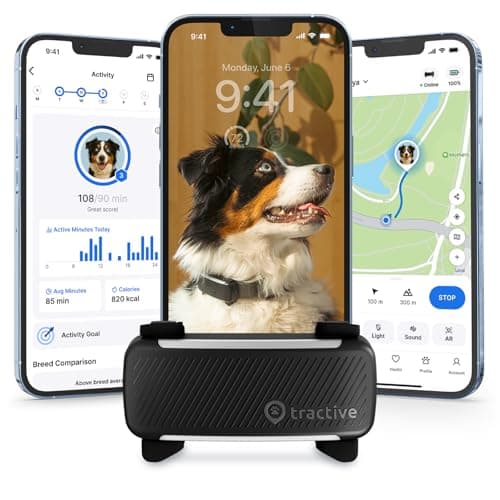
There is no mainstream device that records video from a pet's collar and reports live GPS at the same time, and the reason is battery physics rather than a gap in the market. The working setup for pet adventures is two devices: a cellular GPS tracker for location — Tractive is the best-supported one — and a separate action camera or collar camera for the footage. If you want one purchase, buy the tracker. Footage is a nice-to-have; knowing where the dog went is the part that matters when something goes wrong.
Why the combination is so rare, in one paragraph. A GPS tracker that reports live has to keep a cellular radio and a GPS receiver alive for days, so every design decision is about sipping power. A camera has to run a sensor, an encoder and storage, which burns power roughly two orders of magnitude faster — collar cameras are typically measured in a couple of hours of recording. Put both in one collar-sized housing and you get a device that is heavy, hot, and out of battery before the walk ends. The products that claim both usually do one of them badly, and the compromise is almost always made on the tracking.
What people actually want from this search
Three different things, in our reading of the query and the suggestions around it:
“I want to see what my dog does on the trail.” That is a camera problem and a small action camera on a harness mount solves it. It does not need GPS at all — many cameras log a track or let you overlay your own phone's route afterward.
“I want to know where my dog is if it runs off.” That is a tracking problem and no camera helps, because a camera records to local storage and tells you nothing from a distance. This is the one worth spending money on.
“I want to see what spooked the dog where it happened.” That is genuinely the combined product, and it is the one the market does not really serve. Two devices and matching timestamps is how people do it today.
The two-device setup, concretely
A cellular tracker clipped to the collar handles location: live position, a virtual fence around camp or the trailhead, and a walk-to-it mode for the last hundred yards. A camera goes on a harness rather than the collar, because a harness mount is steadier and spreads the weight across the chest instead of hanging from the neck. If you want to line the two up later, start both at the same time and the timestamps do the work.
On weight, be realistic. A camera plus a cellular tracker is a meaningful load for anything under about 25 lb, and on a small dog it is too much — pick one. Small dogs are a weight problem before they are a feature problem.
Where neither device works
Backcountry with no coverage. A cellular tracker needs a carrier signal to deliver its position, so in a canyon or deep woods you get the last point it managed to send, and a camera has never reported anything live in its life. If your adventures are genuinely off-grid, the technology that works is radio direction-finding, which has no network and no subscription. The off-grid pet tracking problem.
What to look for if you still want a combined unit
Ask three questions of any listing claiming camera plus GPS. First, does it report location over a cellular network, or does it only log a track to local storage for you to read later? Logging is not tracking, and the two are deliberately confused in marketing copy. Second, what is the recording runtime, and what is the runtime with tracking also enabled? Those are usually two very different numbers. Third, is there a subscription, and for which half — many of these devices charge for the cellular side only, which still means a monthly bill.
Collar camera or harness camera?
Harness, almost always. A camera on a collar swings, records the ground, and puts all its weight on the neck. A chest mount on a harness is steadier, points where the dog is going, and distributes the load. It also keeps the collar free for the tracker, which should be the device with the clear line to the sky.
The adventure checklist
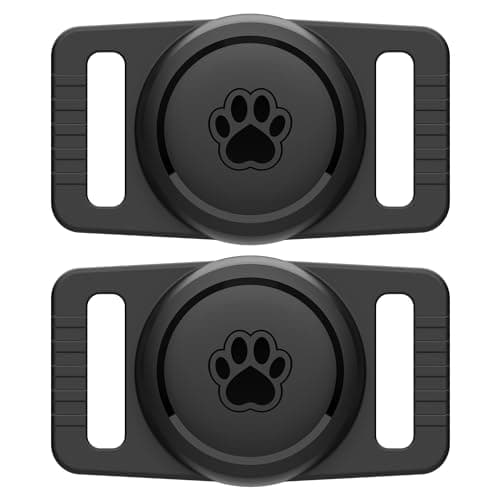
Charge everything the night before, not the morning of. Check that the tracker's low-battery alert is actually switched on in the app. Set a virtual fence around the trailhead or camp so you get a notification rather than a surprise. Put a cheap no-fee tag in a collar holder as a second layer — it costs almost nothing and covers the case where the expensive device fails or falls off. And carry the handheld if your system is a radio one, because it is useless in the truck.
What this costs over three years
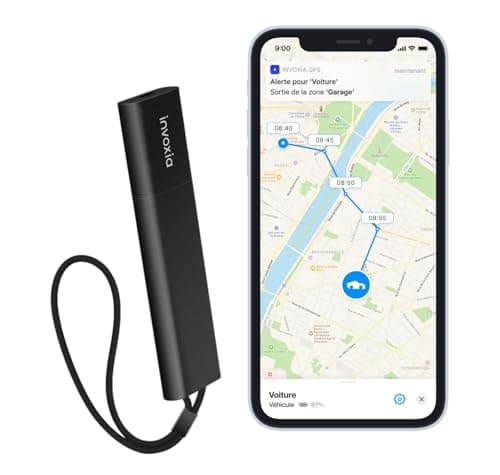
The tracker is the recurring half. Tractive publishes Basic at $9 a month on a one-year term and $6 a month on a two-year term, which comes to $252 across thirty-six months. Invoxia states that no subscription is included with its PRO version, so the plan is a separate line to confirm. The camera has no running cost beyond memory cards and your patience for editing. Every plan on the site, costed the same way.