Skip to content
Tag & Tether

One device at a time · Tracker Reviews

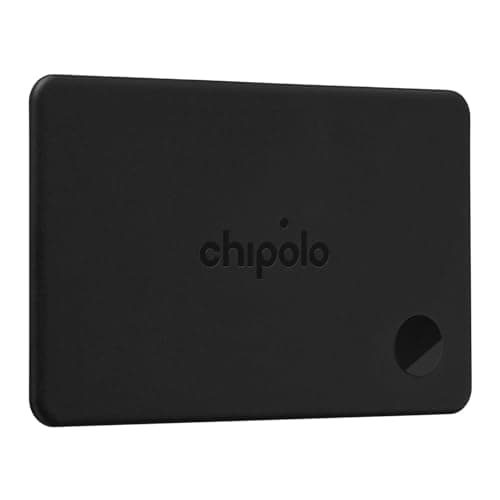
Chipolo CARD review

The wallet tracker that does not expire, on either phone platform. That combination is rarer than it should be.

By Mike M.Last updated

#ad — we earn a commission if you buy through the links on this page, at no cost to you. It never changes what we recommend, and the structural reason it cannot is that we recommend the no-subscription devices, which pay the least. Full disclosure.


What it is: a credit-card-shaped Bluetooth tracker for a wallet note slot, rechargeable, working on either Apple Find My or Google Find Hub with no subscription.

The specifications

Form factorCard-shaped, for a wallet note or card slot.
BatteryRechargeable. It does not expire, which is the key difference from the older sealed wallet cards.
NetworksApple Find My or Google Find Hub — one chosen at setup.
SubscriptionNone, at any tier.
LoudnessQuieter than a keyring tag. True of every card tracker — there is no room for a speaker.

Three-year cost of ownership

The live price above and nothing else. No subscription, no batteries, and — crucially — no replacement, because it recharges.

That last point is the whole argument. A sealed-battery wallet card dies after two or three years and you buy the product again, which spread over three years is a recurring cost of roughly a third of the purchase price per year. A rechargeable card is genuinely a single purchase.

Chipolo Chipolo CARD
$33.14View on Amazon

$38.9915% off

Price as of October 8, 2026. Prices move — Amazon's at checkout is the one that counts.

#ad · we may earn a commission from this link to Chipolo CARD

No monthly feeChipolo

Chipolo CARD

Wallets, either platform

Our default wallet recommendation: rechargeable so it does not expire, dual-network so it survives a phone change, and no subscription.

The subscription reality

No subscription, now or later. The purchase price is the whole cost of ownership.

Over three years:
$0

Specs, as published by Chipolo

  • Credit-card form factor, rechargeable
  • Works with Apple Find My or Google Find Hub
  • No subscription for any feature

Good

  • Actually card-shaped, so it sits in a note slot without bulging the wallet
  • Rechargeable, so no sealed two-year death date like the first wallet cards had
  • Dual-network

Not so good

  • Needs charging, and a wallet card is the easiest thing to forget to charge
  • Thicker than a real credit card
  • Alarm is quieter than a keyring tag, as every card tracker's is

Skip it if

your wallet is already tight — measure the slot before you buy any card tracker.

Why rechargeable is the specification that matters

The first generation of wallet trackers had sealed batteries. When the cell died, the product was finished and you bought the same thing again — a subscription with extra steps, and exactly what someone shopping for a no-fee tracker was trying to avoid.

The Chipolo CARD, Pebblebee's Card 5, KeySmart's SmartCard and eufy's card all fixed this. Among them, Chipolo's is the one we recommend first because it is dual-network: it works on Apple Find My or Google Find Hub, so it survives a change of phone platform as well as a change of battery.

The one sealed card still worth considering is the Tile Slim, and only because Tile is the sole mainstream tag that works identically on both platforms simultaneously. If that is not your requirement, the expiry date is a straightforward downside.

What a wallet tracker genuinely does

Worth setting expectations, because this is a category where people are often disappointed for avoidable reasons.

It tells you where you left your wallet. The restaurant, the taxi, the office, the gym. This is the high-value case, it is by far the most common one, and it works well because all of those places have phones in them.

It does not recover a stolen wallet. A pickpocket removes cards and cash and discards the wallet, often within a few hundred meters — so the tracker leads you to a bin. Useful for a police report; not recovery.

It will not find a wallet in your own house quickly, because it is too quiet. A loud keyring tag in the same bag does that job better.

The feature to turn on

Separation alerts. For a wallet specifically, the notification when you walk away from it is worth more than the finding, because leaving it behind is the failure mode.

Set trusted locations up properly on day one — home, work — so your own house does not generate alerts. Skipping that step is why people disable the feature in week two.

The charging friction, honestly

A wallet card is the easiest thing in your life to forget to charge. It lives in a wallet, you never look at it, and the low-battery notification arrives on a day you are busy.

Two habits that work: charge it on a fixed date you will remember — the first of a month, or when the clocks change — and when the notification does arrive, do it that evening rather than “soon”. A charge roughly once a year makes this twice-a-year attention at worst.

Who should buy it

Anyone who wants a wallet tracker and would rather not buy the same product again in three years. Particularly anyone on Android, where the card options are genuinely limited — most card trackers are Find My only.

Who should skip it

Anyone whose keys and wallet travel together. One loud keyring tag covers both, and it is louder, cheaper and has a replaceable battery. Nobody in this category will tell you that.

Anyone with a very tight wallet. Do the test before buying: take a card out and see whether the wallet still closes comfortably. If it does not, no card tracker will fit. Rolling Square's AirCard is thinner if millimeters genuinely matter.

Anyone who wants to find the wallet in their own house. Card trackers are quiet. That is physics, not a brand weakness.

The alternatives, named

Pebblebee Card 5 — rechargeable and dual-network too, slightly louder for a card. A very close second.

Rolling Square AirCard Pro Dual — the thinnest serious option, for a wallet where thickness is the binding constraint.

KeySmart SmartCard Gen 2 or eufy SmartTrack Card — cheaper rechargeable cards, Find My only, so not for Android.

Tile Slim — the only card that serves iPhone and Android simultaneously from one account, with a sealed battery as the price.
How we picked

We did not lab-test these trackers

Everyone in this category claims to have tested twenty devices. We have not tested any of them, and we say so on every page. What we did instead: read each manufacturer's published specifications and cite them with the date, find the actual subscription price and cite that too, and work out what thirty-six months of ownership costs at those published figures. Device prices come live from Amazon's API and expire after 48 hours rather than going stale. Where a figure could not be sourced to the manufacturer, the page says the spec is unconfirmed rather than borrowing it from a competitor's review. The full method is on the methodology page.

Working out what a tracker really costs? See the three-year cost of every tracker, compared.

Questions

Frequently asked

Is the Chipolo CARD worth buying?
It is our default wallet recommendation, for two reasons. It is rechargeable, so unlike the older sealed-battery wallet cards it does not expire after two or three years and become a repeat purchase. And it works on Apple Find My or Google Find Hub, so it survives a change of phone platform — which matters more than people expect, and makes it one of very few good card options on Android.
Do wallet trackers expire?
The sealed-battery ones do, which is the most important thing to know in this category. When the non-replaceable cell dies — typically two or three years in — the product is finished and you buy the same thing again, a recurring cost of roughly a third of the purchase price per year. The rechargeable cards from Chipolo, Pebblebee, KeySmart and eufy fixed this and are worth their small premium.
Will a Chipolo CARD help if my wallet is stolen?
Not really, and it is worth knowing before you buy. A pickpocket removes the cards and cash and discards the wallet, often within a few hundred meters, so the tracker leads you to a bin — useful for a police report and not recovery. Where a wallet tracker genuinely earns its place is the wallet you left in a restaurant, a taxi or at the gym, which is the far more common event.
Is the Chipolo CARD loud enough to find in a house?
No, and no card tracker is — there is no room for a proper speaker in a two-millimeter card, which is physics rather than a brand weakness. A card tracker is good at telling you the wallet is at the restaurant you left an hour ago and poor at finding it down the back of a sofa. For that, a loud keyring tag in the same bag does the job better.
Do I need a wallet tracker if my keys already have one?
Often not, and nobody in this category will tell you so. If your keys and wallet live in the same bag or pocket, one loud keyring tag covers both — and it is louder, cheaper and has a replaceable battery. Buy a card when the wallet genuinely travels separately from the keys, which for a lot of people it does not.
Which wallet tracker works with Android?
Chipolo's CARD and Pebblebee's Card 5, both of which run on Google Find Hub as well as Apple Find My. They are genuinely the main options, because most card trackers are Find My only. If your household runs both platforms and you want one card for everyone, Tile Slim is the only one that works identically on each — with its sealed battery as the trade-off.

Read next

Where the figures came from

Sources

Every specification and plan price on this page traces to one of these, read on the date shown. Device prices are live from Amazon and stamped separately.

  1. Chipolo — LOOP product page (battery, IP67, 125 dB, 120 m) — accessed 2026-10-05
  2. Pebblebee — Clip 5 product page (12 months per charge, IP66, dual network) — accessed 2026-10-05
  3. Life360 — membership pricing (Silver $9.99, Gold $16.99, Platinum $24.99 per month) — accessed 2026-10-05
  4. Amazon Product Advertising / Creators API — live prices and product images — accessed 2026-10-05