Call the police first and give them the plate, the VIN and any location you already have. Recovering a stolen car is a police action, not a solo errand — your job is to hand over good information fast. While you are waiting, check the sources that may already know where the car is: your manufacturer's connected-services app, your insurer's telematics app, any tracker you fitted, and a Bluetooth tag if one is in the car.
The first hour, in order
- Confirm it is actually stolen. Towed, repossessed and parked-on-the-next-street account for a real share of “stolen” cars. Check the local impound or parking-enforcement number before anything else.
- Call the police and file the report. You need the report number for the insurer, and the police need the plate and VIN in the system quickly — recovery rates fall sharply with time.
- Open every app that might know. The manufacturer's connected app, the insurer's telematics app, your tracker's app, and Find My or Find Hub for a tag or a phone left inside.
- Give the police the location — do not go yourself. A tracker tells you where a stolen car is standing, and standing next to it is where this goes wrong. Pass the coordinates on and let them act.
- Call your insurer. They will want the police report number, the keys you still have, and often a statement about where the spare keys are.
What your car may already report
A lot of cars sold in the last decade have a connected-services subscription that includes stolen-vehicle location, often as a trial the owner never activated. It is worth finding out which one your car has before you need it — the account setup takes ten minutes and cannot be done after the car is gone. Insurer telematics dongles and the apps that come with them are the second source people forget.
Why a Bluetooth tag is only half an answer
A tag in the glovebox has no GPS and no network of its own. It reports when somebody else's phone passes it, so on a car abandoned in a city you will often get a location within the hour, and on a car driven into a container you will get nothing. A tag under a steel body has its Bluetooth attenuated badly, which makes a magnetic external mount better than the glovebox but still not a tracker. The full version of that argument is here.
The short answer
Quick picks
Ranked by what each one costs to own for three years, not by sticker price. The plan column is the one most comparisons leave out.
| # | Product | Best for | Plan / 3 yr | Price |
|---|
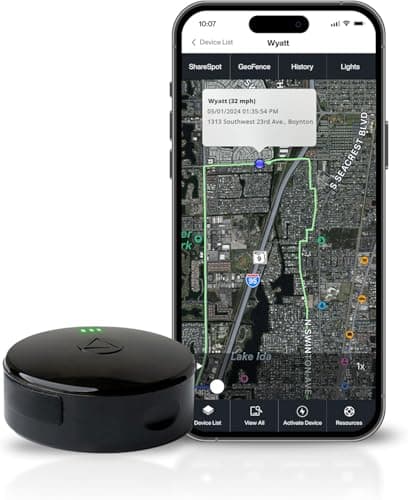
| 01 | LandAirSea 54Magnetic and battery-powered, so it goes under the car in a minute and reports where it is now rather than where it was. The plan is the larger half of the cost. | Real-time location, no install | Plan required Plan required | $14.95·Amazon |
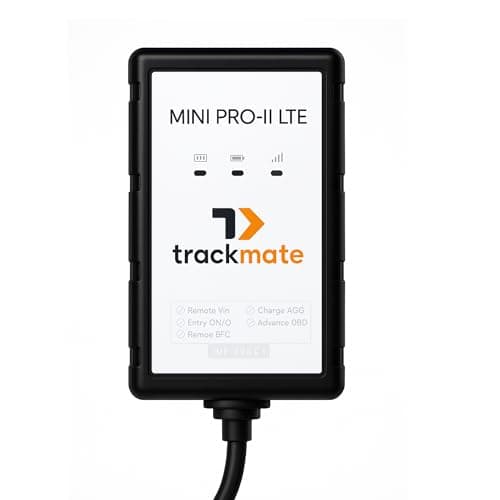
| 02 | | Turning tracking into recovery | Plan required Plan required | $64.95·Amazon |
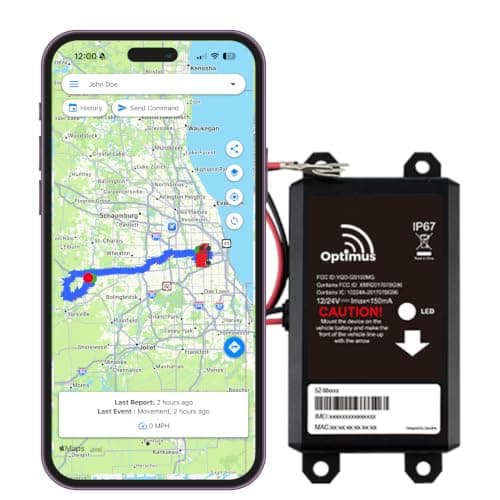
| 03 | Optimus wired vehicle trackerThe cheapest honest hardwired unit here. Properly concealable, unlike an OBD dongle, and it never goes flat at the wrong moment. | Hidden and never needs charging | Plan required Plan required | $19.95·Amazon |
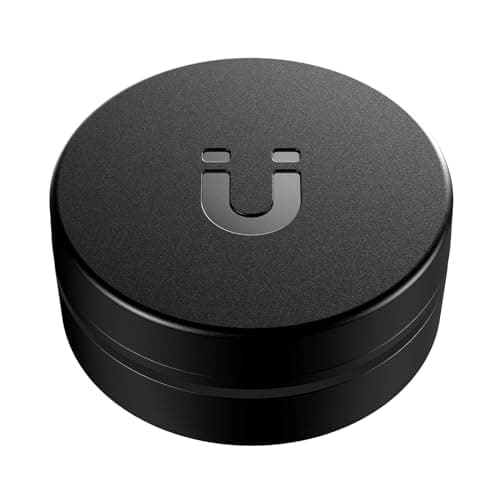
| 04 | Ultra magnetic waterproof AirTag holderA no-fee tag in a magnetic shell will often tell you the car moved and roughly where it was seen. Under a steel body its signal is badly attenuated — expect gaps. | Something rather than nothing | No monthly fee $0 | $14.99·Amazon |
#ad · Live prices from Amazon's product API, as of October 11, 2026. Where we have no verified live price we show none — a gap beats a number that has rotted. Plan figures are the brands' own published rates, cited in Sources below.
In detail
The picks, in full
Top pickPlan required#01 · LandAirSea
LandAirSea 54
Real-time location, no install
Magnetic and battery-powered, so it goes under the car in a minute and reports where it is now rather than where it was. The plan is the larger half of the cost.
The subscription reality
The 54 is a cellular tracker, so it needs a LandAirSea service plan to report anything. LandAirSea does not publish plan rates on a static page; check the current rate before you buy, because it is the larger half of the cost.
Specs, as published by LandAirSea
- ·Magnetic waterproof case for under-vehicle mounting
- ·Built-in SIM, 4G cellular reporting
- ·Made in the USA per the manufacturer's listing
Good
- +Genuinely real-time: it reports where the vehicle is now, not where someone last walked past it
- +The magnet mount means no wiring and no OBD port
- +Long-established device with a large owner base
Not so good
- −Needs a service plan, and the plan is the larger half of the cost
- −Battery-powered means recharging it on a schedule
- −Cheap sticker price is misleading until you price the plan
Skip it if
nobody will remember to charge it. A dead battery-powered tracker is worse than no tracker, because you think you are covered.
Plan required#02 · TrackmateGPS
TrackmateGPS Mini PRO II with kill switch
Turning tracking into recovery
Hidden, hardwired and able to support a starter-disable relay, which is the one feature that changes the outcome rather than just documenting it.
The subscription reality
A cellular tracker needs a data plan to report its position. This brand does not publish a plan rate we can cite, so treat the device price as a deposit rather than the cost.
Specs, as published by TrackmateGPS
- ·4G, hardwired
- ·Supports a remote starter-disable relay
- ·Small enough to hide behind trim
Good
- +The kill switch is the one feature that turns tracking into recovery
- +Hidden install
- +No charging
Not so good
- −Plan required
- −Kill-switch wiring is a job for an installer
- −Disabling a moving vehicle is a liability you need to understand
Skip it if
you are not going to read up on when a starter disable is legal and safe to use. It is not a panic button.
Plan required#03 · Optimus Tracker
Optimus wired vehicle tracker
Hidden and never needs charging
The cheapest honest hardwired unit here. Properly concealable, unlike an OBD dongle, and it never goes flat at the wrong moment.
The subscription reality
A cellular tracker needs a data plan to report its position. This brand does not publish a plan rate we can cite, so treat the device price as a deposit rather than the cost.
Specs, as published by Optimus Tracker
- ·Hardwires to the vehicle's 12V supply
- ·Cellular, real-time
- ·No battery to charge
Good
- +Never needs charging
- +Can be hidden properly, unlike an OBD dongle
- +Cheapest hardwired option here
Not so good
- −Install needed
- −Plan required
- −Wiring into a leased vehicle is a bad idea
Skip it if
you are not comfortable finding a switched 12V feed, or paying someone who is.
No monthly fee#04 · Generic
Ultra magnetic waterproof AirTag holder
Something rather than nothing
A no-fee tag in a magnetic shell will often tell you the car moved and roughly where it was seen. Under a steel body its signal is badly attenuated — expect gaps.
The subscription reality
No subscription, now or later. The purchase price is the whole cost of ownership.
- Over three years:
- $0
Specs, as published by Generic
- ·Strong magnet plus waterproof shell
- ·Sticks under a vehicle or to plant
- ·Shatterproof
Good
- +Lets a no-fee tag ride under a car or on a trailer
- +Waterproof
- +Reusable, unlike adhesive
Not so good
- −A tag under a steel car body has its Bluetooth badly attenuated
- −Magnets shed on rough roads
- −Still only a Bluetooth finder
Skip it if
you expect this to track a stolen car. It will not; buy a cellular tracker for that job.
What would actually have recovered it
A cellular tracker. It has a SIM and reports its position on demand, so it tells the police where the car is now. That is the whole difference between a tracker and a finder, and it is why a plan exists: somebody has to pay the carrier.
Hidden, not plugged in. An OBD dongle is the first thing an experienced thief unplugs, because it sits where the driver's knee goes. A hardwired unit behind trim is the install that survives.
A starter disable, if you will learn how to use it. A relay that prevents the engine being restarted turns a chase into a stationary car. It is also a serious responsibility: never use it on a moving vehicle, and read up on where you stand legally before you fit one.
Two devices beat one. The standard advice from people who recover vehicles for a living is a visible deterrent plus a hidden tracker — because a thief who finds one tracker stops looking. A cheap tag somewhere obvious and a hardwired unit somewhere quiet is a sound pairing.
The honest cost over three years
A battery-powered magnetic tracker can be bought for around fifteen dollars and will cost several hundred over three years once the plan is counted. That is not a criticism of the device; it is how this category is funded, and the plan is the product. The three-year cost table prices every one of them side by side. If you want live tracking with nothing billed monthly, the prepaid-service devices are the only genuine route, and the no-monthly-fee car picks are here.
Before next time
Activate the connected services your car already has. Keep the VIN written down somewhere other than the glovebox. Photograph the plate and any identifying damage. Fit a tracker you will not need to charge. And lock the keys away from the front door — most modern car theft is a relay attack on a keyless fob, which no tracker prevents and a signal-blocking pouch does.
How we picked
We did not lab-test these trackers
Everyone in this category claims to have tested twenty devices. We have not tested any of them, and we say so on every page. What we did instead: read each manufacturer's published specifications and cite them with the date, find the actual subscription price and cite that too, and work out what thirty-six months of ownership costs at those published figures. Device prices come live from Amazon's API and expire after 48 hours rather than going stale. Where a figure could not be sourced to the manufacturer, the page says the spec is unconfirmed rather than borrowing it from a competitor's review. The full method is on the methodology page.
Working out what a tracker really costs? See the three-year cost of every tracker, compared.
Read next
Related
The table behind every recommendation on this site: device, plan, and what thirty-six months actually comes to.
The devices, ranked for recovery rather than for convenience.
What a tag does and does not do once the car has left the street.
The install decision that determines whether the tracker survives the theft.
Live tracking with nothing billed monthly, and what the catch is.
The decision that comes before every other one: do you need where it is, or where it was?