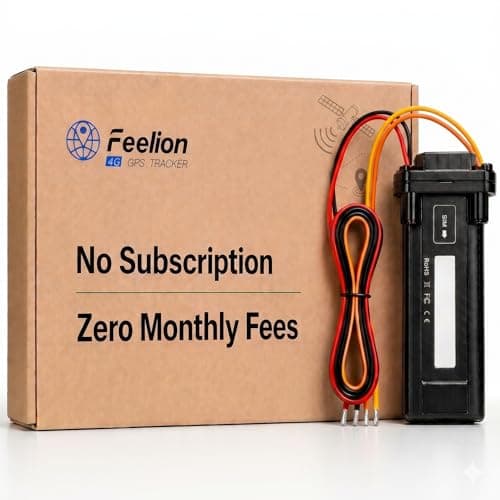
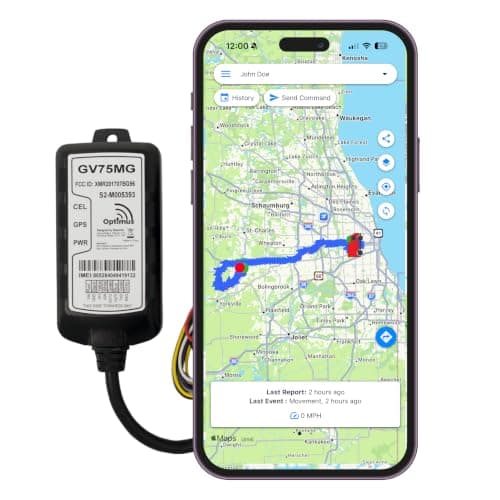
RVs and boats look like the trailer problem and are not, because of one fact that changes the whole answer: they almost always have 12V power available. A motorhome has a chassis battery and usually a leisure bank. A boat has a house battery. A caravan has a leisure battery and often solar.
That means you can hardwire, which removes the only genuine weakness of tracking an asset that sits unattended — the charging schedule you will stop keeping. On a trailer you are stuck with batteries. Here you are not, and you should take the option.
What makes this category distinct
The storage gaps are months, not weeks. A boat out of season or an RV over winter may go unvisited for a full quarter. Any device needing a monthly charge is a device that will be flat when it matters.
The asset is worth a lot. Which justifies both a better device and the two-tracker approach that organized-theft targets warrant: one unit easy to find, one not.
The environment is hostile. Salt air, bilge damp, roof heat. A housing rated for splashes will not survive a season in a boat locker, and a tracker in an RV roof void sees temperatures that shorten lithium life considerably.
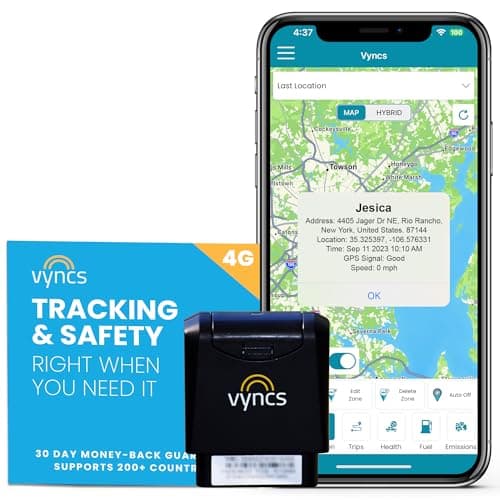
A motorhome has an OBD port. Which quietly makes the easiest option in car tracking available here too, for anything on a van or truck chassis. A towed caravan or a boat does not.
Where to wire it, and where not to
On a motorhome, the chassis battery via a fused feed behind the dash is conventional and fine. Better, if the layout allows, is a feed from the leisure bank with the unit concealed in a wardrobe base or under a fixed bed — away from the obvious dash area a thief checks.
On a boat, the house battery with a proper inline fuse, and the unit somewhere dry and high — a locker under the helm, behind a panel in the cabin. Not the bilge, not the lazarette, and not anywhere a hatch leak will find it. Add a drip loop to the wiring.
On a caravan, the leisure battery, with the unit in a seat base or wardrobe. Check whether the battery is isolated in storage; if it is, the tracker goes dark along with everything else, which rather defeats the purpose. A small dedicated supply or a solar trickle feed solves it.
Signal, and the two places it fails
Boats on moorings are often in marinas with poor cellular coverage at the waterline, and below-decks metalwork makes it worse. Mount the unit high and, where the device supports it, use an external antenna. If coverage is genuinely absent, a cellular tracker will store and forward rather than report live — which for a theft alert is a meaningful delay.
RVs stored in metal barns have the same problem for the same reason. Before committing to cellular, check your phone's signal in the exact storage spot: if your phone has nothing, the tracker will have nothing.
That is the one case where a Bluetooth tag can outperform a cellular tracker, if the storage site has people and phones moving through it. It is also where a satellite device becomes worth considering for genuinely remote moorings.
The two-device approach, which is standard here
For a five- or six-figure asset, fit two: a visible or easily-found unit, and a concealed hardwired one. A thief sweeping for trackers finds the first, assumes the job is done, and leaves the second reporting.
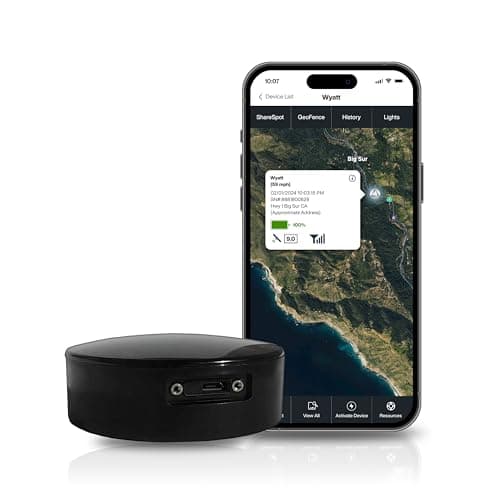
The cheap version of this is a no-fee Bluetooth tag as the hidden backup, which costs almost nothing and works in any marina or yard with footfall. The expensive version is two cellular units on different platforms, which is what high-value-asset owners do.
Insurance and marine-specific notes
Some marine insurers do recognize tracking systems, and some require an approved immobilizer on higher-value hulls. Ask before you buy: an approved system may earn a discount that a consumer tracker will not, and on an expensive boat that changes the maths.
One practical marine point: outboards are stolen far more often than whole boats, and they are small, unpowered and detachable. A tracker wired into the house battery protects the hull, not the engine. If the outboard is the valuable part, it needs its own device — a tag in a sealed mount inside the cowling is the cheap answer.