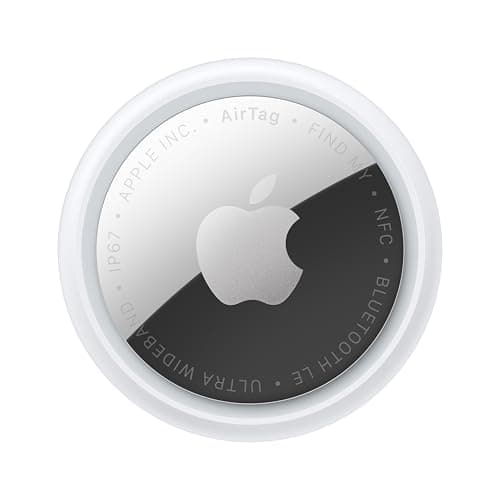
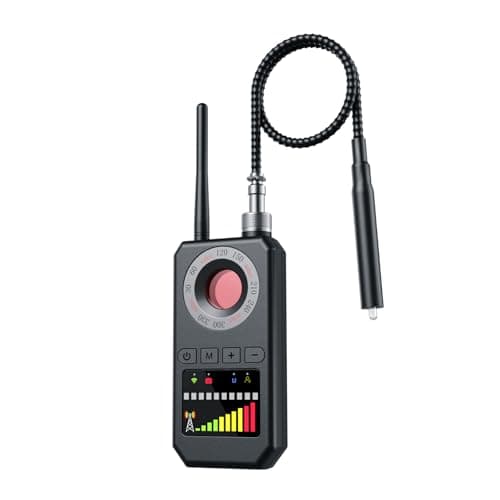
When AirTags launched, the obvious worry was that a cheap, tiny, long-lasting tracker on a global network would be used to follow people. Both Apple and Google have since built detection into their operating systems, and it works well for the devices it covers.
It also misses an entire category, and that gap is the most important thing on this page.
What Apple's system does
If an AirTag, a set of AirPods, a Find My network accessory or a compatible Bluetooth location-tracking device is separated from its owner and seen moving with you over time, you are notified — by an alert on your device, or by a sound from the device itself.
Tapping the alert and continuing lets you play a sound to help locate it. On a compatible iPhone with Ultra Wideband, and where the device is an AirTag or an AirPods Pro 3 case, you can tap “Find Nearby” and use directional guidance with distance and direction indicators.
There is also an “Instructions to Disable” option, which walks you through stopping the device. Apple notes something important here: turning off your own Location Services or Bluetooth does not prevent the owner tracking the device. Only disabling the device does.
The requirements, which are specific
These alerts do not work unless your phone is configured for them. Apple states the requirements as:
- iOS or iPadOS 17.5 or later (14.5 or later for basic notifications)
- Location Services enabled, with Significant Locations turned on
- Bluetooth enabled
- Tracking Notifications enabled
- Airplane Mode off
Significant Locations is the one people have switched off for privacy reasons and then wonder why they get no alerts. It is worth checking.
What Android's system does
Android alerts you when someone else's tracker is separated from its owner and far from their phone, after the tracker has physically moved with you over time. Supported devices include Find Hub network compatible tags, headphones and Apple AirTags, along with Chipolo, Motorola's moto tag and Pebblebee products.
Crucially, Android adds something Apple does not: a manual scan. Settings → Safety & emergency → Unknown tracker alerts → Scan now. It takes about ten seconds and works on Android 11 and later without Location Services enabled.
Google also notes that turning some trackers off triggers a factory reset, which can prevent law enforcement identifying the owner — worth knowing before you disable one.
The gap: cellular trackers are invisible to both
This is the most important limitation and it is barely mentioned anywhere.
Both systems work by listening for Bluetooth beacons. A cellular GPS tracker does not beacon — it talks to a cell tower. So a hidden cellular tracker in a car or a bag is completely invisible to your phone's unknown-tracker scan, on either platform, forever.
Those devices are widely available, cost under twenty dollars, and are magnetic. If your concern is someone tracking your vehicle, the phone scan will not find it and you need a physical search or an RF detector instead. That is a different procedure and we cover it here.
Four other limitations worth knowing
Alerts need time and movement. The system wants to see a tracker moving with you over a period, which prevents constant false alarms from tags in shops and taxis — and means a short journey may not trigger anything.
Alerts are suppressed near the owner. A tag traveling with its owner is not “separated”, so a tracker planted by someone who is also present will not alert you. That matters in domestic situations specifically.
Older phones and feature phones get nothing. Apple's full feature set needs iOS 17.5 or later, and Android's manual scan needs Android 11 or later. Someone on an old handset is unprotected.
The sound can be defeated. A tag's speaker can be physically disabled, and tags sold with the speaker removed have been reported. The phone alerts still fire, which is why the notification matters more than the chirp.
What to check on your own phone today
iPhone: Settings → Privacy & Security → Location Services (on), → System Services → Significant Locations (on). Then Find My → Tracking Notifications (on). And keep iOS current.
Android: Settings → Safety & emergency → Unknown tracker alerts. Turn alerts on, and note the Scan now button for when you want to sweep deliberately.
Five minutes, and it is the difference between protection that works and protection that is technically present.
If you find a tracker that is not yours
Do not immediately disable it if you think you may want to involve the police. Google notes that turning some trackers off triggers a factory reset, which can destroy the link to the owner — and that link is the evidence.
Photograph the device in place, with its serial number if visible. On an iPhone or Android phone you can tap an AirTag with NFC to see its serial and any lost-mode message. Keep the alert notification.
If you believe you are being followed, contact local law enforcement, and consider that a domestic-violence advocacy organization can help with the wider situation. Please do not treat a tracker as a problem to solve alone.
We go through the practical detection steps in full on the unwanted-tracker detection page.