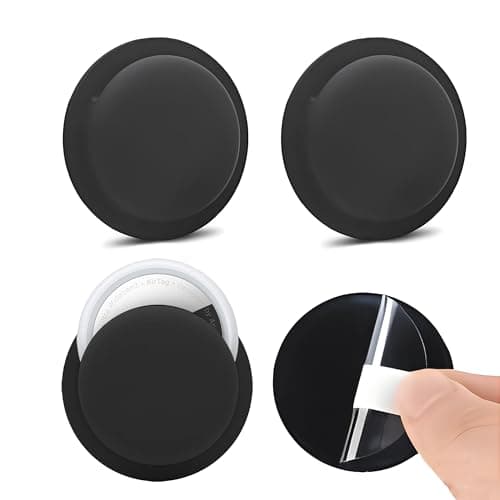
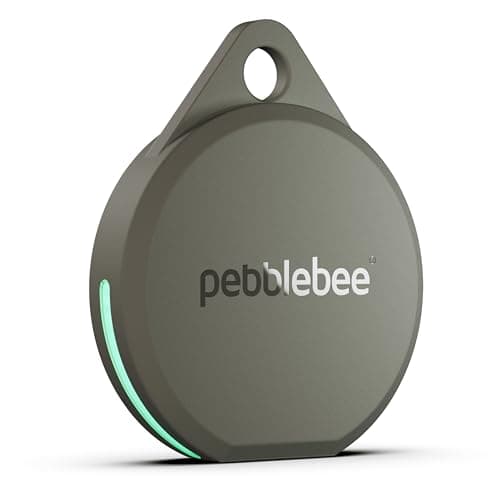
There is no tracker small enough to live on a pair of glasses and leave them wearable, so the answer is to tag the case. For most people that means a small adhesive tag stuck to a hard case — the Tile Sticker is the neatest fit and works on both phone platforms — or an adhesive mount holding an AirTag if you are on an iPhone and want Precision Finding. If the glasses go missing inside the house rather than out in the world, buy for loudness instead: Pebblebee states a 130 dB siren, and that is the feature that ends an indoor search.
It is worth being blunt about why, because the search results are full of products implying otherwise. A tracker needs a battery, a Bluetooth radio and a speaker. The smallest tags on the market are roughly coin-sized and weigh several grams. Glasses are a balanced object worn on your face: a few grams on one temple arm is noticeable, an adhesive puck on a lens rim is both ugly and in your eyeline, and anything clamped to a hinge will eventually break the hinge. The physics has not been beaten yet, and anybody claiming to have beaten it is selling you a tag with a sticker on it.
So what actually gets tagged
The case. Hard cases have a flat lid, which is ideal for adhesive, and the case is what you put the glasses into when you take them off. This covers the common failure — glasses in their case, case somewhere in the house or left at a restaurant.
The lanyard or cord. If you use a neck cord, a small tag on it rides with the glasses themselves. It is the only setup that actually tracks the frames rather than their container.
The bag the case lives in. Less precise, far better than nothing, and you probably want the bag tagged anyway.
Why loudness beats the map here
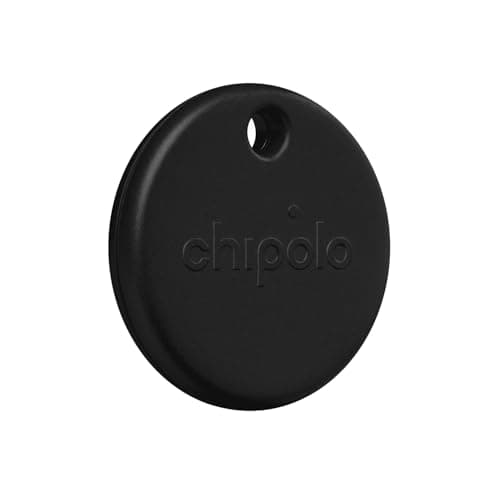
Think about where glasses are actually lost. On a bedside table, under a newspaper, down the side of a sofa, in the pocket of yesterday's coat. All of those are inside your own house, where a map pin says “home” and tells you nothing. What you need is for the tag to make a noise you can follow, which is why the published alarm figures matter more on this page than on any other: Pebblebee states 130 dB for the Clip 5 and Chipolo states about 125 dB for the LOOP, against an AirTag whose speaker Apple describes only as 50% louder than the first generation.
The counter-argument is Precision Finding, which is genuinely excellent at the “somewhere in this room” problem on an iPhone — a direction arrow and a distance rather than a beep to chase. If you are on iPhone, that is the reason to put an AirTag on the case despite the quieter speaker. The same trade-off applies to keys.
What to look for before you buy
A flat mounting face. Adhesive needs a hard, smooth surface. A soft slip pouch is not a mounting surface, and double-sided tape on fabric lasts about a week.
A stated alarm figure. Not every brand publishes one. Where it does, treat it as a ranking rather than a measurement, and prefer the ones that publish.
No subscription. Everything on this page can be bought with no recurring cost. Tile is the one to read carefully: finding works on the free tier, and Life360's paid memberships — $9.99, $16.99 and $24.99 a month at the published rates — add features you do not need for a glasses case. What Tile does and does not charge for.
The right battery model. A sealed battery means replacing the whole device in a couple of years. A coin cell means a one-dollar fix. A rechargeable means finding a cable about once a year. For something that lives in a bag, coin cell or rechargeable both beat sealed.
Which one, by how you lose them
In the house, constantly: the Pebblebee Clip 5 on the case, for the 130 dB siren. Loudness is the entire solution to this problem and nothing else comes close.
Out in the world, and you carry an iPhone: an AirTag on an adhesive mount. Precision Finding plus the densest crowd network means a case left in a cafe is findable in a way nothing else manages.
You switch between Android and iPhone, or your household does: the Chipolo POP. Dual-network, cheap, color-coded, no fee.
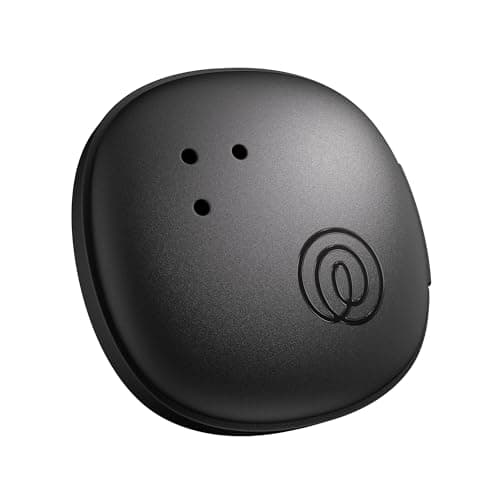
You want the smallest, flattest thing that sticks: the Tile Sticker. Accept the sealed battery and ignore the membership upsell.
Mounting it so it survives
Clean the case with alcohol and let it dry before you apply any adhesive — skin oils are why most of these fall off in a fortnight. Put the tag on the outside of the lid, not the inside, so the body of the case is not between the tag and your phone. And press it for thirty seconds rather than a moment: pressure-sensitive adhesive needs pressure, which is the step everyone skips.
Two tags, one for each pair
If you own reading glasses and sunglasses, tag both and name them clearly in the app on day one. The color-coded tags earn their keep here — an alert that says “Tag” is useless, and one that says “sunglasses, blue” is not. No-fee tags make this cheap: two tags is one purchase and no monthly cost at all, which is the difference between this category and anything with a SIM in it.
What no tracker on this page can do
Tell you where your glasses are if they are nowhere near a phone. All of these are Bluetooth finders: they report when your phone is close, or when a stranger's phone passes the crowd-network ones. Glasses left on a park bench at dawn may report when the park fills up, or may not report at all. There is no GPS option here, because a device with GPS and a SIM would be the size of a matchbox and would need a monthly plan to protect an object worth less than a year of it. Where it was versus where it is.